Plant profile
Malabar chestnut
Pachira aquatica
Also known as Money tree, Guiana chestnut, Saba nut.
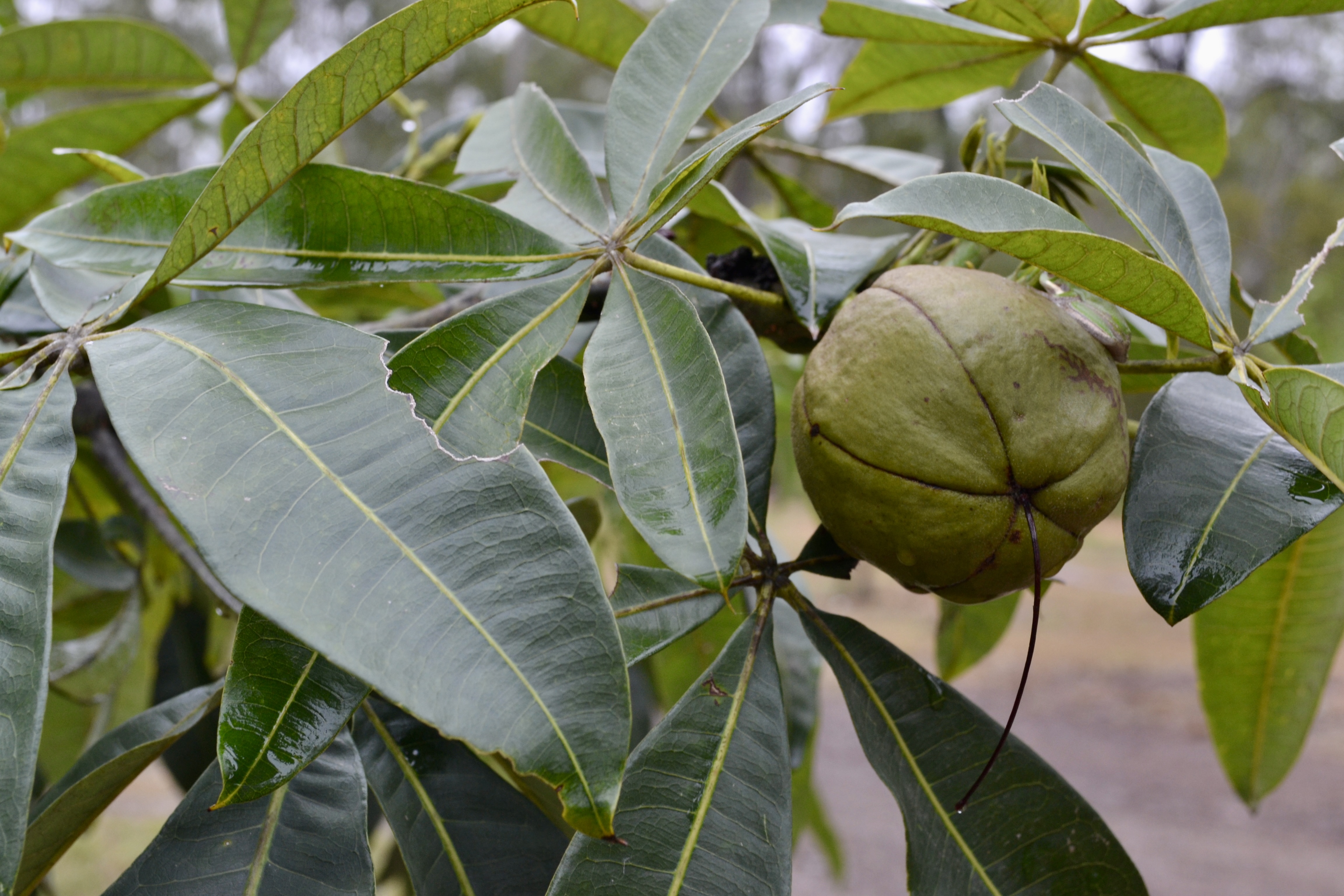
Malabar chestnut is a tropical tree with large hand-shaped leaves and big woody seed pods. Young plants are also sold indoors as braided money trees.
- Grows well in
- Tropical, Subtropical
- Lifecycle
- Evergreen to semi-evergreen tropical tree
- Light
- Full sun, Part shade
- Mature size
- Outdoor trees commonly 8–15 m high; indoor plants stay much smaller
- Spacing
- About 5–8 m apart outdoors
- Growth habit
- Tropical tree with a broad canopy and palmately divided leaves
- Native range
- Mexico and Central America to northern South America
- Natural habitat
- Wet tropical riverbanks, seasonally flooded forest and swampy lowland forest.
When to plant
Tropical
February–May, September–November
Subtropical
March–May, September–November
Temperate
September–November
Mediterranean
September–November
Tropical and subtropical: plant during warm weather with reliable moisture.
Planting
Plant into deep, free-draining soil with room for a broad tree. Water regularly while young and protect from frost.
Position and light
Full sun to part shade outdoors; bright indirect light indoors.
Soil
Fertile soil that drains well but holds some moisture. It naturally grows in wet tropical habitats but potted plants still need air around the roots.
Watering
Water regularly during warm growth. Indoor plants should dry slightly at the surface before watering again. Indoor plants in smaller pots dry much more slowly than outdoor trees, so check the mix before watering rather than using the same schedule year-round.
Feeding
Use compost outdoors or a light balanced feed during active growth.
Pruning
Prune young outdoor trees to shape them or keep them smaller. Indoor money trees can be tip-pruned to control height.
Harvest
Mature pods contain large seeds used as food in parts of the plant's native range, although this is not a common Australian food crop.
Propagation
Fresh seed germinates readily. Stem cuttings can also be used.
Common problems
Scale, mealybugs and root rot can occur, especially indoors. Cold damages tropical growth.
Safety notes
Seeds have traditional food use, but ornamental plants are not necessarily managed as food crops. Do not eat other plant parts without reliable identification and preparation guidance.
Worth knowing
The braided 'money tree' sold as a houseplant is the same species. Outdoors in the tropics it becomes a real tree rather than remaining a tabletop plant. The braided trunk seen on indoor plants is created by growers plaiting several young stems together while they are still flexible; a tree grown outdoors from seed will not naturally form this shape.
Grow Malabar chestnut with Brancho
Add it to My Garden and Brancho works out what it needs next, timed for your climate.
How it grows around Australia
Growing this too? Share what you've noticed in your garden.
Grow a Little Wild
New plants to try, useful growing tips and a few garden jobs based on what you grow.