


Plant profile
Marshmallow
Althaea officinalis
Also known as Marsh mallow, Marsh-mallow, White mallow, Common marshmallow, Guimauve.
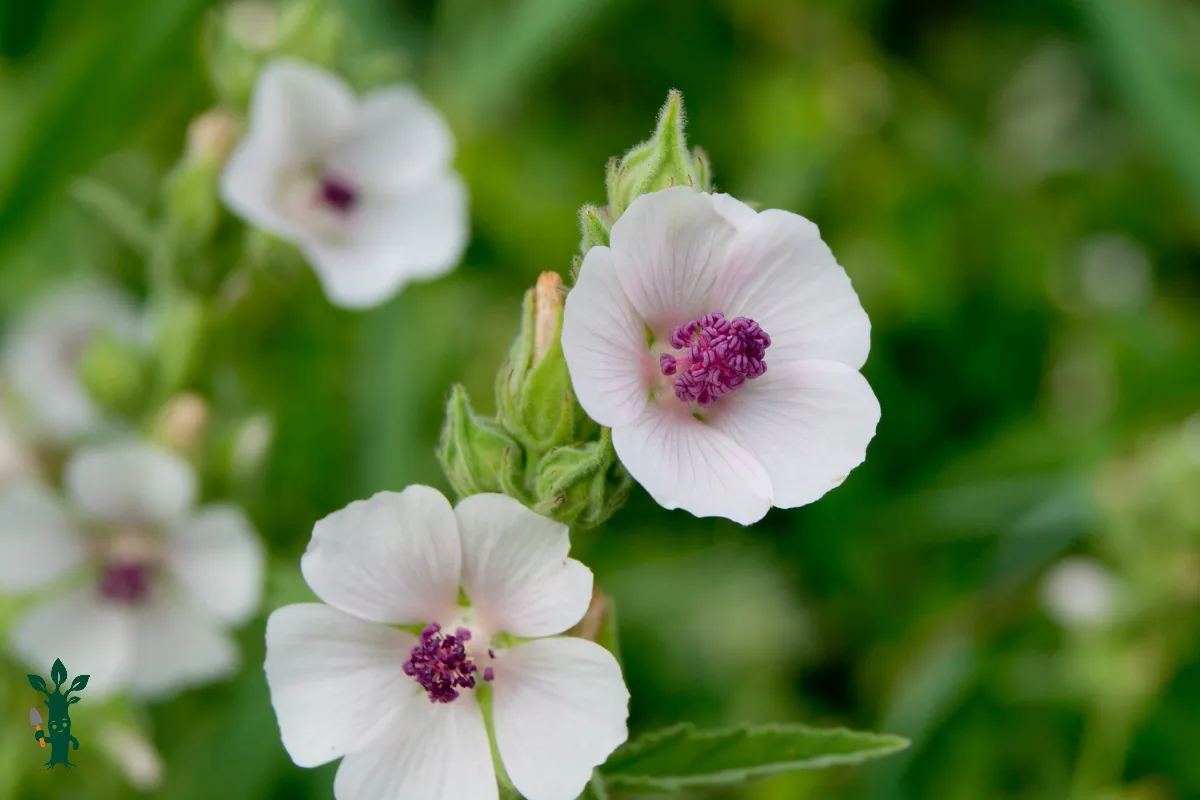
Marshmallow is a tall herbaceous perennial with soft grey-green leaves and pale pink flowers. It prefers moisture-retentive soil and is grown as much for its traditional herbal history as for its cottage-garden look.
- Grows well in
- Subtropical, Temperate, Cool / mountains, Mediterranean
- Lifecycle
- Herbaceous perennial
- Light
- Full sun, Part shade
- Mature size
- Usually about 1.5–2.5 m tall and roughly 1–1.5 m wide in good conditions.
- Spacing
- Allow about 75–100 cm between plants for airflow and mature spread; more room is useful in humid climates.
- Growth habit
- Tall, clump-forming herbaceous perennial with upright flowering stems arising from a perennial crown and deep root system.
- Native range
- North-western Africa and Europe through Central Asia and Siberia to western Pakistan
- Natural habitat
- Salt marshes, wet meadows, riverbanks and damp coastal ground.
When to plant
Tropical
April–August
Subtropical
March–September
Temperate
August–November
Cool / mountain
September–November
Mediterranean
August–November
Plant small nursery plants during mild weather. In subtropical gardens, autumn to early spring is easiest. In a humid tropical garden, the cooler and drier part of the year gives a new plant the best chance to establish before oppressive heat and wet-season humidity.
Full growing guide
How to Grow Marshmallow Plants in Australia
Marshmallow is a moisture-loving perennial herb with soft leaves, pale flowers and useful roots. Learn where it grows best, how to propagate it and how to manage it in warm Australian gardens.
Read the full growing guidePlanting
Plant at the same depth it was growing in the pot, into deep soil with room for the crown and roots to expand. Water in well. Allow generous space because mature plants can become tall and broad.
Position and light
Full sun gives the strongest flowering in mild climates. In hot subtropical conditions, morning sun with some afternoon protection can reduce heat stress. In humid tropical gardens, a bright position with good airflow is safer than a hot, enclosed site.
Soil
Best in fertile, moisture-retentive soil that still drains. It tolerates a broad range of soil types, but grows most strongly where roots can reach consistent moisture. Avoid a potting mix that repeatedly dries hard, and avoid permanently stagnant water around the crown.
Watering
Keep young plants evenly moist while they establish. Established plants tolerate short dry periods but perform best with reliable moisture. Mulch helps buffer the root zone, especially in hot climates.
Feeding
Marshmallow does not need aggressive feeding. Compost or a light balanced feed during active growth is usually enough. Excess nitrogen can produce very soft growth at the expense of sturdy stems.
Pruning
Cut old flowering stems back once flowering has finished or when they become untidy. In climates with a cool winter the top may die back and regrow from the crown. In warm climates, remove tired stems and let fresh basal growth take over.
Harvest
Leaves and flowers are traditionally harvested from established plants, and the root is the part historically associated with the original marshmallow confection. Root harvest removes a major part of the plant, so wait until a plant is well established if you intend to lift roots.
Propagation
Usually grown from seed. Established clumps can also be divided when conditions are mild and the plant is not under heat stress. Seedlings need steady moisture while small.
Common problems
Watch for rust, flea beetle damage and stress from hot, dry conditions. In very humid weather, give plants space and airflow and remove badly affected foliage rather than keeping the centre of the clump dense.
Worth knowing
The roots are thick and mucilaginous, which is the characteristic behind the plant's long history of traditional use. Mature plants form a substantial clump and can die back in cold weather before returning from the crown.

Grow Marshmallow with Brancho
Add it to My Garden and Brancho works out what it needs next, timed for your climate.
How it grows around Australia
Growing this too? Share what you've noticed in your garden.
Grow a Little Wild
New plants to try, useful growing tips and a few garden jobs based on what you grow.