
Plant profile
Mint
Mentha spp.
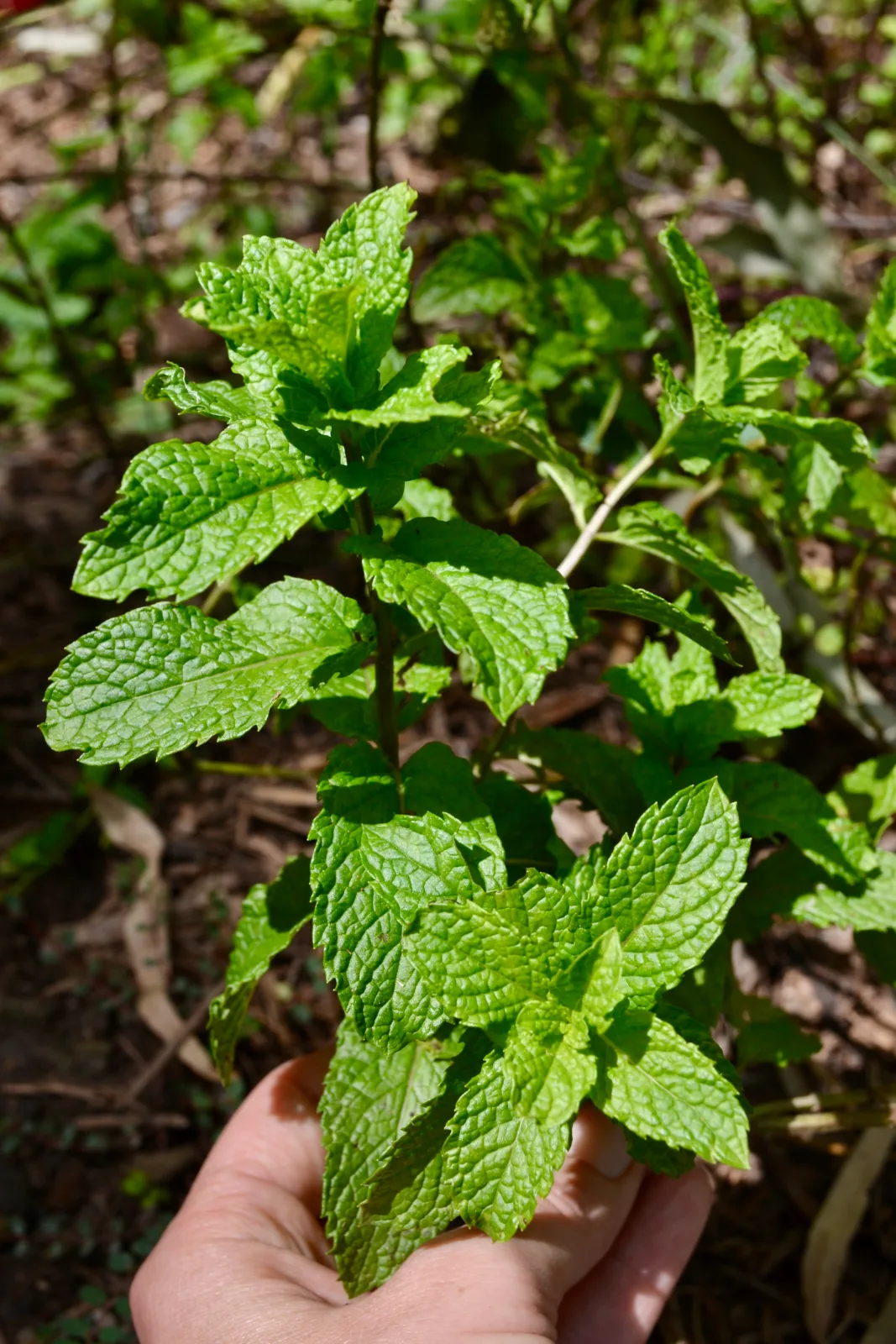
Also known as Spearmint, Peppermint.
Mint is a fast-spreading perennial herb that likes moisture and can grow in sun or part shade. Containers make it easier to control.
- Grows well in
- Tropical, Subtropical, Temperate, Cool / mountains, Arid / inland, Mediterranean
- Lifecycle
- Perennial spreading herb
- Light
- Full sun, Part shade, Shade
- Mature size
- Most common culinary mints grow about 20–60 cm tall, but their underground runners can spread much farther sideways than the leafy plant appears to.
- Spacing
- About 30–45 cm apart if growing in the ground. In most gardens, a pot or other contained space is easier to manage than giving mint unrestricted soil.
- Growth habit
- Fast-spreading perennial herb that runs through the soil by creeping stems and rhizomes, forming expanding colonies.
- Native range
- Native across many temperate and subtropical parts of the world, depending on species
- Natural habitat
- Damp grassland, stream banks, wet meadows and open woodland.
When to plant
Tropical
March–October
Subtropical
March–October
Temperate
August–April
Cool / mountain
September–March
Arid inland
March–October
Mediterranean
August–April
Planting
Plant mint in a roomy container or use a reliable root barrier if it goes in the ground.
Position and light
Full sun to part shade; light shade helps in hot climates.
Soil
Rich, moisture-retentive soil or potting mix that still drains well.
Watering
Mint likes regular moisture, especially in pots and hot weather.
Feeding
Feed container mint lightly during active growth if leaf production slows.
Pruning
Regular picking keeps mint bushy. Cut tired growth back and divide crowded pots.
Harvest
Pick leafy stems whenever the plant is actively growing. Harvest before heavy flowering for the softest leaves and strongest fresh flavour. Regular cutting encourages new shoots; if stems become coarse or sparse, cut the plant back and let it regrow from the base. Once flower spikes develop, the leaves can become coarser and the flavour stronger. Cut flowering stems back if you want softer new shoots, or leave some flowers for pollinators.
Propagation
Divide and replant rooted sections or runners.
Common problems
Mint rust, caterpillars, mites and overcrowded pots can reduce leaf quality. Uncontained runners can spread widely.
Worth knowing
Mint is one of those plants where vigorous growth is both the attraction and the problem. A large pot keeps the runners contained, and dividing and repotting the root mass periodically keeps the plant productive. Australia has native mints, including river mint (Mentha australis), but the common culinary mints sold for gardens are usually introduced species or hybrids.
Grow Mint with Brancho
Add it to My Garden and Brancho works out what it needs next, timed for your climate.
How it grows around Australia
Growing this too? Share what you've noticed in your garden.
Grow a Little Wild
New plants to try, useful growing tips and a few garden jobs based on what you grow.