

Plant profile
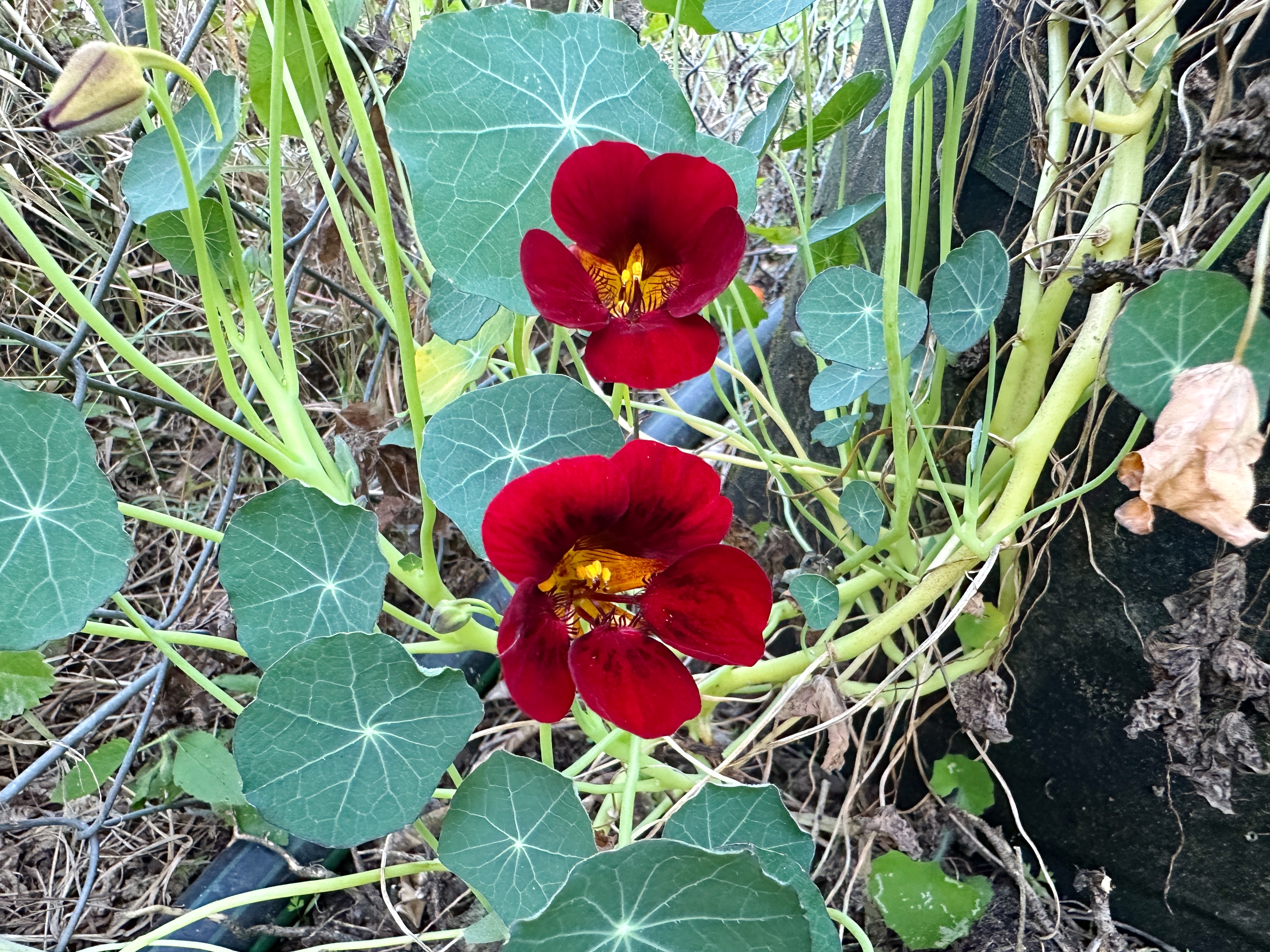
Nasturtium
Tropaeolum majus
Also known as Indian cress.
Nasturtium is one of the easiest edible flowers to grow, and it does most of the work itself. Round leaves, peppery flowers, and seed that keeps coming up in the same bed year after year.
- Grows well in
- Tropical, Subtropical, Temperate, Cool / mountains, Arid / inland, Mediterranean
- Lifecycle
- Annual; short-lived perennial in frost-free gardens
- Light
- Full sun, Part shade
- Mature size
- Mounding types 30 cm; trailing types spread 1.5 to 2 m
- Spacing
- 25 to 30 cm apart
- Growth habit
- Sprawling or mounding, with round leaves on long stalks
- Native range
- An ancient cultivated form originating in Peru
- Natural habitat
- A cultivated subtropical annual rather than a plant with one clearly defined wild habitat.
When to plant
Tropical
March–July
Subtropical
March–August
Temperate
March–October
Cool / mountain
September–November
Arid inland
March–September
Mediterranean
March–October
Warm areas: autumn to winter for a cool-season display. Temperate: autumn or early spring. Cool: spring, after the last frost.
Planting
Sow the large seed straight where you want it, about 2 cm deep. It does not like being moved. Sow in autumn in warm areas for a winter and spring show, or in spring in cool areas. Nasturtium self-seeds freely, so expect volunteers.
Position and light
Full sun gives the most flowers. Part shade gives bigger leaves and fewer flowers, which is useful if you want it as a living mulch.
Soil
Poor to average soil is ideal. Free draining matters more than fertility.
Watering
Water deeply while the plants are young and through dry times. Established plants handle dry weather but don't enjoy extreme heat.
Feeding
Do not feed. Rich soil and nitrogen give a sprawling mat of leaves with almost no flowers. This is the most common mistake with nasturtium.
Pruning
Cut back sprawling stems whenever they take over a path or smother a neighbour. Cutting back hard in mid-season often brings a fresh flush of leaves and flowers.
Harvest
Pick young leaves and open flowers any time for salads. Both have a peppery, watercress-like bite. Green seed pods can be pickled as a caper substitute. Pick in the morning and use fresh.
Propagation
From seed, and it does it on its own. Collect the fat pale seeds off the ground when dry, or leave them and let the patch renew itself.
Common problems
Cabbage white caterpillars chew the leaves, and aphids cluster on the growing tips, which is why some gardeners grow it as a decoy plant near brassicas. Both are easy to squash or hose off. In humid weather leaves can spot and rot. Frost kills the plant outright.
Safety notes
Leaves, flowers and green seed pods are edible in normal food amounts. The peppery compounds can irritate the stomach in large quantities, so treat it as a salad ingredient, not a bulk green. Only eat plants you have not sprayed.
Worth knowing
Nasturtium leaves, flowers and young green seed pods all have a peppery flavour. In frost-free gardens the plant often comes back from seed, so one sowing can give you plants again in later seasons.
Grow Nasturtium with Brancho
Add it to My Garden and Brancho works out what it needs next, timed for your climate.
How it grows around Australia
Growing this too? Share what you've noticed in your garden.
Grow a Little Wild
New plants to try, useful growing tips and a few garden jobs based on what you grow.