
Plant profile
Parlour palm
Chamaedorea elegans
Also known as Parlor palm, Dwarf mountain palm.
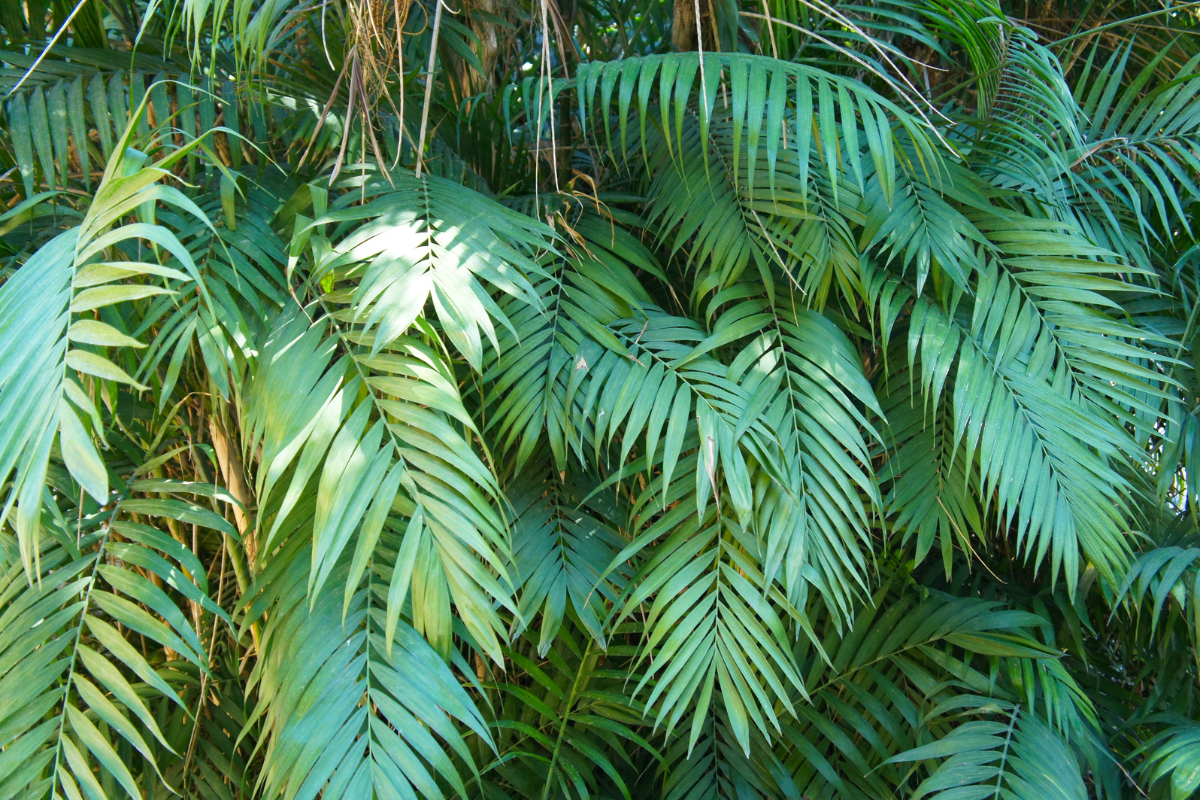
Parlour palm is a slow-growing indoor palm with fine arching fronds and a much smaller footprint than most palms. It tolerates moderate indoor light, grows happily for years in a pot and does not need frequent repotting.
- Grows well in
- Tropical, Subtropical, Temperate
- Lifecycle
- Evergreen tropical palm
- Light
- Part shade, Shade
- Mature size
- Usually 30–120 cm tall indoors over many years, although old plants can become taller.
- Spacing
- One nursery clump per pot; allow roughly 30–60 cm around the fronds as the plant matures.
- Growth habit
- Slow-growing, slender-stemmed palm, commonly sold as a multi-seedling clump with arching pinnate fronds.
- Native range
- Mexico to Honduras.
- Natural habitat
- Tropical forest and woodland, often growing beneath taller vegetation in sheltered light.
When to plant
Repot during spring or early summer when roots have filled the pot. There is no need to repot annually; slow-growing plants can remain in the same pot for several years.
Position and light
Bright indirect light gives the best growth, but parlour palm handles moderate shade better than many indoor palms. Protect it from strong direct sun through glass.
Soil
Use a light, free-draining potting mix that stays slightly moist without becoming waterlogged. Avoid a dense mix that collapses around the roots.
Watering
Water thoroughly, then allow the surface of the mix to begin drying before watering again. Growth is slow, especially in lower light, so the pot may stay moist longer than expected.
Feeding
Feed lightly during active warm-season growth with a balanced indoor-plant fertiliser at the label rate.
Pruning
Remove fully brown or damaged fronds at the base. Do not cut the growing tip from an individual palm stem because palms do not branch from a topped trunk.
Propagation
Usually propagated from seed. Nursery pots commonly contain several separate seedlings together, which can sometimes be separated carefully.
Common problems
Brown tips can follow very dry air, irregular watering or salt build-up. Yellowing can occur with poor drainage or very low light. Spider mites, scale and thrips are the main indoor insects to watch for.
Worth knowing
Parlour palms grow slowly, so a small plant will not become a floor-sized specimen quickly. Their tolerance of moderate shade is useful indoors, but brighter filtered light still gives stronger growth.
Featured In
Grow Parlour palm with Brancho
Add it to My Garden and Brancho works out what it needs next, timed for your climate.
How it grows around Australia
Growing this too? Share what you've noticed in your garden.
Grow a Little Wild
New plants to try, useful growing tips and a few garden jobs based on what you grow.