
Plant profile
Parsley
Petroselinum crispum
Also known as Flat-leaf parsley, Curly parsley.
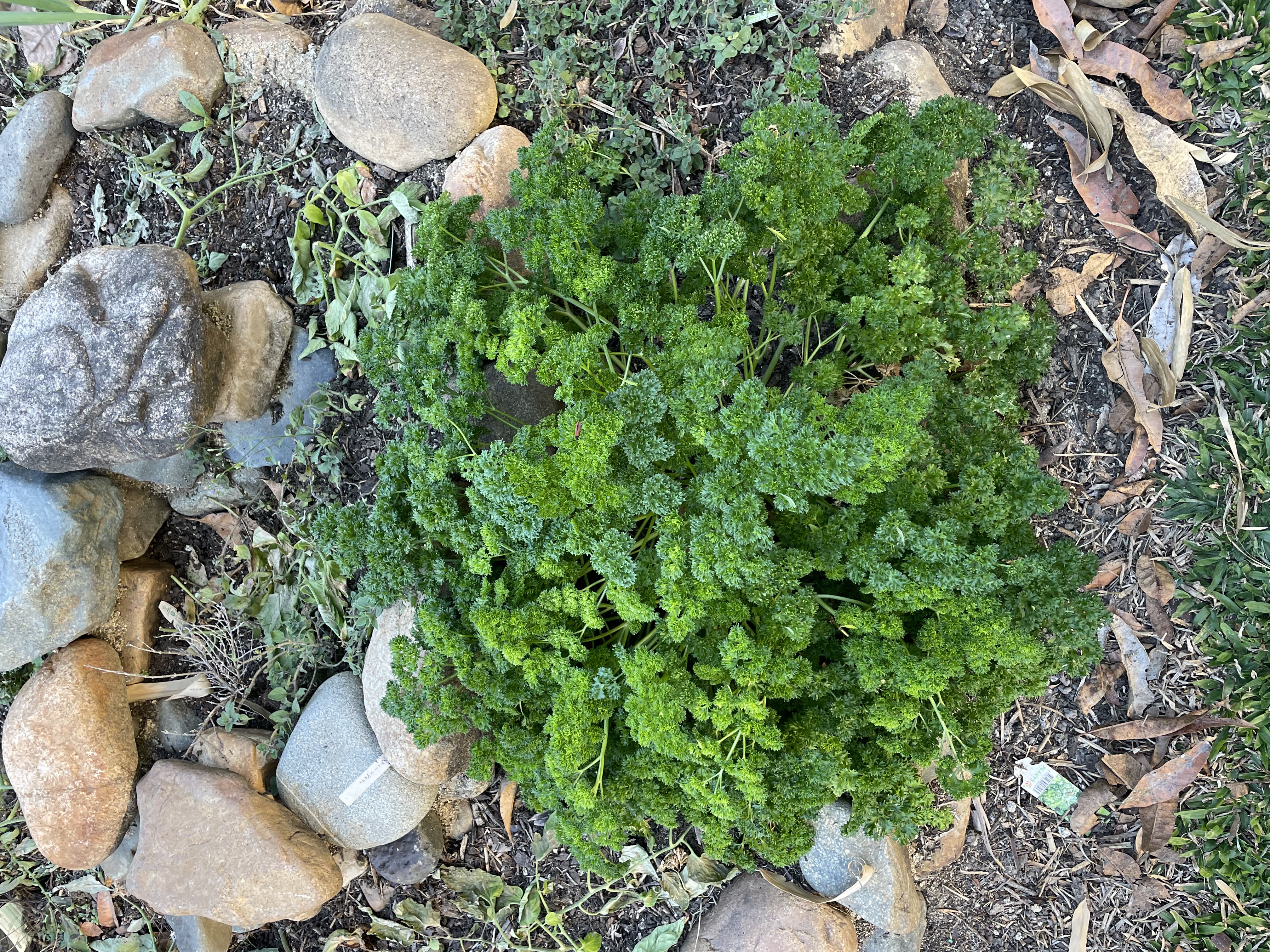
Parsley is a leafy biennial herb that grows best in mild conditions with steady moisture and regular picking.
- Grows well in
- Tropical, Subtropical, Temperate, Cool / mountains, Arid / inland, Mediterranean
- Lifecycle
- Biennial herb usually grown for one season
- Light
- Full sun, Part shade
- Mature size
- Usually 20–40 cm tall while leafy, reaching about 60–80 cm if allowed to flower.
- Spacing
- About 15–25 cm apart for full plants; closer spacing works if you harvest young leaves regularly.
- Growth habit
- Leafy biennial herb forming a basal clump before sending up taller flowering stems in its second season.
- Native range
- North-western Africa and the Balkan Peninsula
- Natural habitat
- Mediterranean rocky ground, cliffs and open scrub.
When to plant
Tropical
April–August
Subtropical
March–September
Temperate
February–June, August–November
Cool / mountain
March–June, September–November
Arid inland
March–September
Mediterranean
March–June, August–November
Planting
Direct sow or transplant young seedlings before the taproot becomes large. Parsley seed can be slow and uneven to germinate, so keep the seedbed consistently moist and do not let a fresh sowing dry out while you wait for seedlings.
Position and light
Full sun suits parsley through mild weather. In hotter conditions, part shade keeps leaves softer and slows the rush to flowering.
Soil
Use fertile, free-draining soil with plenty of organic matter and enough depth for the taproot. Compact or waterlogged soil gives smaller, paler plants and makes repeated harvesting harder to sustain.
Watering
Keep the root zone evenly moist, especially in containers and during repeated harvest. Parsley tolerates a short dry period once established, but repeated wilting makes leaves tougher and can bring flowering forward.
Feeding
Compost at planting is often enough. In poor soil or containers, a light herb or balanced liquid feed during active leaf growth supports repeated harvests without creating very soft growth.
Pruning
Harvest outer stems at the base and leave the centre growth.
Harvest
Pick the oldest outer stems at the base once plants are established and leave the centre growing. Harvest regularly to keep new leaves coming, and replace plants once the central flower stem takes over and leaf quality drops.
Propagation
Grow from seed. Direct sow where possible or transplant seedlings while they are still small because established taproots resent disturbance. Soaking seed briefly before sowing can help soften the coat, but steady moisture after sowing matters more than any special treatment.
Common problems
Slow germination, aphids, caterpillars and heat stress are common. Waterlogged or compacted soil can also cause poor root development and stunted, pale growth. Parsley can also attract swallowtail butterfly caterpillars, which strip foliage quickly but rarely kill an established plant outright.
Worth knowing
Curly and flat-leaf parsley are forms of the same species, and flat-leaf types usually have a stronger flavour. Parsley is biennial, so it generally flowers in its second season before finishing. It is related to carrot, celery and dill, and can share some of the insects and diseases that visit those crops. Let a plant flower if you want to feed hoverflies and other tiny visitors.
Grow Parsley with Brancho
Add it to My Garden and Brancho works out what it needs next, timed for your climate.
How it grows around Australia
Growing this too? Share what you've noticed in your garden.
Grow a Little Wild
New plants to try, useful growing tips and a few garden jobs based on what you grow.