


Plant profile
Passionfruit
Passiflora edulis
Also known as Passion fruit.
Passionfruit is a fast-growing vine that needs a strong support, good drainage, regular water and feeding. Most vines are productive for only a few years.
- Grows well in
- Tropical, Subtropical, Temperate, Mediterranean
- Lifecycle
- Short-lived perennial fruiting vine
- Light
- Full sun
- Mature size
- A vigorous vine commonly spreading 4–8 m along a fence or trellis once established.
- Spacing
- Allow roughly 3–4 m between vines on a fence or trellis so each plant has room to spread.
- Growth habit
- Fast-growing evergreen or semi-evergreen climber that grips supports with curling tendrils.
- Native range
- Brazil to north-eastern Argentina
- Natural habitat
- Wet tropical and subtropical forest margins, woodland and river valleys where the vine climbs other vegetation.
When to plant
Plant in warm, settled weather when the vine can establish quickly. Spring is a good general choice in cooler areas after frost risk has passed; in frost-free tropical areas, plant when reliable moisture is available and avoid the harshest dry period.
Planting
Plant in a warm, sunny position with free-draining soil and a strong trellis. Spring is a good general planting time; in very warm frost-free areas, autumn can also work. Keep the graft above soil level on grafted plants.
Position and light
Full sun is best for flowering and fruiting. Good airflow helps reduce disease.
Soil
Fertile, compost-rich and free-draining soil. Improve drainage or mound the planting site where water collects.
Watering
Keep young vines watered while they establish. Mature vines need regular water through dry weather, flowering and fruit filling, but roots should not stay waterlogged.
Feeding
Feed during active growth with a complete fertiliser that is not excessively high in nitrogen. Extra potassium may be useful for flowering and fruiting when the chosen product or soil program calls for it.
Pruning
Fruit forms on new-season growth. In late winter or early spring, thin tangled old growth and shorten laterals to encourage fresh shoots and airflow. Avoid removing the whole framework.
Harvest
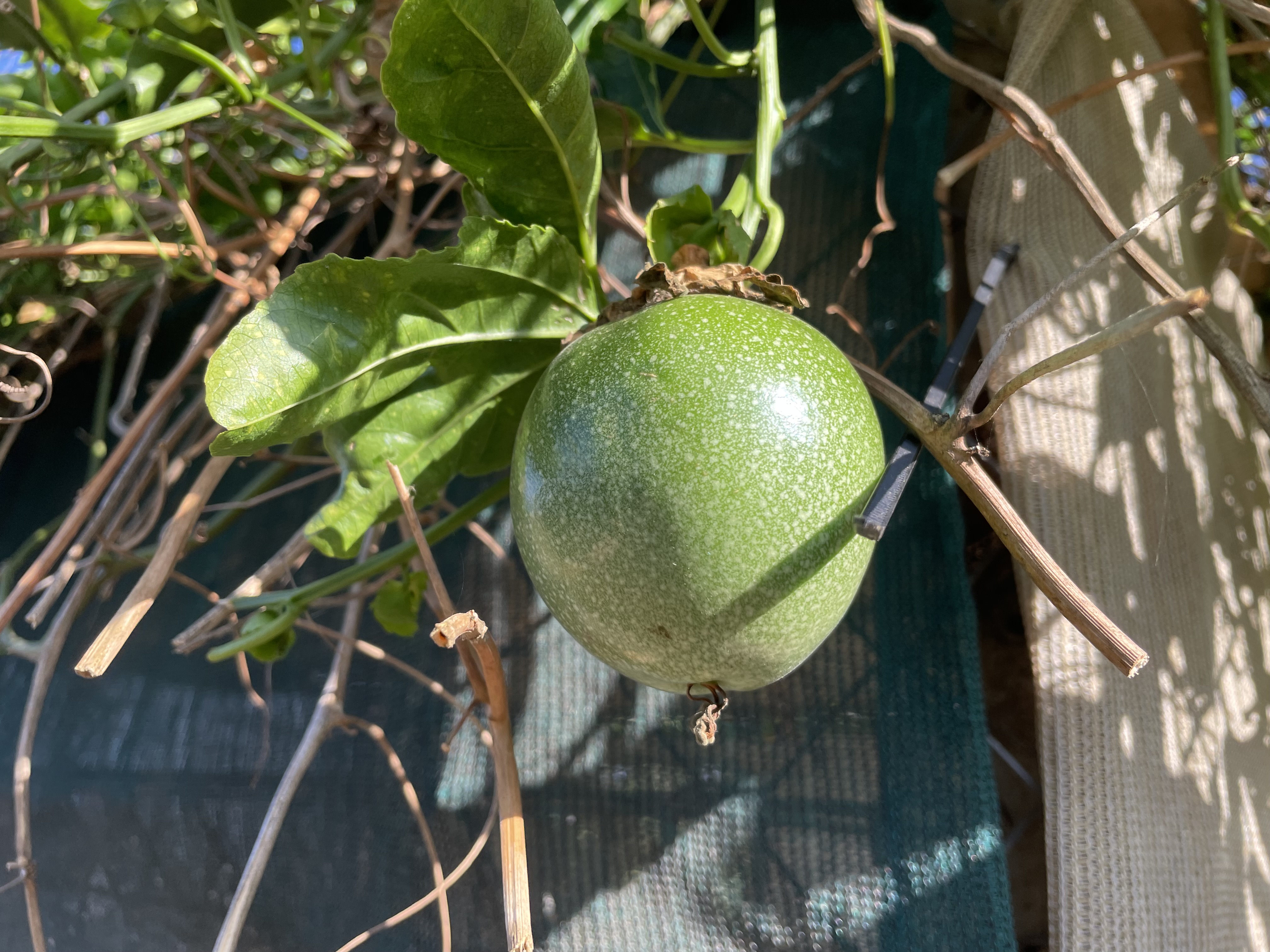
Ripe passionfruit usually colours and falls from the vine. Collect fallen fruit often and use or refrigerate it promptly.
Propagation
Passionfruit can be grown from seed, cuttings or grafted plants. Grafted vines need regular checks for shoots arising below the graft.
Common problems
Rootstock suckers, poor drainage, fruit fly, fungal disease and poor fruit set can occur. Some vines decline quickly after several productive years.
Safety notes
Unripe fruit and other plant parts are not normally eaten. Use ripe fruit from known edible passionfruit varieties.
Worth knowing
Passionfruit are productive but not especially long-lived. Many backyard vines start declining after several years, so planting a replacement before an old vine fails can prevent a gap in harvests.

Grow Passionfruit with Brancho
Add it to My Garden and Brancho works out what it needs next, timed for your climate.
How it grows around Australia
Growing this too? Share what you've noticed in your garden.

Grow a Little Wild
New plants to try, useful growing tips and a few garden jobs based on what you grow.