
Plant profile
Peanut
Arachis hypogaea
Also known as Groundnut.
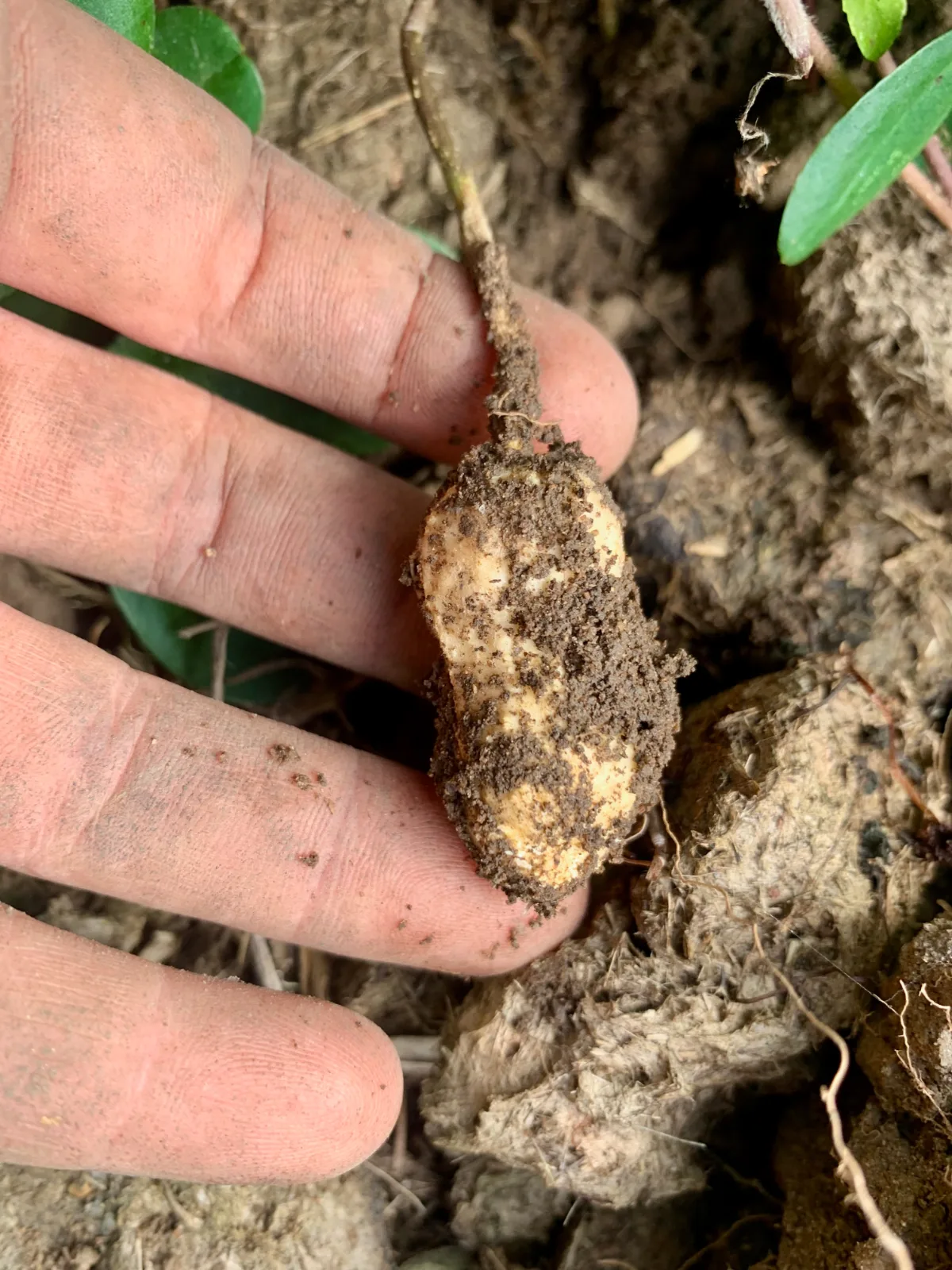
Peanuts are warm-season legumes that flower above ground and then push pegs into loose soil, where the pods develop.
- Grows well in
- Tropical, Subtropical, Temperate, Arid / inland, Mediterranean
- Lifecycle
- Warm-season annual legume
- Light
- Full sun
- Mature size
- Usually about 30–60 cm tall and 40–60 cm wide, depending on variety and growing conditions.
- Spacing
- Plant about 15–25 cm apart, leaving enough bare soil around plants for the pegs to enter the ground.
- Growth habit
- Low, bushy annual legume that flowers above ground, then sends fertilised pegs down into the soil where the pods develop.
- Native range
- An ancient cultivated crop originating in Bolivia
- Natural habitat
- A cultivated seasonally dry tropical crop rather than a plant with one clearly defined wild habitat.
When to plant
Tropical
August–December
Subtropical
September–December
Temperate
October–December
Arid inland
September–November
Mediterranean
October–December
Planting
Sow raw viable peanut seed after frost when soil is warm. Use loose soil so flowering pegs can enter the ground easily.
Position and light
Full sun.
Soil
Loose, well-drained soil is best. Heavy compacted ground makes pegging and harvest difficult.
Watering
Keep moisture steady through flowering and pod formation, then allow conditions to become drier as plants approach harvest.
Feeding
Peanuts are legumes and do not need heavy nitrogen feeding. Build the soil before sowing rather than pushing soft leafy growth later. Like other legumes, they rely on compatible root-nodule bacteria to supply much of their nitrogen; poor nodulation can leave plants pale even when other nutrients are adequate.
Pruning
No pruning is needed.
Harvest
Harvest when the plants begin to yellow and pods have filled. Lift carefully so pods stay attached, then dry promptly. Pods do not all mature at exactly the same time. Check a few before lifting the whole crop: mature kernels should fill the shells and show the variety’s normal seed-coat colour.
Propagation
Grow from raw, unroasted seed with the seed skin intact. Seed quality and variety affect crop time and yield.
Common problems
Harvested peanuts need to be dried thoroughly, because mouldy nuts are unsafe to eat. Leaf diseases, soil-dwelling insects and poor pod set can occur when conditions do not suit the crop. Give plants loose, well-drained soil and check the pods as you lift them.
Safety notes
Peanuts are a major food allergen. Do not serve harvested peanuts to anyone with a peanut allergy.
Worth knowing
Peanuts do something unusual: after pollination, a peg grows down from the flower and pushes into the soil, where the pod forms underground. Loose soil makes that process much easier.
Grow Peanut with Brancho
Add it to My Garden and Brancho works out what it needs next, timed for your climate.
How it grows around Australia
Growing this too? Share what you've noticed in your garden.
Grow a Little Wild
New plants to try, useful growing tips and a few garden jobs based on what you grow.