


Plant profile
Rice bean
Vigna umbellata
Also known as ricebean, climbing mountain bean, Vigna umbellata.
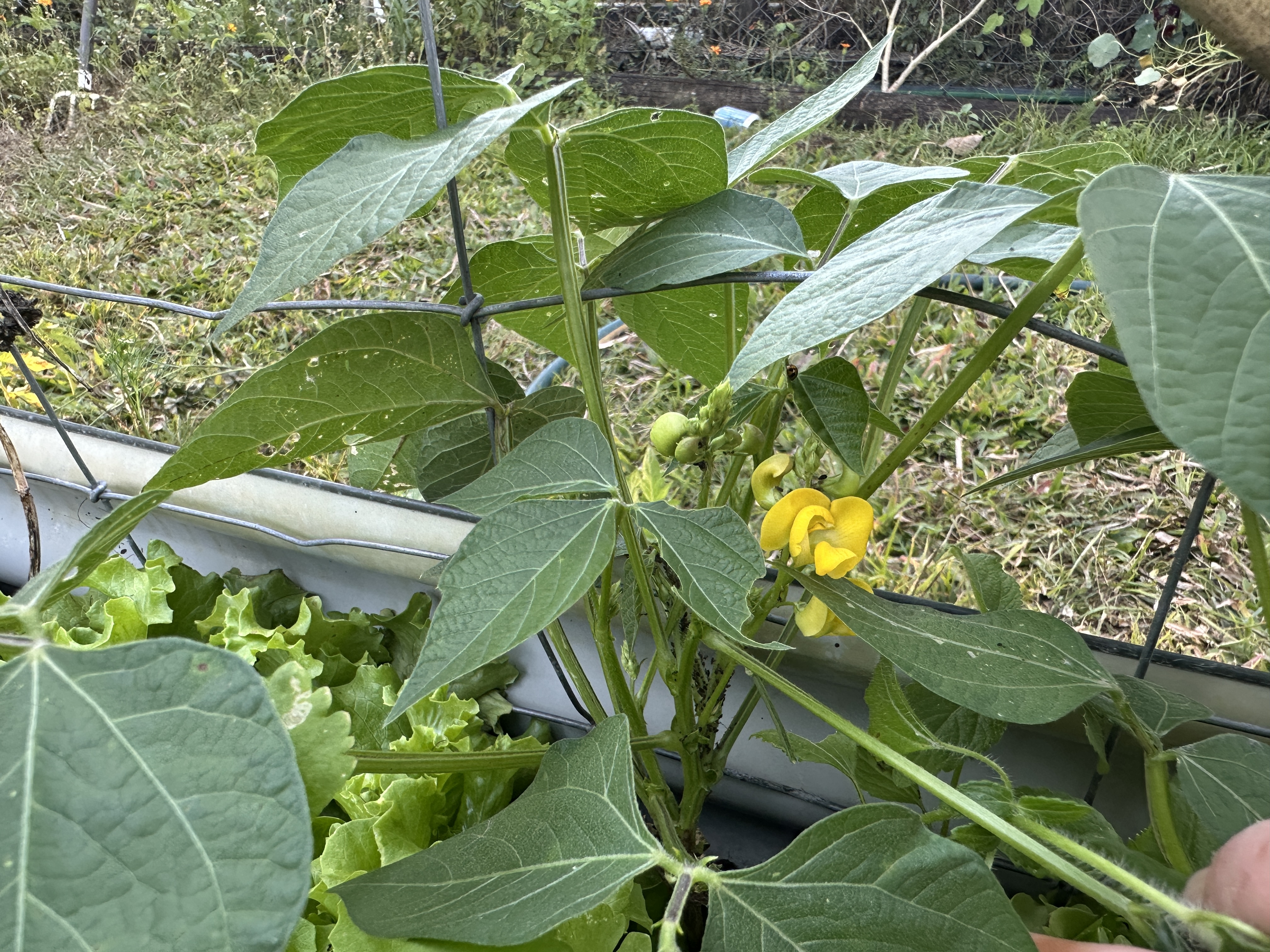
Rice bean is a warm-season climbing legume grown mainly for its small dry beans. The yellow flowers are distinctive, and a vigorous plant can cover a trellis quickly in warm weather. It is still unusual in Australian home gardens, but it suits gardeners who like useful vines and less-common pulse crops.
- Grows well in
- Tropical, Subtropical, Temperate, Arid / inland
- Lifecycle
- Warm-season annual in cultivation; some forms can persist longer in frost-free climates
- Light
- Full sun
- Mature size
- Usually around 1.5 to 2.5 m on support, depending on cultivar and season
- Spacing
- About 30 to 60 cm apart; 45 cm is a useful starting point
- Growth habit
- Twining or scrambling warm-season legume vine
- Native range
- Tropical and subtropical Asia, extending from the Indian subcontinent through southern and eastern Asia to New Guinea and the Solomon Islands.
- Natural habitat
- Primarily a scrambling plant of subtropical forest and woodland habitats within its native range.
When to plant
Tropical
September–February
Subtropical
September–January
Temperate
October–December
Arid inland
September–November
Sow after frost danger once soil is around 18°C or warmer. Tropical and humid-subtropical gardeners can choose a warm planting window that lets pods mature in relatively settled weather. In temperate districts, start as early as safely possible and favour an early or day-neutral line so seed can mature before cool autumn weather.
Planting
Direct sow beside a trellis once the soil is properly warm and frost risk has passed. Sow about 2.5 to 4 cm deep, using the shallower end in heavier soil. Rice bean is naturally a twining or scrambling plant, so put the support in before the vines start reaching. If you are growing it mainly for dry seed, choose an early or day-neutral line where you can. Many traditional forms respond to short days and may make plenty of vine before flowering.
Position and light
Full sun gives the best flowering and seed production. Give the vine a sturdy trellis, mesh panel, fence or strings around 1.5 to 2.4 m high. In very hot inland gardens, good root-zone moisture matters more than afternoon shade once the plant is established.
Soil
Use free-draining soil with moderate fertility. Rice bean can grow in relatively poor or acidic ground, but seed production is better where the roots have moisture, phosphorus and potassium available. Avoid low spots that stay saturated after rain. In containers, use a large pot with an open mix and secure the support so the mature vine cannot pull it over.
Watering
Keep the soil evenly moist while seedlings establish, then water deeply as needed through flowering and pod filling. Established plants can handle some dryness, but repeated moisture stress while pods are filling reduces seed size and yield. Ease watering as mature pods brown and dry, especially if you are harvesting dry beans.
Feeding
Compost at planting is usually enough in reasonably fertile garden soil. Avoid heavy nitrogen feeding because it can push leafy growth at the expense of pods. Like other legumes, rice bean can form nitrogen-fixing nodules when compatible rhizobia are present, but that does not remove its need for other nutrients.
Pruning
Routine pruning is not needed. Guide young stems onto the support and redirect tangled growth if the vine starts forming a dense mat. Remove damaged or diseased stems and keep access to the pods so you can harvest them before wet weather or shattering causes losses.
Harvest
For dry beans, wait until pods are brown and crisp and the seeds are hard. Pick mature pods promptly because some forms can split when fully dry. If rain is coming, harvest mature pods and finish drying them under cover before shelling. Store only thoroughly dried seed.
Propagation
Grow from seed. Direct sowing is simplest because the seedlings establish quickly in warm soil. If you need a head start in a cooler district, use individual pots and transplant while plants are still young so the roots are disturbed as little as possible.
Common problems
Aphids, bean flies, caterpillars and pod borers can attack the crop. Storage bruchids are worth watching once seed is harvested. Rusts, leaf spots, root rots and legume viruses are more likely where vines are crowded or soil stays wet. In humid climates, give the plant airflow and collect drying pods promptly.
Safety notes
Mature dry rice beans need soaking and thorough cooking before eating.
Worth knowing
Rice bean is not simply another name for mung bean or adzuki bean. It is Vigna umbellata, a separate pulse crop with bright yellow flowers and strong variation between landraces. Many traditional types need shorter days to trigger flowering, so a vine that grows beautifully can still be late to produce dry seed in long-summer districts.

Grow Rice bean with Brancho
Add it to My Garden and Brancho works out what it needs next, timed for your climate.
How it grows around Australia
Growing this too? Share what you've noticed in your garden.
Grow a Little Wild
New plants to try, useful growing tips and a few garden jobs based on what you grow.