



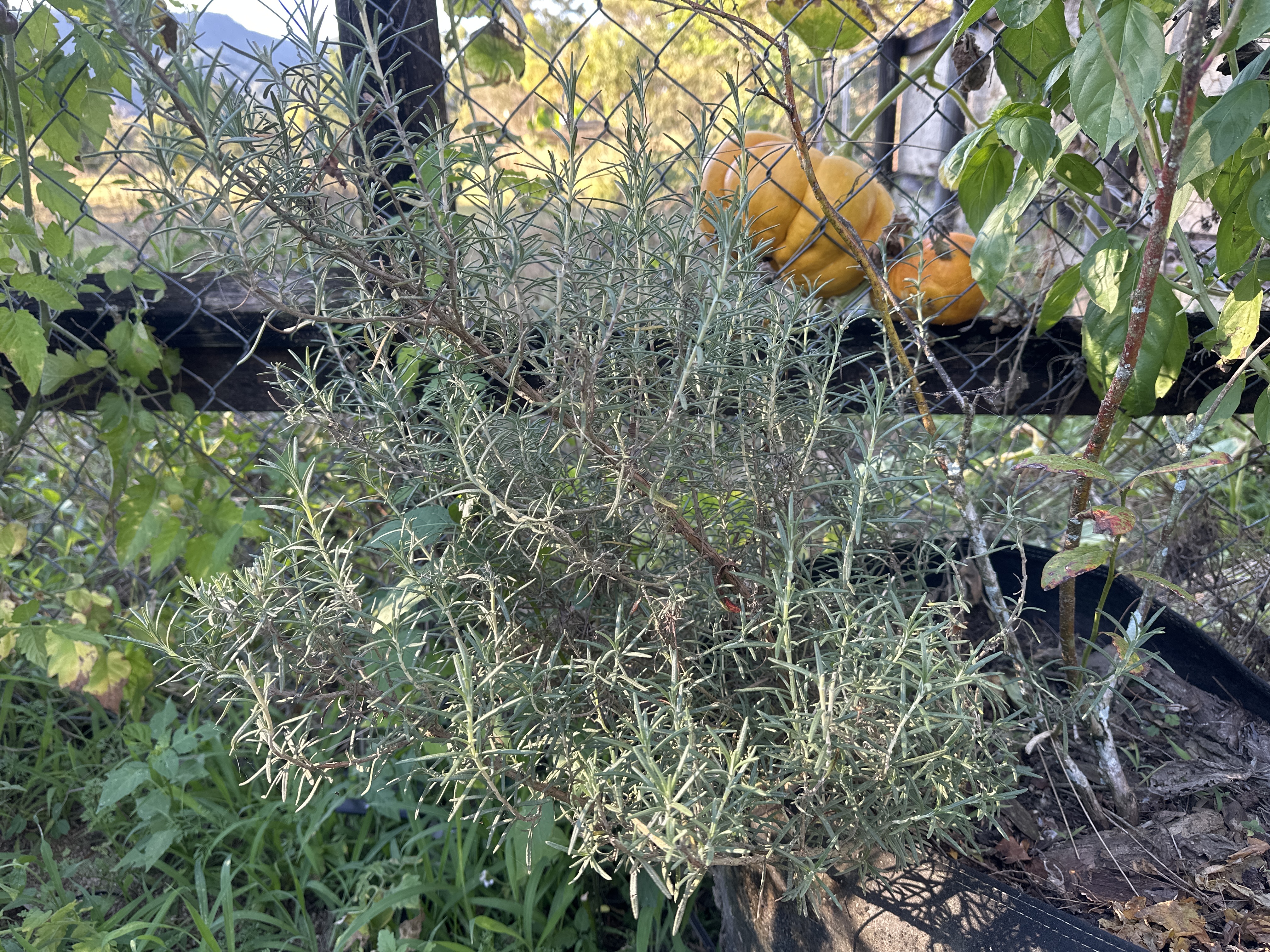
Plant profile
Rosemary
Salvia rosmarinus
Also known as Rosmarinus officinalis.
Rosemary is a woody perennial herb from the Mediterranean that grows well in sunny, well-drained gardens. Once established it needs little water or fertiliser, and you can harvest leafy stems throughout the year. It also grows readily from cuttings, so one good plant can supply plenty more.
- Grows well in
- Subtropical, Temperate, Cool / mountains, Arid / inland, Mediterranean
- Lifecycle
- Evergreen woody perennial herb.
- Light
- Full sun
- Mature size
- Upright rosemary commonly reaches about 1–1.5 m tall and wide. Prostrate cultivars may stay below 30 cm high while spreading much farther.
- Spacing
- Allow about 60–100 cm between ordinary upright plants. You can plant more closely if you are deliberately growing rosemary as a clipped hedge.
- Growth habit
- An evergreen woody shrub with narrow aromatic leaves. Cultivars range from upright, bushy plants to low, spreading forms that trail over walls and banks.
- Native range
- Mediterranean region
- Natural habitat
- Dry Mediterranean scrub, rocky slopes and coastal hillsides.
When to plant
Subtropical
March–September
Temperate
March–October
Cool / mountain
August–October
Arid inland
March–September
Mediterranean
March–October
In warm climates, autumn and the drier parts of winter and spring are good planting times because the roots can establish without constant summer rain. In cool and temperate areas, plant from spring into early autumn and avoid planting into cold, waterlogged winter soil.
Planting
Plant rosemary in a sunny position where water drains away quickly after rain. In heavy soil, plant it on a mound or raised bed, or improve the planting area with materials that increase drainage. Give plants enough room for air to move through the foliage, particularly in humid climates.
Position and light
Full sun is best. Rosemary can grow in some light shade, but plants tend to become more open and produce less dense growth.
Soil
Rosemary grows in a wide range of soils as long as they drain freely. It does well in sandy, gravelly and relatively low-fertility ground. Heavy soil that remains soggy after rain is much more likely to cause problems.
Watering
Water regularly while new plants establish. Once the roots are well developed, rosemary is quite drought tolerant and usually needs little extra water in the ground. Let the soil begin to dry between waterings rather than keeping it continually moist.
Feeding
Rosemary needs very little fertiliser in the ground. Compost at planting or an occasional light top-dressing is usually enough. Too much nitrogen can produce soft, leafy growth without improving the flavour or health of the plant.
Pruning
Trim rosemary regularly if you want a dense, compact shrub. Pruning after flowering is a good time to reshape larger plants. Avoid cutting an old plant right back into thick, leafless wood unless you know the cultivar will reshoot from it.
Harvest
Pick leafy stems whenever you need them. Regular harvesting also helps keep the plant bushy. For drying, cut healthy stems and strip or dry the leaves soon after harvest.
Propagation
Rosemary grows easily from cuttings. Take softwood or semi-hardwood tip cuttings from healthy, non-flowering shoots, remove the lower leaves and place them into a free-draining propagation mix. Seed is possible, but cuttings are faster and keep the characteristics of the parent plant.
Common problems
Rosemary loves drainage, and roots can rot if the soil stays saturated, especially in warm, humid weather. Dense growth with poor airflow can also develop fungal problems. Spider mites, scale and other sap-feeding insects sometimes gather on stressed plants, particularly those grown in pots.
Safety notes
Rosemary is widely used as a culinary herb. The concentrated essential oil is much stronger than the leaves used in food and should not be treated in the same way.
Worth knowing
Rosemary handles dry soil much better than soil that stays saturated. In humid climates, good drainage and airflow become especially important because warm, constantly damp conditions increase the risk of root and stem diseases.

Grow Rosemary with Brancho
Add it to My Garden and Brancho works out what it needs next, timed for your climate.
How it grows around Australia
Growing this too? Share what you've noticed in your garden.

Grow a Little Wild
New plants to try, useful growing tips and a few garden jobs based on what you grow.