


Plant profile
Rubber plant
Ficus elastica
Also known as Rubber tree, Indian rubber plant, Indian rubber tree, Assam rubber.
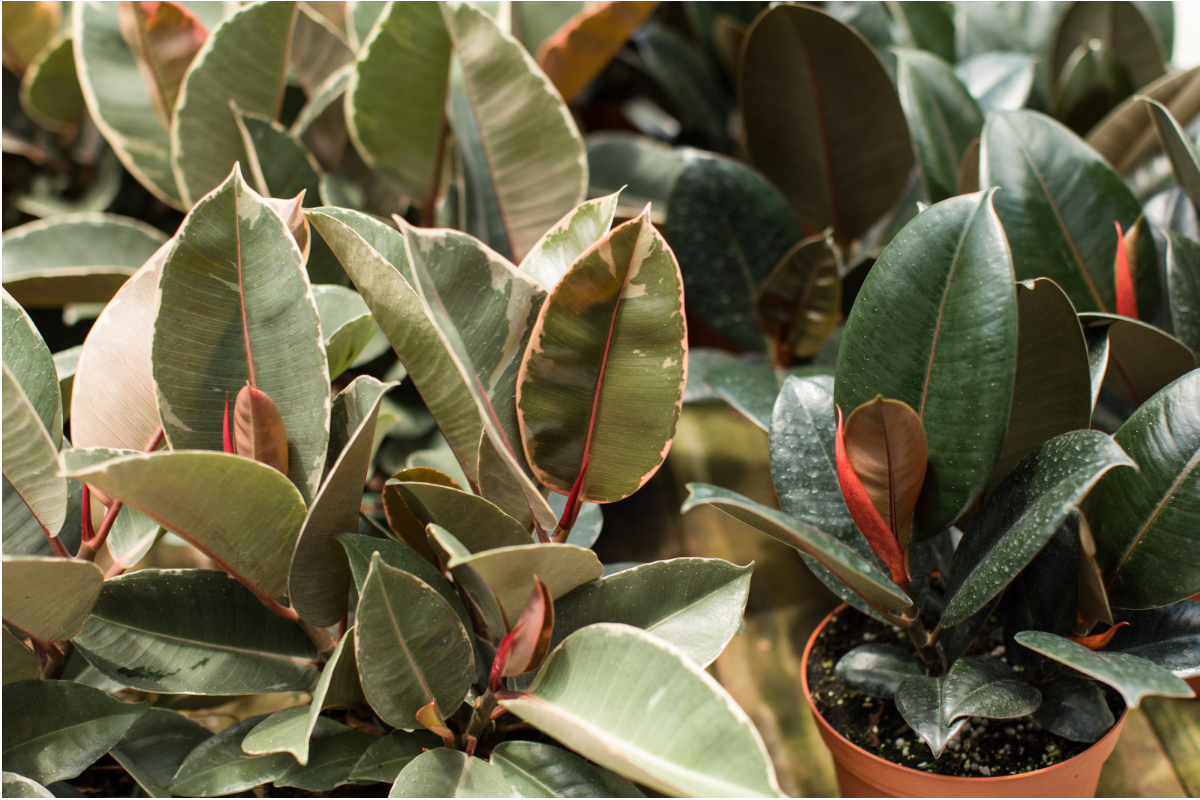
Rubber plant is a glossy-leaved fig that makes a bold indoor foliage plant and can become a very large tree in warm ground. In a pot, you can keep it compact with good light and regular pruning.
- Grows well in
- Tropical, Subtropical, Temperate
- Lifecycle
- Evergreen perennial tree
- Light
- Part shade
- Mature size
- About 1–3 m in a managed pot; in warm ground it can become a very large tree well over 10 m tall with powerful roots.
- Spacing
- Keep container plants individually potted. In the ground, allow at least 4–6 m from other large plants and much more space around structures.
- Growth habit
- Evergreen fig tree with a strong central trunk, broad leathery leaves and potentially massive roots and canopy outdoors.
- Native range
- Nepal through western Yunnan in China to the western Malay Archipelago
- Natural habitat
- Wet tropical forest, where it grows into a large tree and can begin life on other trees or rocky surfaces.
When to plant
Tropical
February–October
Subtropical
September–April
Temperate
October–March
Mediterranean
October–March
Repot in late winter through spring or during warm active growth. Outdoor planting, where appropriate, should wait for warm frost-free conditions.
Planting
For indoor and patio growing, use a sturdy pot with good drainage. If you plant it in the ground in a warm climate, give it tree-scale space away from paving, pipes and walls.
Position and light
Bright indirect light is ideal. Indoors, avoid sudden moves between very different light levels. Outdoors, use bright filtered light or morning sun rather than harsh exposed afternoon sun.
Soil
Use a quality free-draining potting mix with enough structure to support a large plant. In the ground it tolerates a range of fertile soils but should not sit waterlogged.
Watering
Water when the upper mix is nearly dry, then water thoroughly and drain. Aim for consistency rather than a rigid calendar; sudden shifts between very wet and very dry can trigger leaf drop.
Feeding
Feed during spring and summer with a balanced fertiliser at the label rate. Large vigorous plants use more nutrients than slow indoor specimens, but avoid heavy feeding in winter.
Pruning
Prune in warm weather to control height and encourage branching. Wear gloves and protect surfaces from the sticky white latex. Large potted plants can also be root-pruned when repotted to keep them manageable.
Propagation
Stem cuttings and air layering both work well during warm active growth. Cuttings need warmth, humidity and a free-draining propagation mix while roots form.
Common problems
Leaf drop often follows sudden changes in light, temperature, moisture or airflow. Also watch for scale, thrips, spider mites and root rot from overwatering.
Safety notes
The white latex sap is sticky and can irritate skin. Avoid contact with eyes and wash sap from skin promptly.
Worth knowing
Rubber plants branch readily after pruning, so you can turn a tall single stem into a fuller plant. Their big glossy leaves collect dust indoors; wipe them occasionally to keep them looking good and to spot scale or mites on the undersides of leaves.
Featured In

Grow Rubber plant with Brancho
Add it to My Garden and Brancho works out what it needs next, timed for your climate.
How it grows around Australia
Growing this too? Share what you've noticed in your garden.
Grow a Little Wild
New plants to try, useful growing tips and a few garden jobs based on what you grow.