

Plant profile
ZZ plant
Zamioculcas zamiifolia
Also known as Zanzibar gem, Zee-zee plant, Zamioculcas, Fortune plant.
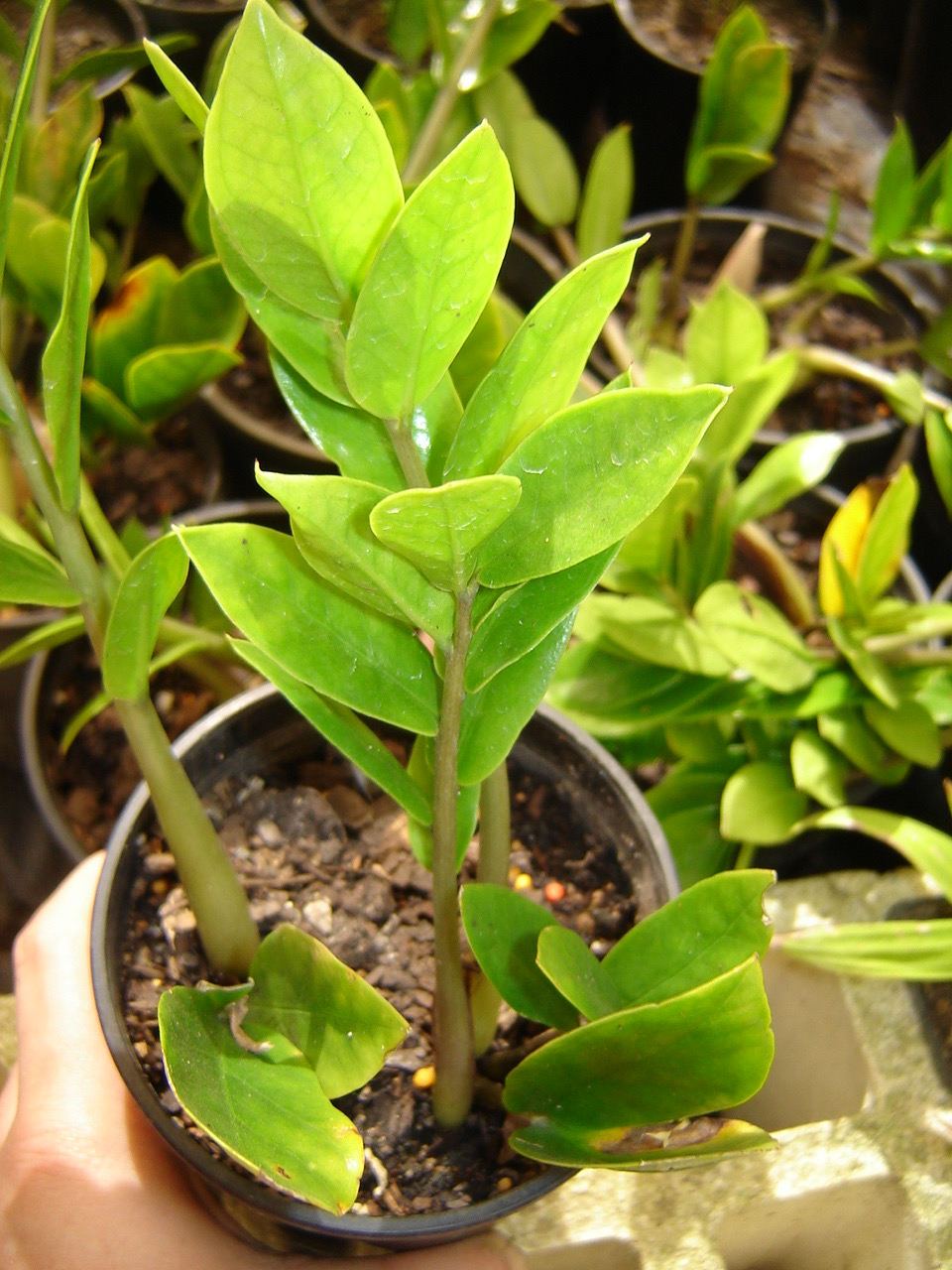
ZZ plant is one of the toughest glossy-leaved foliage plants you can grow. Its thick underground rhizomes store water, so it handles dry shade and missed waterings far better than constantly wet soil.
- Grows well in
- Tropical, Subtropical, Temperate, Arid / inland, Mediterranean
- Lifecycle
- Evergreen rhizomatous perennial
- Light
- Part shade, Shade
- Mature size
- Usually about 45–90 cm tall and 45–75 cm wide, slowly expanding as new shoots rise from the rhizomes.
- Spacing
- About 45–60 cm apart in warm shaded gardens, or one clump per pot with room for the rhizomes to expand.
- Growth habit
- Slow-growing clumping aroid with thick underground rhizomes and upright fleshy leaf stalks carrying glossy leaflets.
- Native range
- Kenya to KwaZulu-Natal
- Natural habitat
- Seasonally dry tropical woodland, rocky ground and shaded forest margins.
When to plant
Repot in spring or warm active growth if possible. Indoors, urgent repotting can be done at other times, but avoid keeping freshly disturbed roots cold and wet.
Planting
Use a pot with drainage and a loose, free-draining mix. Do not bury the rhizomes deeply. Outdoors, grow only in a warm sheltered position without frost.
Position and light
Medium to bright indirect light gives the best growth, but ZZ plant tolerates low light and dry shade exceptionally well. Protect it from strong direct sun, which can scorch the glossy leaflets.
Soil
Use a premium potting mix opened up with perlite, coarse bark or another drainage material. In the ground, choose porous soil in a sheltered shaded position.
Watering
Let the mix dry substantially before watering again. The swollen rhizomes store water, so overwatering is far more dangerous than an occasional dry period. Reduce water sharply in cool or low-light conditions.
Feeding
Feed lightly during active growth, around every two months, with a balanced indoor-plant fertiliser at the label rate. Skip feeding if the plant is not producing new growth.
Pruning
Remove yellow, damaged or collapsed stalks at soil level. No shaping prune is normally needed. Divide crowded rhizomes when the pot is badly congested.
Propagation
Division is quickest: separate rhizome sections with roots and shoots. Individual leaflets or stem sections can also root, but they take much longer to form a new rhizome and shoot.
Common problems
Yellowing and soft stems usually point to overwatering or root rot. Also watch for scale and mealybugs. Very low light will not kill the plant quickly, but growth can become extremely slow.
Safety notes
All parts are potentially toxic if chewed or swallowed and can irritate skin or eyes. Keep away from children and pets that chew plants, and wash sap from skin.
Worth knowing
ZZ plant can survive a long dry period by drawing on its potato-like rhizomes. If it drops leaves after severe drought, the rhizome may still be alive and capable of reshooting.
Featured In

Grow ZZ plant with Brancho
Add it to My Garden and Brancho works out what it needs next, timed for your climate.
How it grows around Australia
Growing this too? Share what you've noticed in your garden.
Grow a Little Wild
New plants to try, useful growing tips and a few garden jobs based on what you grow.