
Plant profile
Bougainvillea
Bougainvillea glabra
Also known as Paper flower, Lesser bougainvillea.
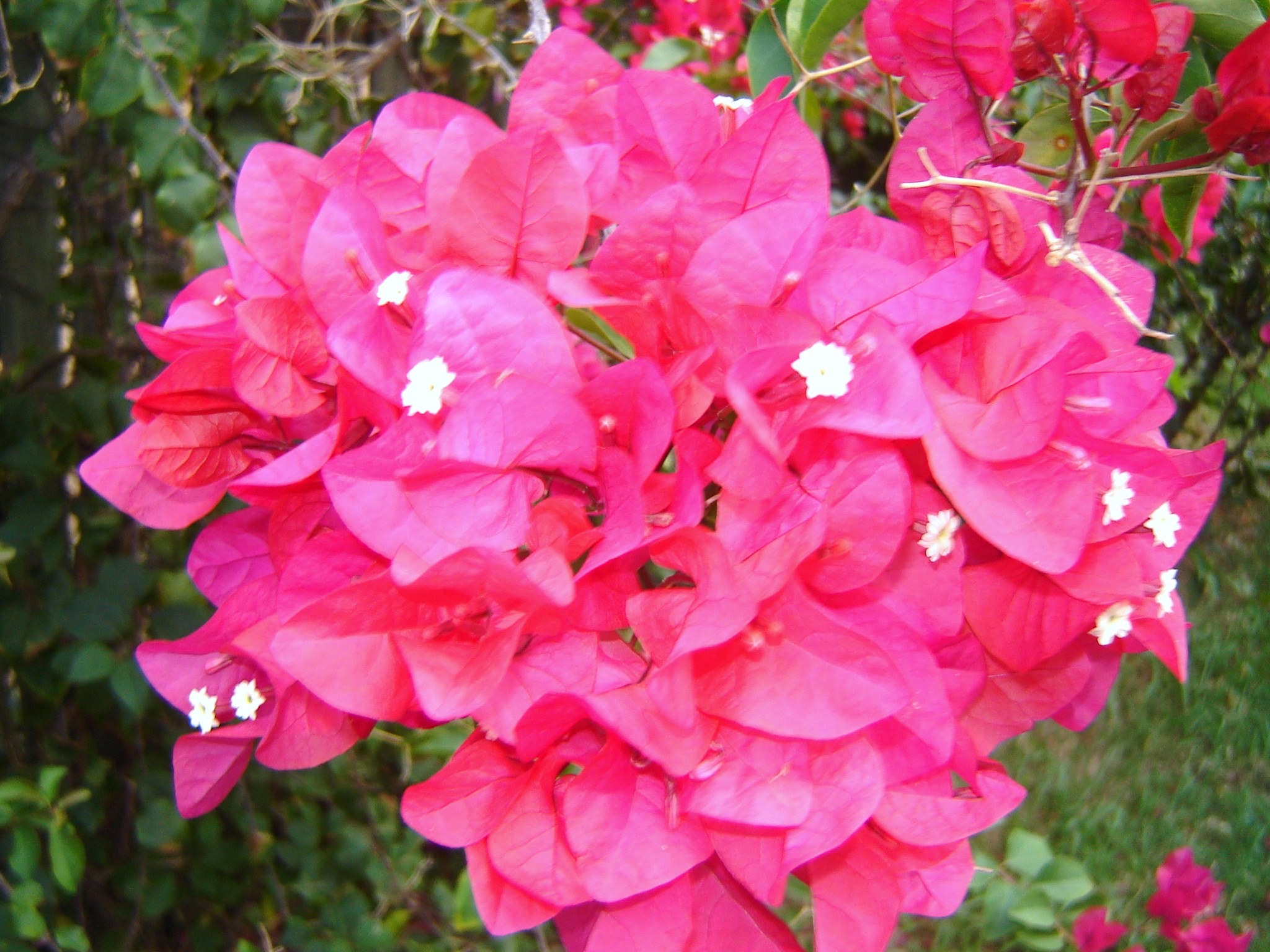
Bougainvillea is a thorny scrambling shrub or climber grown for brilliant coloured bracts. Heat, sun and fairly lean soil bring the strongest display.
- Grows well in
- Tropical, Subtropical, Mediterranean
- Lifecycle
- Evergreen to semi-evergreen woody climber
- Light
- Full sun
- Mature size
- Commonly 3–8 m with support, depending on pruning
- Spacing
- About 2–4 m apart for large plants
- Growth habit
- Thorny scrambling shrub or vigorous woody climber
- Native range
- Eastern and southern Brazil
- Natural habitat
- Well-drained sandy or rocky ground on slopes and uplands, including disturbed sites, from near sea level to about 1,000 m.
When to plant
Tropical
February–May, September–November
Subtropical
March–May, September–November
Temperate
September–November
Mediterranean
September–November
Tropical and subtropical: plant in warm weather. Mediterranean: spring after frost risk.
Planting
Plant into a sunny free-draining position beside a strong support, wall or fence. Avoid burying the root ball too deeply.
Position and light
Full sun.
Soil
Light, free-draining soil. Rich wet soil produces more leaf growth and fewer bracts. It tolerates poor, sandy or gravelly soils and mildly alkaline conditions, and rarely needs soil improvement once established.
Watering
Water regularly while establishing, then let the soil dry slightly between deep waterings. Once the root system is established, mature plants tolerate extended dry periods and often flower more heavily under mild moisture stress; constant heavy watering favours leaf growth over bracts.
Feeding
Feed lightly. Excess nitrogen pushes leafy growth at the expense of flowering. A fertiliser formulated for flowering shrubs, lower in nitrogen and higher in potassium, applied in spring and again after the first flush, supports repeat flowering.
Pruning
Prune after a flowering flush to control size and direct new shoots. Wear gloves around the thorns. Remove any vigorous plain-coloured shoots that appear on grafted plants, since these can outgrow and eventually replace the named colour if left unchecked.
Propagation
Semi-hardwood cuttings are commonly used.
Common problems
Scale, mealybugs and root rot can occur. Heavy shade reduces flowering.
Safety notes
Thorns can cause injury; sap may irritate sensitive skin.
Worth knowing
The colourful part of a bougainvillea flower is a set of papery bracts; the true flowers are small and white, tucked in the centre of each bract cluster. Because most garden colours are grafted or selected sports of a vigorous species, a plant can occasionally throw a shoot back to plain magenta or cerise if that growth is not removed. Bougainvillea also resents root disturbance, so container-grown stock establishes far more reliably than bare-rooted plants. In warm coastal districts it is often trained as a hedge, espalier or standard, and old plants can be cut back hard and will usually reshoot from bare wood.
Grow Bougainvillea with Brancho
Add it to My Garden and Brancho works out what it needs next, timed for your climate.
How it grows around Australia
Growing this too? Share what you've noticed in your garden.
Grow a Little Wild
New plants to try, useful growing tips and a few garden jobs based on what you grow.