


Plant profile
Carrot
Daucus carota subsp. sativus
Also known as Carrots.
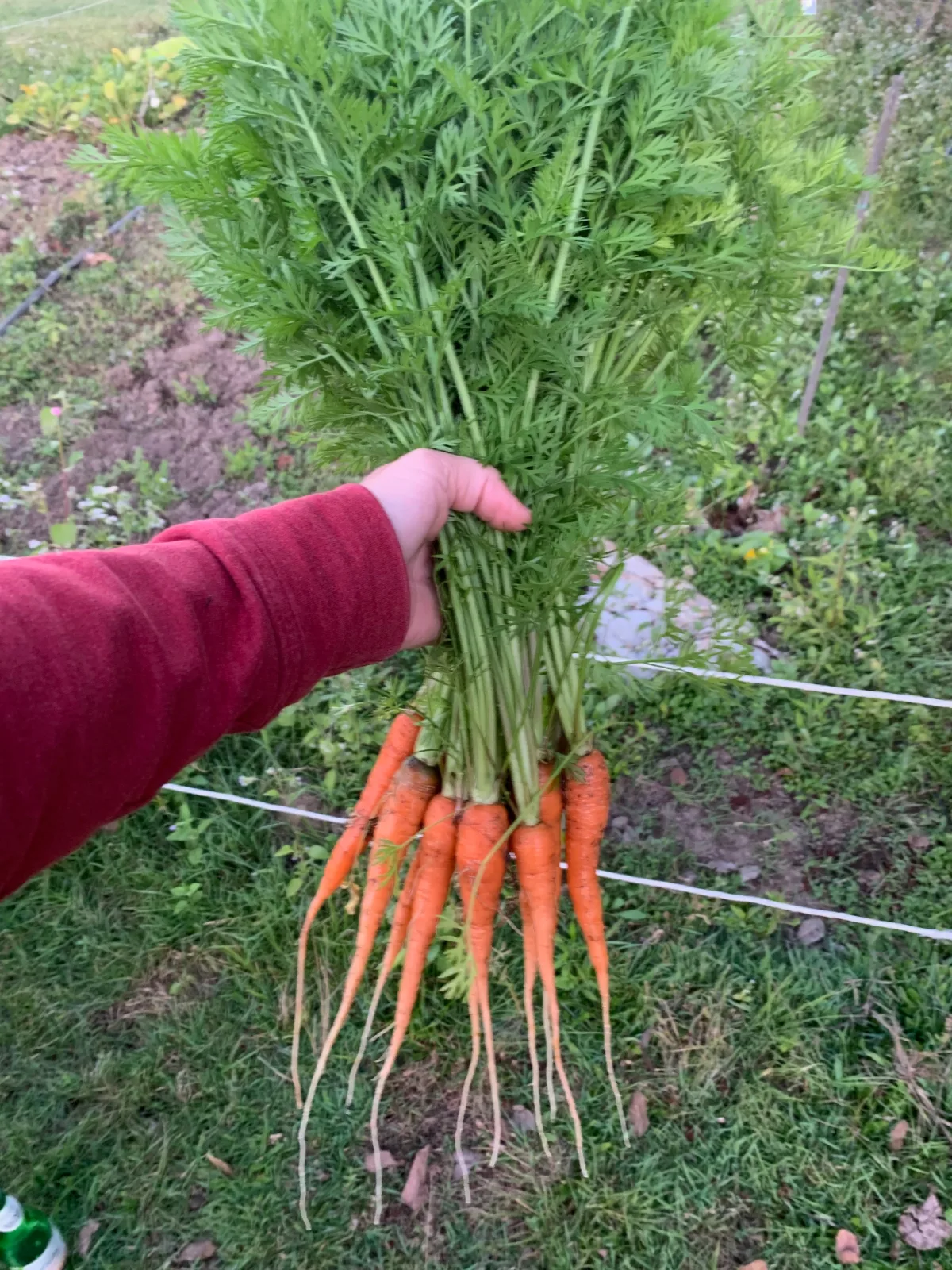
Carrots are direct-sown root crops that need loose soil and steady moisture while the tiny seed is germinating.
- Grows well in
- Tropical, Subtropical, Temperate, Cool / mountains, Arid / inland, Mediterranean
- Lifecycle
- Cool to mild-season annual root crop
- Light
- Full sun, Part shade
- Mature size
- Leafy tops usually reach about 20–40 cm tall; root length and width vary considerably between varieties.
- Spacing
- Thin seedlings to roughly 5–8 cm apart for good-sized roots.
- Growth habit
- Low leafy rosette that forms a single fleshy taproot beneath the soil.
- Native range
- An ancient cultivated form originating from Central Asia to Afghanistan
- Natural habitat
- A long-cultivated root crop rather than a plant with one clearly defined wild habitat.
When to plant
Tropical
April–August
Subtropical
March–September
Temperate
February–June, August–November
Cool / mountain
March–June, September–November
Arid inland
March–September
Mediterranean
March–June, August–November
Planting
Direct sow seed into deep, fine, stone-free soil. Transplanting can damage the taproot. Sow shallowly and keep the surface moist until germination.
Position and light
Full sun is best, with light part shade useful in hot weather.
Soil
Deep, loose and friable soil gives roots room to grow straight. Avoid fresh manure and heavy fertiliser before sowing, since both can cause roots to fork or grow hairy side roots.
Watering
Keep the seedbed consistently moist through germination. After establishment, water deeply enough to support even root growth.
Feeding
Carrots need little extra feeding in a well-prepared bed. Too much nitrogen can produce excessive tops and poor roots.
Pruning
No pruning is needed. Thin crowded seedlings rather than trying to move them.
Harvest
Baby carrots can be taken while young. Most varieties reach useful size around 10 weeks, but cultivar and weather affect timing.
Propagation
Grow from seed. Allow selected plants to flower only if you deliberately want seed; carrot seed production is a longer biennial process.
Common problems
Forked or stunted roots are often caused by stones, compacted soil, fresh manure or root disturbance. Carrot fly occurs in some regions.
Worth knowing
Carrot varieties are usually grouped by root shape and length, from short round types suited to shallow or heavy soils to long tapered types that need deep, stone-free ground. Purple, yellow and white carrots are not novelties; anthocyanin- and carotenoid-pigmented types were common before the orange Dutch carrot became dominant. Carrot seed loses viability faster than many vegetable seeds, so buying fresh seed each season generally gives better germination than using old packets left over from a previous year.

Grow Carrot with Brancho
Add it to My Garden and Brancho works out what it needs next, timed for your climate.
How it grows around Australia
Growing this too? Share what you've noticed in your garden.
Grow a Little Wild
New plants to try, useful growing tips and a few garden jobs based on what you grow.