


Plant profile
Catnip
Nepeta cataria
Also known as catmint, cat herb.
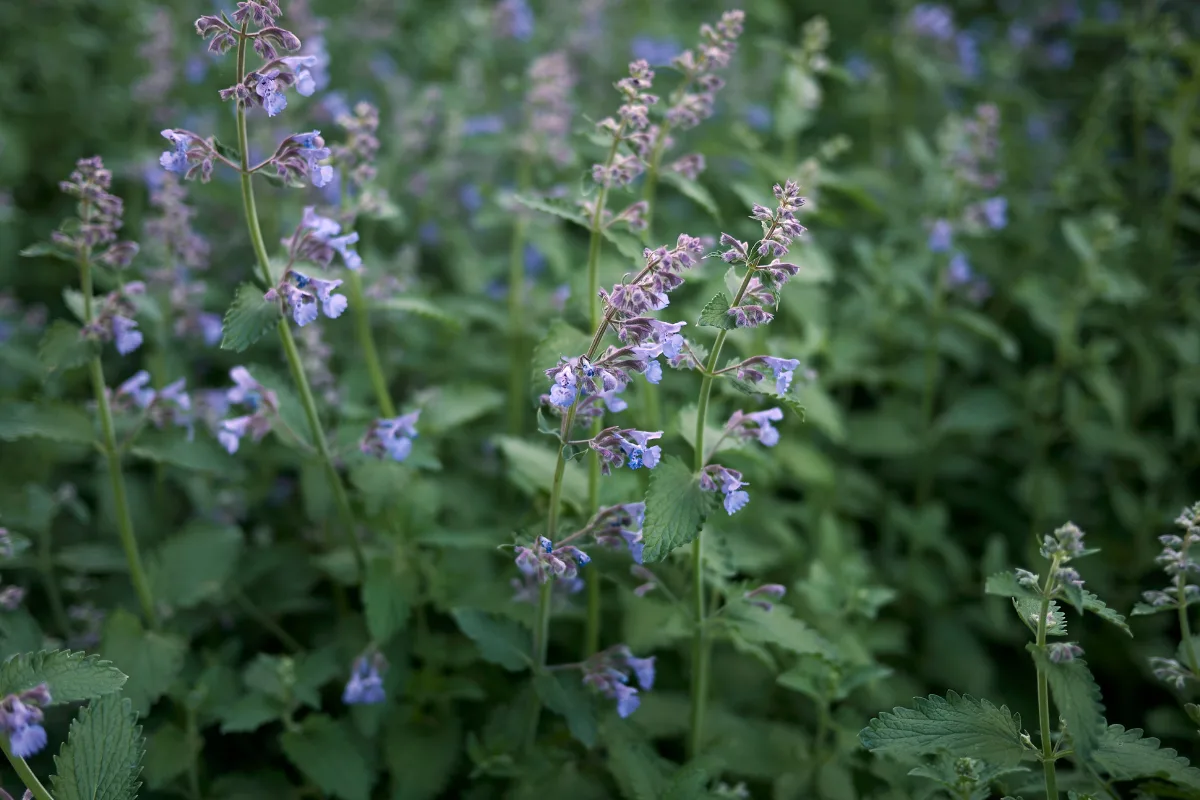
Catnip is an aromatic mint-family perennial with soft grey-green leaves and small white to pale lilac flowers marked with violet spots. Cats may roll on, chew or rub against the foliage, while bees also visit the flowers.
- Grows well in
- Subtropical, Temperate, Cool / mountains, Arid / inland, Mediterranean
- Lifecycle
- Short-lived herbaceous perennial with aromatic foliage
- Light
- Full sun, Part shade
- Mature size
- Usually 50–100 cm tall and around 40–80 cm wide, depending on climate, soil and pruning
- Spacing
- About 45–60 cm apart for individual plants; allow more room if you want a broad, informal clump
- Growth habit
- Loose, bushy herbaceous perennial with branched, square stems and soft grey-green leaves. It commonly forms a broad clump rather than the dense, mounded shape of many ornamental catmints.
- Native range
- Southern Europe to Japan, with a separate native range in north-western Morocco
- Natural habitat
- Temperate grassland, scrub, woodland edges and disturbed ground.
When to plant
Subtropical
March–June
Temperate
March–May
Cool / mountain
September–November
Arid inland
March–May
Mediterranean
March–May
Plant in autumn or spring through much of Australia. In subtropical climates, the cooler months are usually the easiest time to establish plants before summer heat and humidity. In cool districts, plant after the worst winter cold has passed.
Planting
Plant into free-draining soil in an open position. Catnip does not need highly improved soil, but it establishes more reliably if the root zone is not waterlogged. If cats are likely to roll on young plants, protect them with a small cage or place them where nearby seedlings will not be flattened. A wide pot is useful if you want to limit self-seeding.
Position and light
Full sun gives the strongest, most compact growth and flowering. Part shade is suitable, especially where summers are very hot; in warm subtropical gardens, some afternoon shade can help reduce heat stress.
Soil
Most ordinary garden soils are suitable if they drain freely. Catnip grows in sandy, loamy and relatively lean soils and does not need a rich bed. Avoid sites that remain saturated after rain.
Watering
Water regularly while new plants establish. Once rooted in, catnip handles some drying between waterings and usually needs only occasional extra water in the ground. Containers dry faster, so check them more often. Avoid keeping the mix constantly wet.
Feeding
Usually very little is needed. Compost at planting or a light top-dressing is enough in most garden soil. Too much nitrogen can produce soft, floppy growth; container plants may need an occasional light feed if growth becomes pale or slow.
Pruning
Harvesting and light trimming help keep plants compact. After the main flush of flowering, cut stems back to encourage fresh leafy growth. Remove flower heads before seed matures if you do not want seedlings appearing around the garden.
Harvest
Pick young leafy stems as needed, preferably before or around early flowering when the foliage is still fresh. Use them fresh or dry small bunches in an airy, shaded place, then strip the leaves once crisp. Regular harvesting also helps keep the plant from becoming tall and open.
Propagation
Grow from seed, softwood or semi-ripe cuttings, or divide established clumps. Seed is easy but seedlings may appear around the parent plant on their own. Cuttings and division are useful when you want another plant with the same characteristics as the parent.
Common problems
Slugs and snails can damage young growth, and aphids or mites may appear on stressed plants. Powdery mildew can occur where plants are crowded or under stress. The two most common practical problems are cats flattening young plants and unwanted seedlings appearing after seed is allowed to ripen.
Safety notes
Catnip affects many cats behaviourally. Keep dried material and concentrated products away from pets if they overconsume or become unwell.
Worth knowing
True catnip is Nepeta cataria and looks looser and softer than many ornamental catmints. Cutting it back after flowering keeps the plant fresh and leafy and usually encourages another flush of growth.

Grow Catnip with Brancho
Add it to My Garden and Brancho works out what it needs next, timed for your climate.
How it grows around Australia
Growing this too? Share what you've noticed in your garden.

Grow a Little Wild
New plants to try, useful growing tips and a few garden jobs based on what you grow.