


Plant profile
Cauliflower
Brassica oleracea (Botrytis Group)
Also known as cauli.
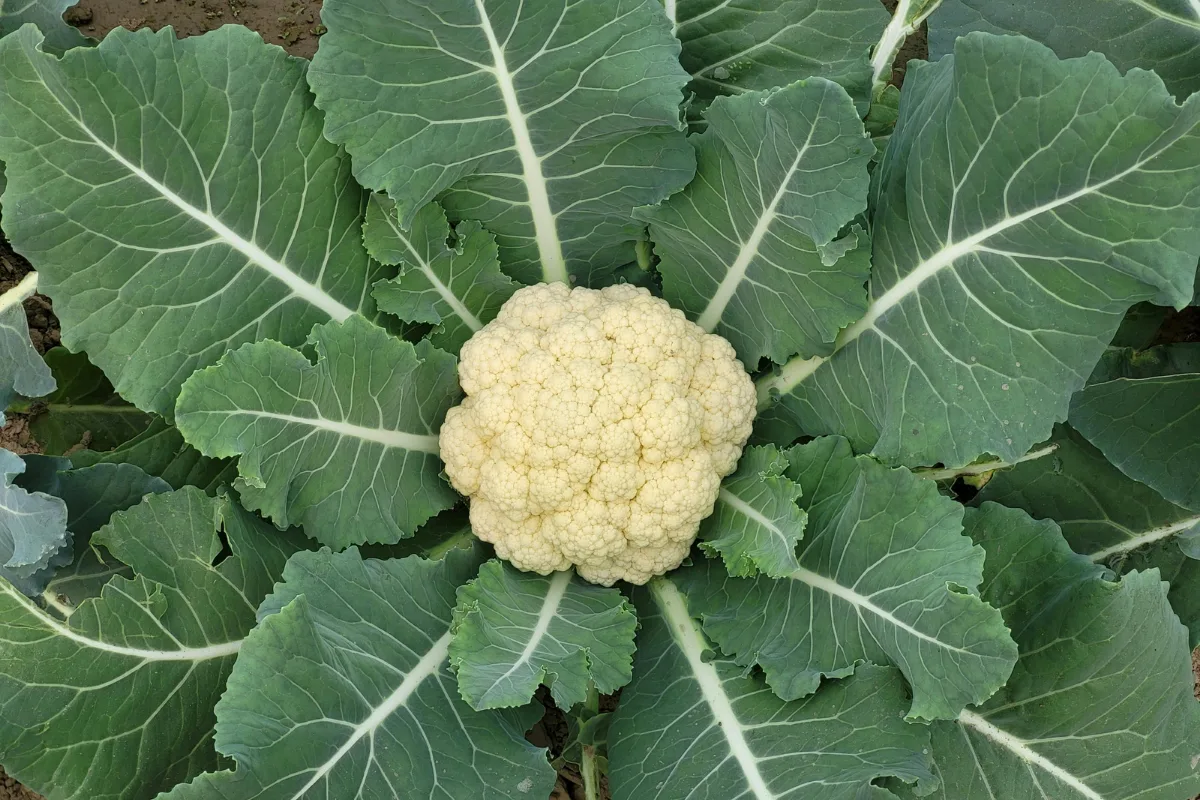
Cauliflower is a cool-season brassica grown for its dense, immature flower head, or curd. It grows best when conditions stay steady: fertile soil, regular moisture and mild temperatures. Heat, drought or interrupted growth can lead to small, loose or uneven heads, so matching the variety and planting time to your climate makes a real difference.
- Grows well in
- Tropical, Subtropical, Temperate, Cool / mountains, Arid / inland, Mediterranean
- Lifecycle
- Cool-season annual vegetable crop
- Light
- Full sun
- Mature size
- Usually about 40–70 cm tall and 50–70 cm wide, although vigorous varieties can spread farther
- Spacing
- Allow about 45–60 cm between plants, with roughly 60 cm between rows for full-sized varieties. Closer spacing can reduce head size.
- Growth habit
- A broad-leaved annual brassica that forms a single dense central curd made from tightly packed immature flower tissue
- Native range
- Cultivated group; its wild ancestor Brassica oleracea is native to the Atlantic coasts of Great Britain, France and Spain.
- Natural habitat
- Cultivated crop with no separate wild habitat; wild Brassica oleracea grows naturally on seaside cliffs.
When to plant
Tropical
March–June
Subtropical
March–July
Temperate
March–May, August–October
Cool / mountain
September–December
Arid inland
March–July
Mediterranean
March–July
Tropical and subtropical areas: grow mainly through the cooler months and choose quick or heat-tolerant varieties where needed. Temperate and Mediterranean areas: autumn and spring are common planting periods. Cool climates: spring into summer can work well, depending on variety and frost risk.
Planting
Start seed in punnets or sow direct, then transplant sturdy seedlings before they become root-bound. Handle the roots gently and keep the growing point above soil level. Space plants generously so the broad leaves have room and air can move through the crop. In warm districts, time planting so the head forms in the cooler part of the season.
Position and light
Full sun is best through cool weather. In hot inland, tropical or subtropical gardens, some late-afternoon shade can reduce heat stress, but too much shade usually gives smaller plants and poorer heads.
Soil
Cauliflower grows best in fertile, moisture-retentive but free-draining soil with plenty of compost or well-rotted organic matter. Aim for steady conditions rather than alternating between very dry and saturated soil. Brassicas also tend to perform poorly in strongly acidic soil, so check pH if crops repeatedly struggle.
Watering
Keep moisture even from transplanting through head formation. Cauliflower has a fairly shallow root system and drought stress can stall growth or produce small, loose heads. Water deeply enough to moisten the root zone, then water again before the soil dries hard. Mulch helps keep moisture and soil temperature more stable.
Feeding
Mix compost or well-rotted manure into the bed before planting. Cauliflower is a relatively hungry crop, so a balanced vegetable fertiliser can help where soil fertility is low. Nitrogen supports strong leaf growth early, but excessive feeding late in the crop is unlikely to rescue a plant that has already been stressed by heat or irregular watering.
Pruning
No routine pruning is needed. Remove badly damaged or diseased leaves if they are restricting airflow or touching the soil. Some gardeners fold a few outer leaves loosely over white heads as they develop to reduce yellowing or sun discolouration, but many modern varieties partly cover their own heads.
Harvest
Harvest when the head is full-sized for the variety, firm and tightly packed. Cut the main stem with a knife and leave a few surrounding leaves attached to protect the head. Do not wait for the curd to loosen, become ricey or begin separating into flower shoots, as quality drops quickly once that starts.
Propagation
Grow from seed. Sow in punnets or small cells for transplanting, or direct-sow when the weather is mild and seedlings can grow steadily. Protect young plants with fine mesh if leaf-chewing insects are taking too much foliage. Use successive sowings or varieties with different maturity times to spread the harvest.
Common problems
Cabbage white and cabbage moth caterpillars can chew leaves, while aphids take sap and snails or slugs may feed on young plants. Fine insect mesh protects developing cauliflower heads if you prefer not to share the crop. Clubroot is a soil-borne disease that becomes more likely when brassicas are grown repeatedly in the same ground. Heat, drought or disturbed roots can also leave plants with small or loose heads.
Safety notes
The harvested head and leaves are edible. As with other brassicas, wash produce well and check between the curds for caterpillars or other insects before cooking or eating.
Worth knowing
Cauliflower is less forgiving of interrupted growth than many other brassicas. Choose a variety whose maturity period fits your season, then keep water and nutrition steady while the plant builds its leaves and head. White, purple, orange and green-headed cultivars are available, and some differ considerably in heat tolerance and time to harvest.

Grow Cauliflower with Brancho
Add it to My Garden and Brancho works out what it needs next, timed for your climate.
How it grows around Australia
Growing this too? Share what you've noticed in your garden.
Grow a Little Wild
New plants to try, useful growing tips and a few garden jobs based on what you grow.