
Plant profile
Celery
Apium graveolens
Also known as Stick celery.
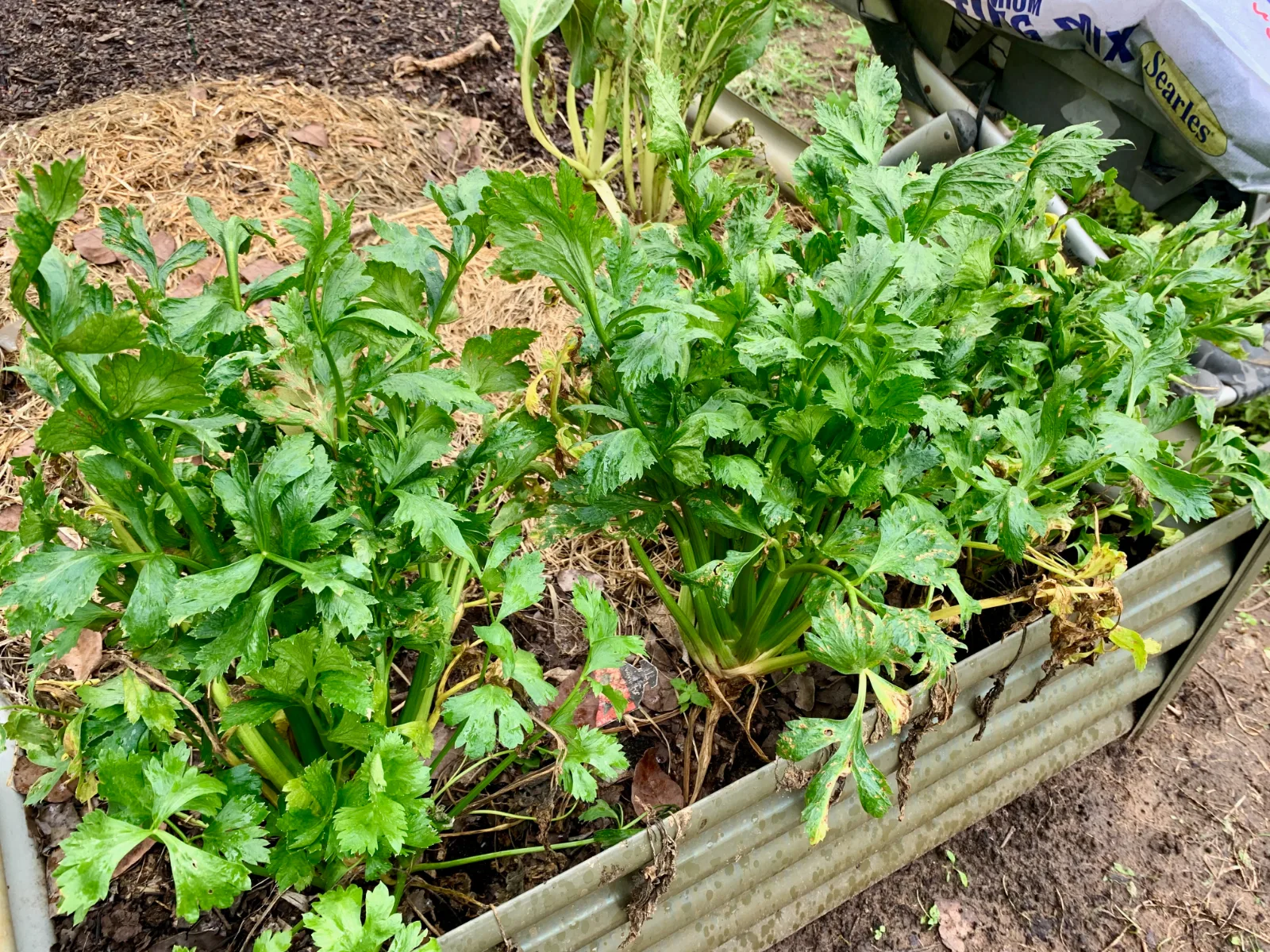
Celery is a moisture-loving biennial usually grown as a cool-season vegetable. Fast steady growth gives the best tender stems.
- Grows well in
- Tropical, Subtropical, Temperate, Cool / mountains, Arid / inland, Mediterranean
- Lifecycle
- Biennial vegetable usually grown as an annual
- Light
- Full sun, Part shade
- Mature size
- Usually about 30–60 cm tall and 20–30 cm wide when mature.
- Spacing
- About 20–30 cm apart, with roughly 30 cm between rows.
- Growth habit
- Upright leafy rosette producing thick, fleshy leaf stalks around a short central crown.
- Native range
- Atlantic islands west of Europe and North Africa, then through North Africa, Europe and western Asia to the western Himalayas
- Natural habitat
- Temperate wet ground, salt marshes, stream margins and other damp open habitats.
When to plant
Tropical
April–August
Subtropical
February–May, August–October
Temperate
February–April, August–October
Cool / mountain
August–October
Arid inland
February–May, August–October
Mediterranean
February–April, August–October
Planting
Raise seedlings in moist conditions and transplant after about five to six weeks. Early spring and early autumn are useful planting times in many climates because they avoid extremes.
Position and light
Full sun in mild weather, with part shade useful in hotter districts.
Soil
Deep, fertile, moisture-retentive but well-drained soil. Working in plenty of aged compost or manure before planting helps the soil hold the steady moisture celery needs.
Watering
Celery needs regular water and should not be allowed to dry out repeatedly. In hot weather this can mean watering most days, since stringy, bitter stalks are usually the result of the soil drying out between waterings.
Feeding
Feed regularly during active growth; quick steady growth produces better stems. A liquid fertiliser applied every two to three weeks suits celery's constant nutrient demand better than one or two heavy feeds.
Pruning
No routine pruning is needed. Harvest outer stalks if you want a cut-and-come-again crop.
Harvest
Harvest outer stalks as needed or cut the whole plant once stems are large and crisp, often around 14 weeks.
Propagation
Grow from seed.
Common problems
Drying out, heat stress, slugs, snails and leaf disease can reduce quality.
Worth knowing
Celery is biennial, and a spell of cold weather while plants are young can trigger early flowering, or bolting, which spoils stalk quality. Self-blanching varieties need less earthing up than older trench types. Celery seed is slow to germinate and can take several weeks.

Grow Celery with Brancho
Add it to My Garden and Brancho works out what it needs next, timed for your climate.
How it grows around Australia
Growing this too? Share what you've noticed in your garden.
Grow a Little Wild
New plants to try, useful growing tips and a few garden jobs based on what you grow.