
Plant profile
Celosia
Celosia argentea
Also known as cockscomb, woolflower, Lagos spinach.
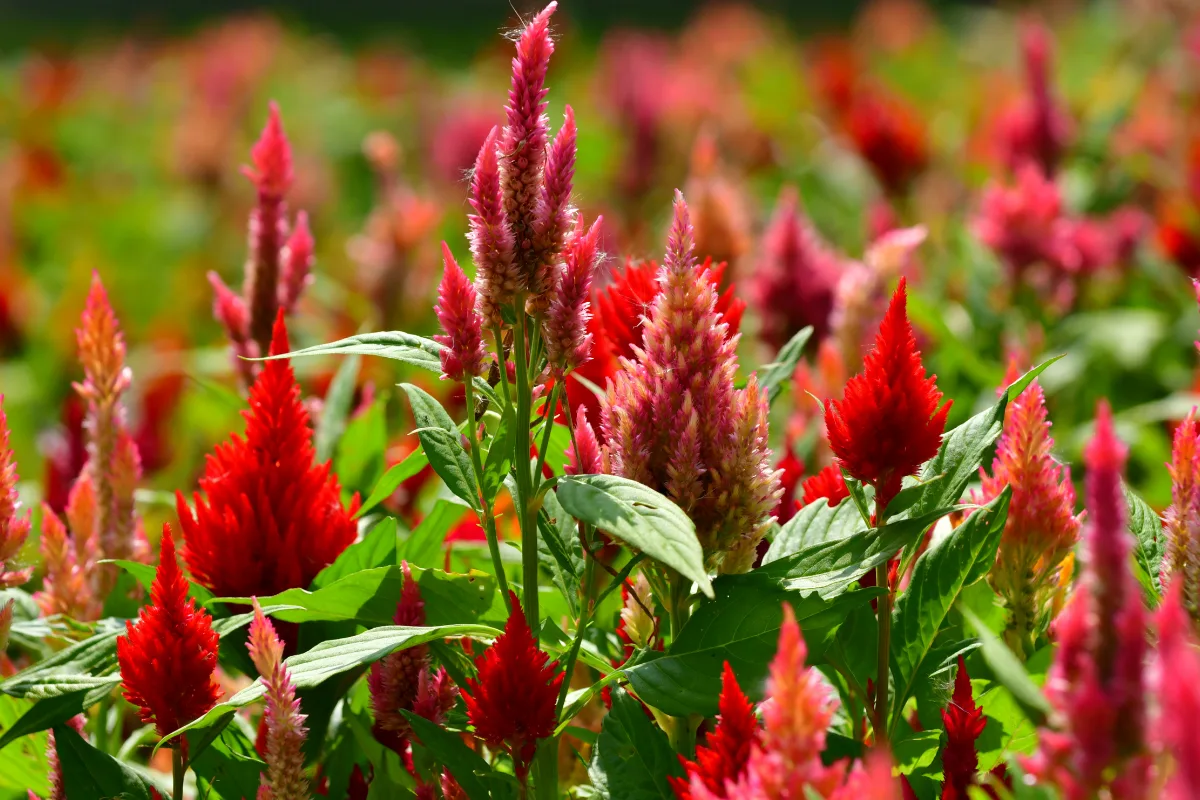
Celosia is a warm-season annual grown for vivid plumed, wheat-like or crested flower heads in red, orange, yellow, pink and purple. It flowers strongly in warm sunny weather and works well as both a fresh and dried flower.
- Grows well in
- Tropical, Subtropical, Temperate, Cool / mountains, Arid / inland, Mediterranean
- Lifecycle
- Warm-season annual
- Light
- Full sun
- Mature size
- Usually 20 cm to 1.2 m tall and about 20–60 cm wide, depending on cultivar
- Spacing
- About 20–40 cm apart for most garden cultivars; give tall or broad forms more room
- Growth habit
- Upright, branching annual with soft green foliage and plumed, wheat-like or crested flower heads, depending on cultivar
- Native range
- Tropical Africa
- Natural habitat
- Seasonally dry tropical grassland, savanna, open woodland and disturbed ground.
When to plant
Tropical
March–October
Subtropical
August–April
Temperate
October–February
Cool / mountain
November–February
Arid inland
September–March
Mediterranean
September–March
Sow or plant during the warm season. In temperate and cool districts, wait until frost has passed and the soil has warmed. In subtropical and tropical gardens, celosia can grow for much of the year, but avoiding the coolest weather and the most persistently wet, humid period can reduce disease problems.
Planting
Sow seed or transplant seedlings once the weather and soil are warm. Celosia grows quickly once temperatures rise, but young plants slow down in cold conditions. Plant into a free-draining bed and avoid crowding so air can move through the foliage, particularly in humid districts. Handle seedlings gently because they dislike prolonged root disturbance.
Position and light
Full sun gives the strongest stems, fullest flowering and brightest colour. Around six hours of direct sun is a good target. In very hot tropical or inland gardens, light afternoon shade can reduce heat stress without sacrificing too much flowering.
Soil
Use fertile, free-draining soil with compost or other organic matter worked through it. Celosia grows best where the root zone stays aerated after rain; cold, saturated soil can cause root and stem problems. In containers, use a quality potting mix that drains freely.
Watering
Water regularly while seedlings establish and while plants are actively flowering. Aim for even moisture without keeping the soil constantly wet. Once established, let the surface begin to dry between waterings. Pots and plants in hot weather may need checking daily, while cool or wet conditions call for less water.
Feeding
In reasonably fertile soil, compost at planting plus an occasional light feed is usually enough. A balanced fertiliser can help plants in pots or poor soil. Avoid heavy nitrogen feeding, which can produce soft leafy growth at the expense of strong flowering stems.
Pruning
Pinch the growing tips of young plants if you want a bushier plant with more flowering stems. Taller cultivars may benefit from support in exposed positions. Deadhead spent flowers to keep plants tidy and reduce self-seeding, or leave selected heads to mature if you want to save seed or dry them.
Harvest
Cut flower stems when the heads are well coloured and developed but still firm. For dried arrangements, harvest on a dry day, remove most leaves and hang small bunches upside down somewhere shaded and airy. Some forms of Celosia argentea are also grown as leafy vegetables.
Propagation
Grow celosia from seed. Sow the fine seed shallowly and keep the mix warm and lightly moist until germination. Seedlings grow quickly once conditions are warm. Plants may also self-sow in suitable climates, so collect mature seed heads before they shed if you want to control where new plants appear.
Common problems
Aphids, spider mites, caterpillars and slugs or snails may damage young growth. Fungal leaf and stem diseases are more likely where plants are crowded, repeatedly wet or growing through cool, humid weather. Root and stem rots are also associated with poor drainage. Weak, stretched plants usually need more light.
Worth knowing
Cockscomb, plume and wheat celosias all belong to the same broad species group but have very different flower shapes. Compact cultivars suit pots, while taller forms make excellent cut flowers.
Grow Celosia with Brancho
Add it to My Garden and Brancho works out what it needs next, timed for your climate.
How it grows around Australia
Growing this too? Share what you've noticed in your garden.
Grow a Little Wild
New plants to try, useful growing tips and a few garden jobs based on what you grow.