


Plant profile
Comfrey
Symphytum officinale
Also known as common comfrey, knitbone.
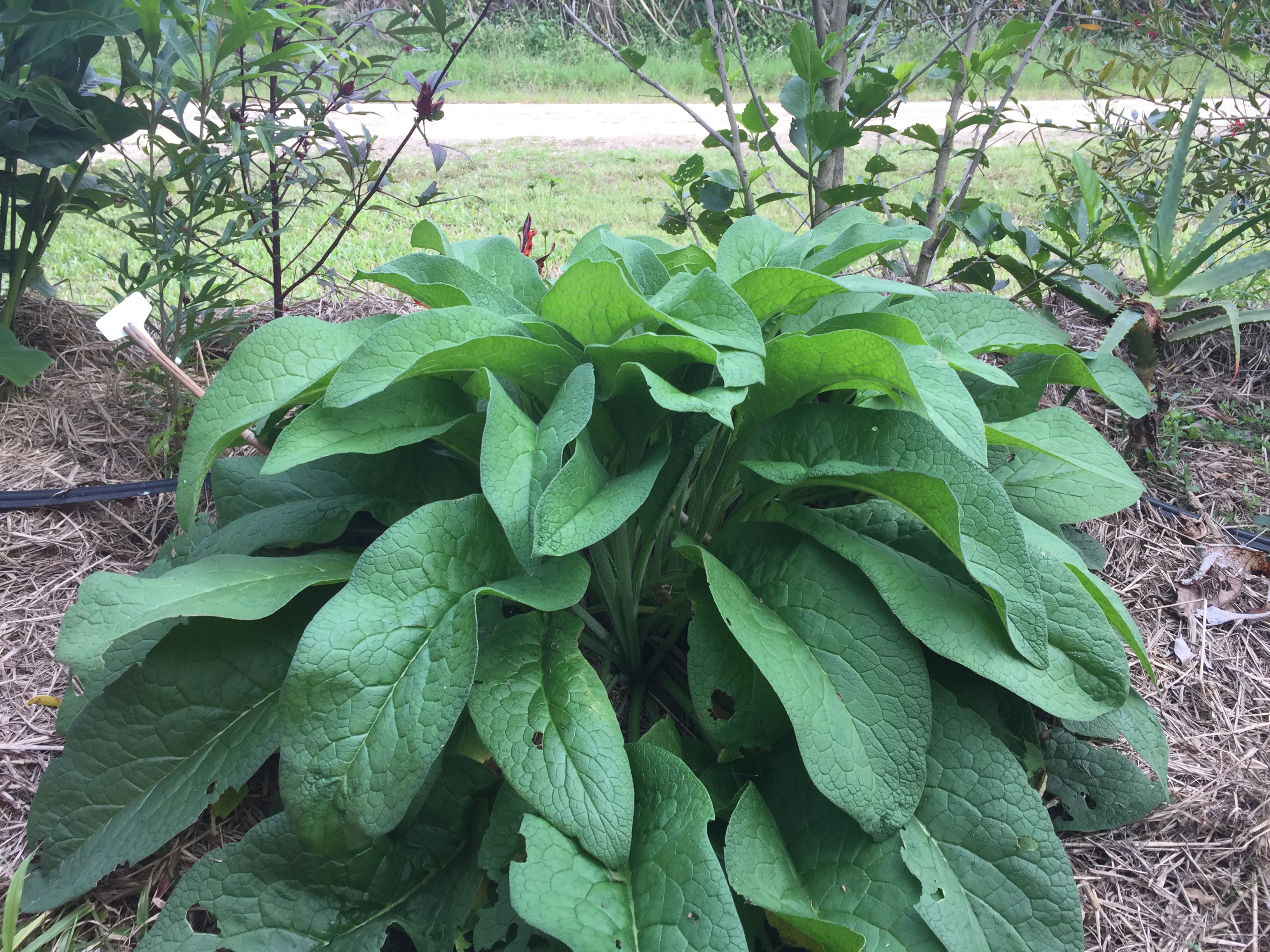
Comfrey is a deep-rooted perennial grown mainly for compost, mulch and biomass. It regrows quickly after cutting, so give it a permanent position rather than moving it around the garden.
- Grows well in
- Tropical, Subtropical, Temperate, Cool / mountains, Mediterranean
- Lifecycle
- Deep-rooted clumping perennial herb
- Light
- Full sun, Part shade
- Mature size
- Usually 60–100 cm tall and 60–90 cm wide
- Spacing
- About 60–90 cm apart
- Growth habit
- Large leafy perennial clump with deep roots
- Native range
- Europe to western Siberia and north-western Türkiye
- Natural habitat
- Temperate damp grassland, riverbanks, ditches and moist woodland edges.
When to plant
Tropical
March–June, September–November
Subtropical
March–May, September–November
Temperate
March–May
Cool / mountain
September–November
Mediterranean
March–May
In tropical and subtropical climates, plant divisions during a milder spell with reliable moisture; avoid the hottest, most stressful part of the wet season if the site is exposed. In temperate and Mediterranean climates, autumn or spring works well, while spring is safer in cold districts.
Planting
Choose a permanent bed where the plant can stay long term. Small root pieces can regrow, so avoid planting where you may later want it removed.
Position and light
Full sun to part shade. In hot tropical and subtropical gardens, some afternoon shade can keep the leaves in better condition and reduce stress through very hot weather.
Soil
Moist, fertile soil with good depth. Comfrey handles heavier ground better than many herbs but grows best where the root zone is not constantly stagnant.
Watering
Water regularly while establishing and after cutting if weather is dry. Established roots reach deeply, but fresh leaf production still responds to moisture. In the tropics, established plants can grow strongly through warm weather if the soil stays moist without remaining waterlogged.
Feeding
Top-dress with compost or manure if you are cutting leaves repeatedly for garden use. Heavy synthetic feeding is rarely necessary in a fertile bed.
Pruning
Cut old leaves close to the crown when harvesting biomass. Remove flower stems before seed matures if you do not want seedlings.
Harvest
Cut mature leaves for compost or mulch once the plant is established. Let plants regrow between cuts.
Propagation
Root cuttings and crown divisions are very easy. Even small root fragments can produce new plants.
Common problems
Snails may chew new leaves. The bigger management issue is persistence: roots left in the soil can regrow after the plant is dug out.
Safety notes
Comfrey contains pyrrolizidine alkaloids. Do not present garden comfrey as a food plant; internal medicinal use has safety concerns. The hairy leaves can also irritate sensitive skin.
Worth knowing
Comfrey is often associated with cool-climate gardens, but established plants can grow very well in tropical and subtropical areas too. Give it moisture, deep soil and some afternoon shade in very hot sites. For a biomass plant, a sterile or low-seeding comfrey cultivar can also be easier to contain than common comfrey grown from seed.

Grow Comfrey with Brancho
Add it to My Garden and Brancho works out what it needs next, timed for your climate.
How it grows around Australia
Growing this too? Share what you've noticed in your garden.
Grow a Little Wild
New plants to try, useful growing tips and a few garden jobs based on what you grow.