

Plant profile
Desert rose
Adenium obesum
Also known as adenium.
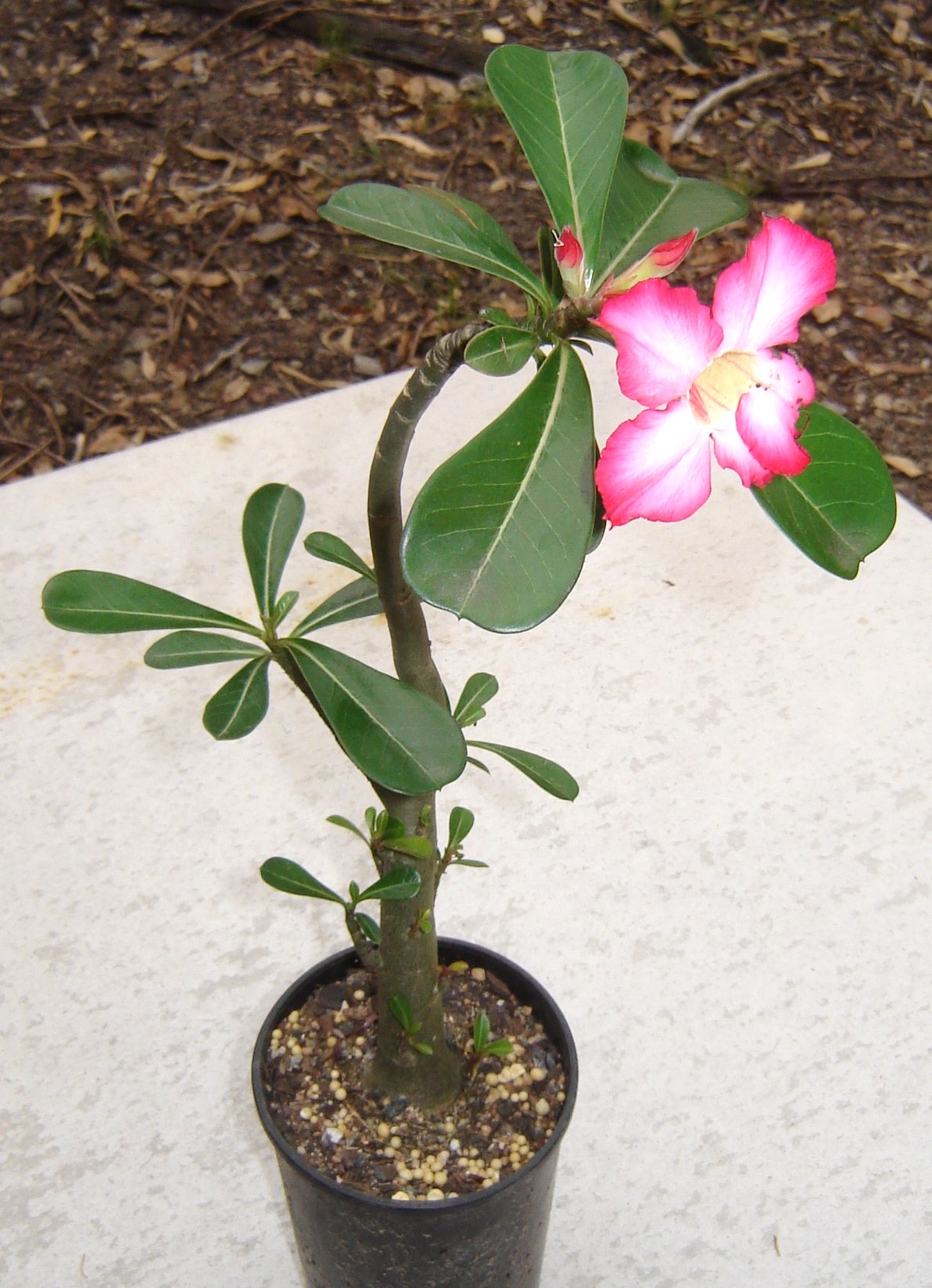
Desert rose combines a sculptural swollen trunk with gorgeous flowers in pink, red, white and other colours. It's a brilliant choice for a sunny, warm spot or a pot where you can admire that unusual shape. Give its roots an open, fast-draining mix and let the soil dry between waterings.
- Grows well in
- Tropical, Subtropical, Arid / inland, Mediterranean
- Lifecycle
- Long-lived semi-succulent flowering shrub
- Light
- Full sun
- Mature size
- Usually 1–2 m tall and wide
- Spacing
- About 1–1.5 m outdoors; one plant per substantial pot
- Growth habit
- Semi-succulent shrub with a swollen caudex
- Native range
- West tropical Africa through East Africa to the Arabian Peninsula
- Natural habitat
- Desert and dry shrubland, often on rocky or sandy ground.
When to plant
Tropical
August–September
Subtropical
September–October
Arid inland
September–October
Mediterranean
September–October
Repot at the start of warm active growth; in wet-summer climates, protect fresh roots and cuts from prolonged rain.
Planting
Plant high in a free-draining mix so water moves away from the swollen stem base. Use a heavy pot if the plant becomes top-heavy.
Position and light
Full sun for compact growth and flowering. Acclimatise shade-grown plants before harsh sun.
Soil
Very free-draining potting mix or raised garden soil. Good drainage is essential during prolonged rain.
Watering
Water during active warm growth, then let the mix drain and partly dry. Reduce water sharply during cool or dormant periods.
Feeding
Feed modestly during warm active growth with a balanced or flowering fertiliser.
Pruning
Prune for branching and shape during warm dry weather. Avoid major pruning in prolonged wet conditions.
Propagation
Seed produces the best swollen caudex but seedlings vary. Cuttings copy a cultivar more closely; grafting is common.
Common problems
Stem and root rot are the biggest risks. Aphids, mealybugs and mites can attack new growth.
Safety notes
Adenium sap is toxic and can irritate skin and eyes. Wear gloves and keep away from children and animals that may chew it.
Worth knowing
Desert rose is related to oleander and frangipani, not roses, and is widely grown as a bonsai-style container plant, where restricting the roots encourages a more pronounced swollen base. It originates in dry parts of East Africa and the Arabian Peninsula, which explains its poor tolerance of humid, wet summers unless drainage is excellent. Flower colour and form vary between named cultivars, and grafted plants combine a hardier rootstock with a particular chosen flower type.
Grow Desert rose with Brancho
Add it to My Garden and Brancho works out what it needs next, timed for your climate.
How it grows around Australia
Growing this too? Share what you've noticed in your garden.
Grow a Little Wild
New plants to try, useful growing tips and a few garden jobs based on what you grow.