


Plant profile
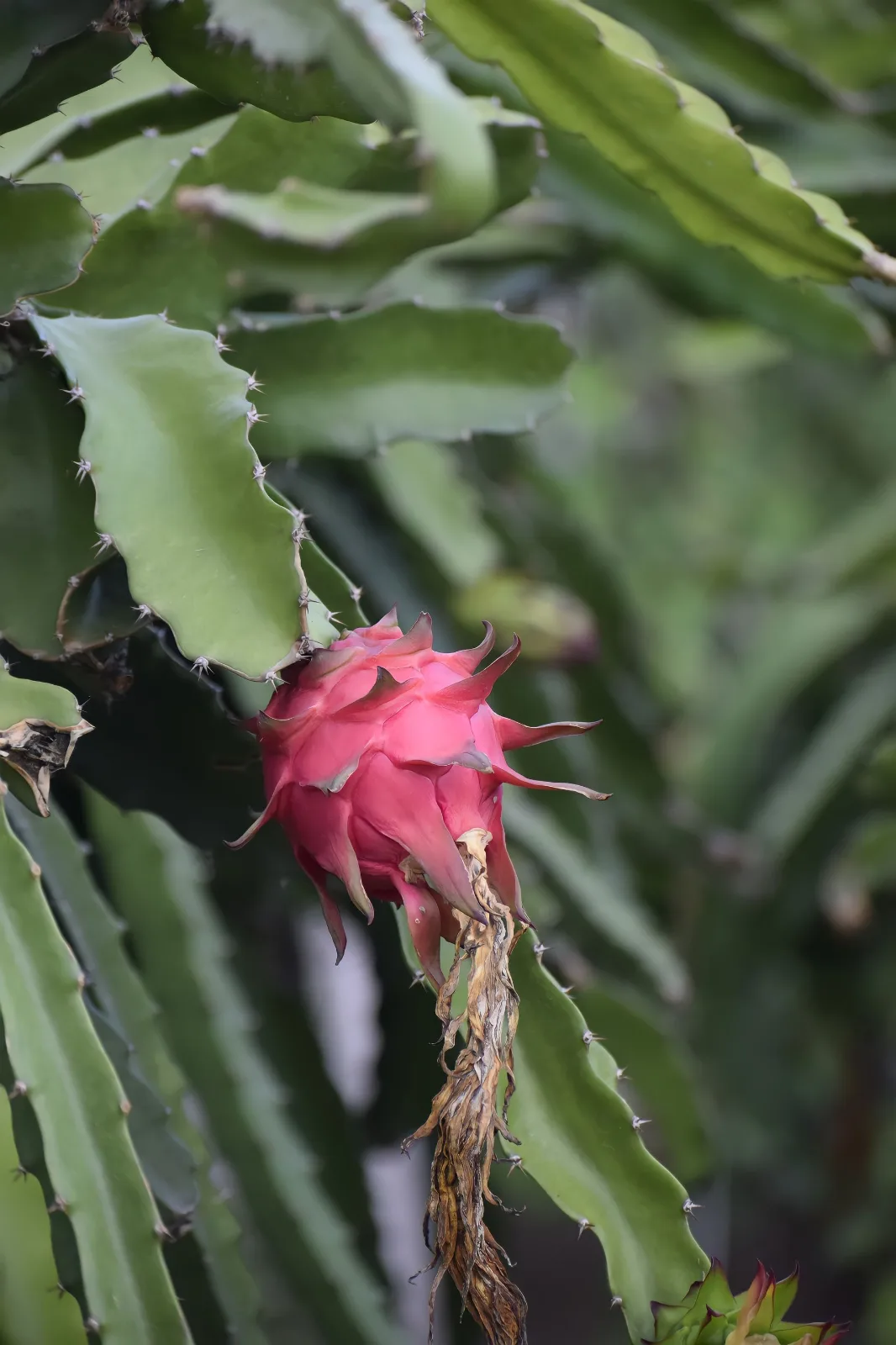
Dragon fruit
Selenicereus spp.
Also known as Pitaya, Pitahaya.
Dragon fruit is a climbing cactus that needs a strong support, warmth, sun and good drainage. Regular pruning keeps mature plants manageable.
- Grows well in
- Tropical, Subtropical, Temperate, Arid / inland, Mediterranean
- Lifecycle
- Perennial climbing cactus
- Light
- Full sun
- Mature size
- A large scrambling cactus that can produce stems several metres long; established plants may spread 4–8 m across their support if left unpruned.
- Spacing
- Allow roughly 2–3 m between support posts or established plants so each has room to form a broad hanging canopy.
- Growth habit
- Vigorous climbing and scrambling cactus with long jointed stems that root and cling as they grow, then hang down from the top of their support.
- Native range
- Varies by species; the commonly cultivated dragon-fruit cacti are native to Mexico, Central America, the Caribbean and northern South America
- Natural habitat
- Tropical and subtropical forest, often climbing trees or rocks in seasonally dry to humid habitats.
When to plant
Tropical
March–October
Subtropical
September–April
Temperate
October–March
Arid inland
September–April
Mediterranean
October–March
Full growing guide
How to Grow Dragon Fruit Plants in Australia
Dragon fruit needs a strong support, sun and sensible pruning before it can put its energy into flowers and fruit. Learn how to train plants, improve pollination and harvest ripe fruit.
Read the full growing guidePlanting
Plant a rooted or healed cutting beside a strong post or trellis. Use very well-drained soil or potting mix and tie new growth loosely to the support.
Position and light
Warm full sun. In very hot exposed sites, young stems can need temporary protection while they establish.
Soil
Free-draining soil or potting mix with added coarse material. Containers must drain freely.
Watering
Water during establishment and dry periods. Although it is a cactus, regular water during flowering and fruit development can improve fruit size. Do not keep roots waterlogged.
Feeding
Top up compost or potting mix and use a balanced feed during active growth, following label rates.
Pruning
Prune mature plants to remove crowded, damaged and excess stems and to keep enough hanging branches for flowering and fruit.
Harvest
Fruit is ready when it reaches full colour for the variety and begins to soften slightly. Cut rather than tearing it from the stem.
Propagation
Cuttings are easy to use. Let fresh cuts dry and seal before planting into well-drained mix.
Common problems
Stem rot, sun damage, scale, snails and poor fruit set can occur. Some varieties set more fruit with cross-pollination.
Safety notes
The fruit is edible. Some varieties have sharp spines on the stems or fruit, so use gloves when handling mature growth.
Worth knowing
Dragon fruit flowers are huge but short-lived, usually opening for a single night. Fruit forms towards the ends of mature hanging stems, so a strong post or trellis with room for branches to drape over it works well.

Grow Dragon fruit with Brancho
Add it to My Garden and Brancho works out what it needs next, timed for your climate.
How it grows around Australia
Growing this too? Share what you've noticed in your garden.
Grow a Little Wild
New plants to try, useful growing tips and a few garden jobs based on what you grow.