
Plant profile
Egyptian walking onion
Allium × proliferum
Also known as Walking onion, Tree onion, Top onion, Egyptian onion.
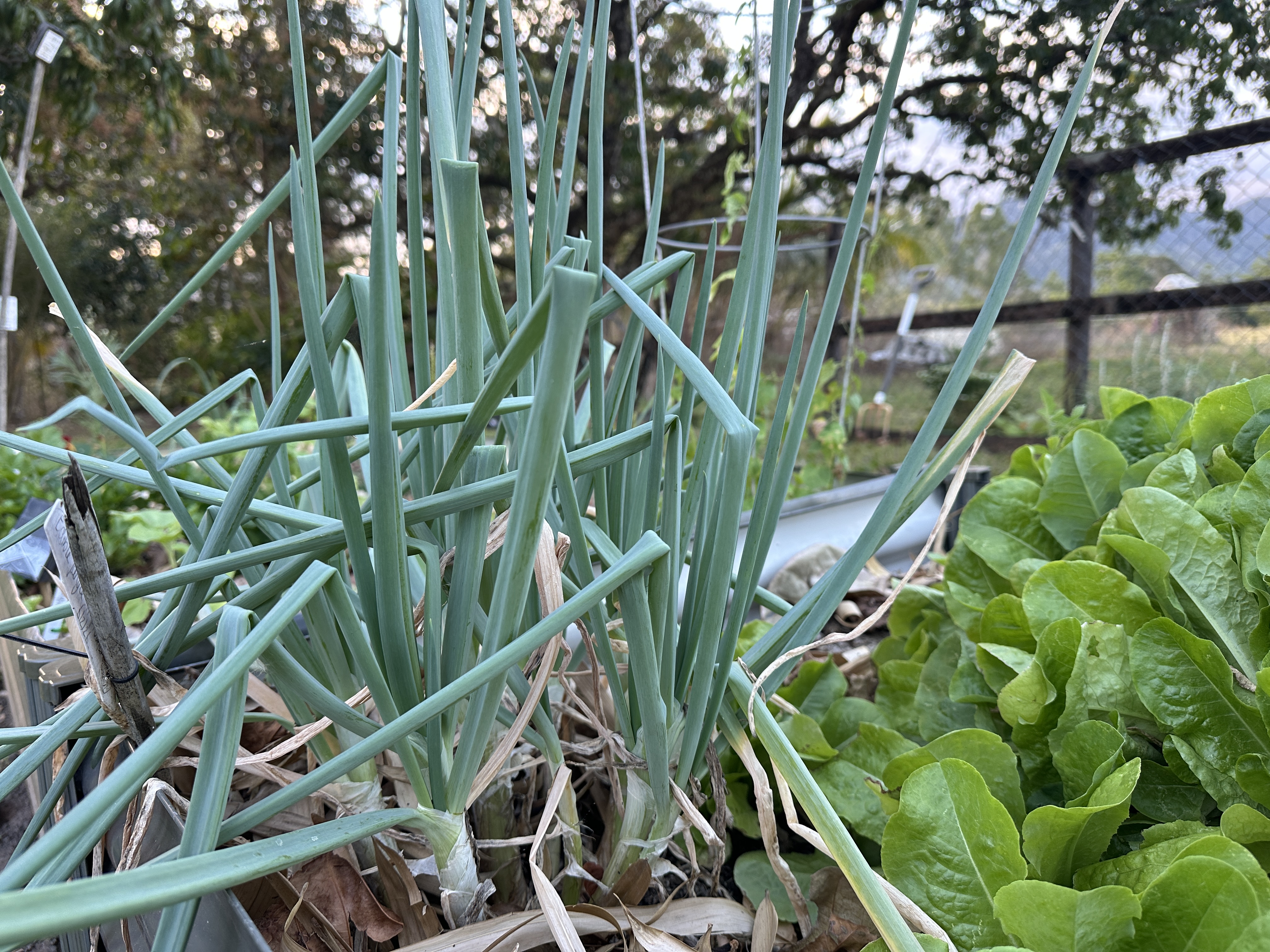
Egyptian walking onion is a perennial onion that makes clusters of bulbils at the top of its stalks. The bulbils bend to the ground and root, slowly moving the clump across the garden.
- Grows well in
- Tropical, Subtropical, Temperate, Cool / mountains, Mediterranean
- Lifecycle
- Perennial clumping onion with aerial bulbils
- Light
- Full sun, Part shade
- Mature size
- Usually 60–100 cm tall in leaf and flower stalk, forming widening clumps
- Spacing
- About 20–30 cm apart
- Growth habit
- Perennial clump producing upright leaves and stalks topped with bulbils
- Native range
- Artificial hybrid of onion and bunching onion, with no wild native range of its own
- Natural habitat
- A cultivated hybrid rather than a naturally occurring wild plant, so it does not have one natural habitat.
When to plant
Tropical
March–June
Subtropical
March–July
Temperate
March–May, August–September
Cool / mountain
March–May
Mediterranean
March–June
Plant bulbils in autumn or spring in mild climates. In tropical and subtropical areas, the cooler drier part of the year is easiest.
Planting
Plant bulbils or divided bulbs shallowly with the tip just above or near soil level. Choose a permanent patch where the clump can multiply.
Position and light
Full sun to part shade. In tropical gardens, light afternoon shade can help during the hottest months.
Soil
Free-draining soil with compost. It handles leaner ground once established but produces better leaves and bulbs with steady fertility.
Watering
Water while establishing and during active leaf growth. Reduce watering if the plants slow down or the soil stays wet for long periods.
Feeding
Top-dress with compost and use a light balanced feed during active growth if needed.
Pruning
No pruning is needed. Remove old stalks after collecting bulbils or once they dry.
Harvest
Use the green leaves, underground bulbs and aerial bulbils as onions. Harvest without removing the whole clump if you want it to persist. The green leaves can be cut like spring onion leaves, while the top bulbils are useful for cooking or replanting. Leave enough basal bulbs in place to keep the perennial clump going.
Propagation
Plant the aerial bulbils or divide the underground bulbs. It spreads almost entirely by vegetative growth.
Common problems
Thrips, onion rust and bulb rots can occur. Crowded clumps benefit from lifting and dividing.
Safety notes
Edible allium. Like other onions, it is toxic to dogs and cats if eaten in sufficient quantity.
Worth knowing
The 'walking' happens when a top-heavy stalk bends down and the bulbils root where they touch soil. Move or harvest bulbils if you want the clump to stay put.
Grow Egyptian walking onion with Brancho
Add it to My Garden and Brancho works out what it needs next, timed for your climate.
How it grows around Australia
Growing this too? Share what you've noticed in your garden.
Grow a Little Wild
New plants to try, useful growing tips and a few garden jobs based on what you grow.