
Plant profile
Elephant ear
Leucocasia gigantea
Also known as Giant elephant ear, Giant elephant's ear.
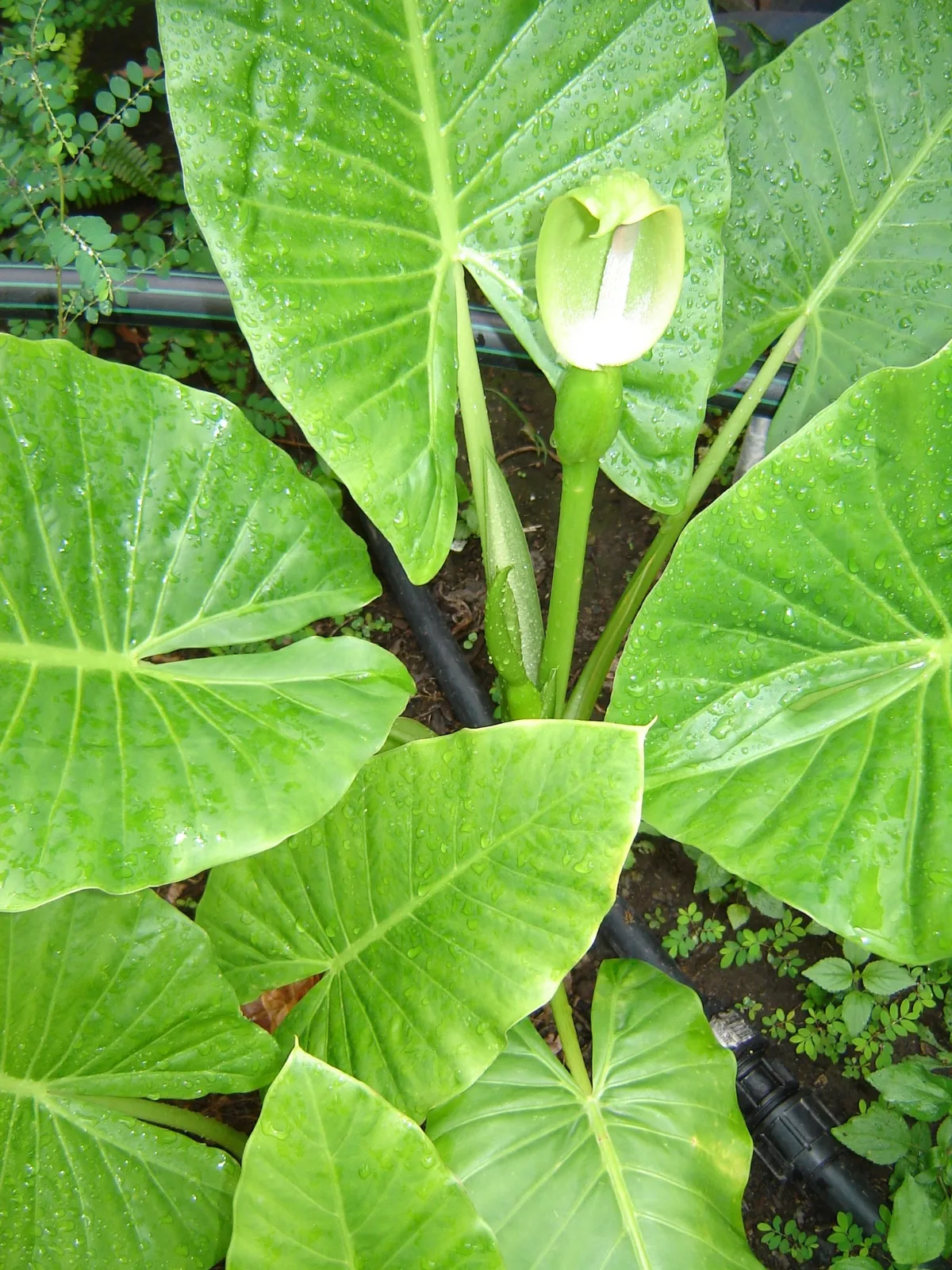
Leucocasia gigantea is a huge tropical foliage plant for damp, sheltered positions. It is one of several unrelated aroids sold as elephant ear and develops large upright leaves on thick fleshy stalks.
- Grows well in
- Tropical, Subtropical, Temperate
- Lifecycle
- Evergreen rhizomatous perennial
- Light
- Full sun, Part shade
- Mature size
- Around 2–3 m tall and wide in good conditions, with individual leaves capable of reaching about 1.5 m long.
- Spacing
- Allow about 1.5–2 m between plants so the huge leaves can develop without crowding.
- Growth habit
- Large clumping aroid with enormous leaves and fleshy leaf stalks arising from a thick underground rhizome.
- Native range
- Southern China through South-East Asia to the western Malay Archipelago
- Natural habitat
- Wet tropical forest and damp shaded sites.
When to plant
Tropical
February–November
Subtropical
September–April
Temperate
October–February
Plant outdoors once warm weather is established. Tropical gardens have a broad window; farther south, spring to early summer gives the rhizome time to establish before cold weather.
Planting
Plant into rich, moisture-retentive soil with plenty of organic matter. Give it a sheltered position and enough room for its huge leaves. In cooler areas, wait until frost risk has passed and the soil is warm.
Position and light
Full sun to part shade in a damp sheltered position. In hot climates, part shade protects the huge leaves from scorch and drying winds. A position near a pond or consistently moist bed suits it well.
Soil
Rich, fertile soil high in organic matter is ideal. Keep the soil consistently moist, but stagnant anaerobic mud can still damage the rhizome.
Watering
Keep moisture steady during active growth. Large leaves lose water quickly in heat and wind, so do not let the root zone dry hard. Container plants may need frequent watering in warm weather.
Feeding
Feed during active warm-season growth with compost plus a balanced fertiliser at the label rate. Big leaves need steady nutrition, but avoid piling fertiliser directly against the stems.
Pruning
Cut off old, storm-damaged or yellowing leaves near the base. Divide an oversized clump when necessary, preferably during warm active growth.
Harvest
The fleshy leaf stalks, or petioles, of correctly identified Leucocasia gigantea are traditionally eaten as a vegetable in parts of Southeast Asia. Harvest a mature outer stalk by cutting it near the base while leaving plenty of healthy growth on the plant. Preparation varies between cuisines, so use a trusted recipe for this species rather than treating other plants sold as 'elephant ear' the same way.
Propagation
Leucocasia gigantea can be raised from seed. Established clumps may also be divided where offsets or separate growing points have formed.
Common problems
Spider mites can be troublesome in hot dry weather. Also watch for snails, slugs, wind-torn leaves and rhizome rot where drainage and airflow are poor.
Safety notes
Leucocasia gigantea needs correct preparation before eating. Other plants sold as elephant ear may be different species with different edible parts and preparation.
Worth knowing
Elephant ear is a confusing common name. This profile is specifically Leucocasia gigantea. Alocasia, Colocasia and Xanthosoma are also sold as elephant ears and can differ substantially in care and edibility.
Grow Elephant ear with Brancho
Add it to My Garden and Brancho works out what it needs next, timed for your climate.
How it grows around Australia
Growing this too? Share what you've noticed in your garden.
Grow a Little Wild
New plants to try, useful growing tips and a few garden jobs based on what you grow.