
Plant profile
Gardenia
Gardenia jasminoides
Also known as cape jasmine, Gardenia augusta.
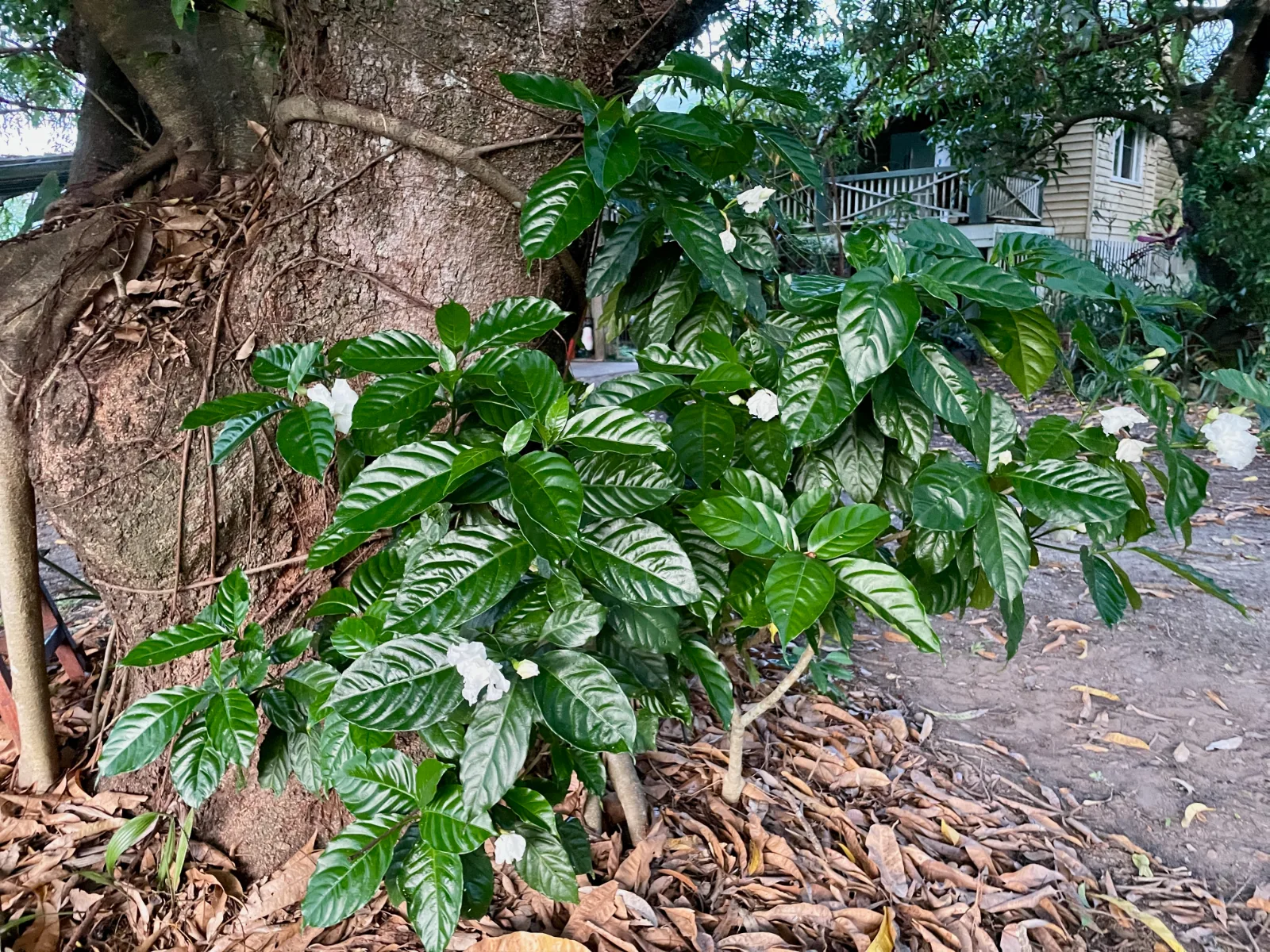
Gardenia is an evergreen shrub grown for glossy foliage and strongly fragrant white flowers. It grows best in warm, sheltered gardens with acidic soil, steady moisture and good drainage. Yellow leaves, dropped buds and poor flowering usually point to cold, root stress, alkaline soil or inconsistent care rather than one single nutrient problem.
- Grows well in
- Tropical, Subtropical, Temperate, Mediterranean
- Lifecycle
- Evergreen flowering shrub
- Light
- Full sun, Part shade
- Mature size
- Usually about 1–2 m tall and wide; dwarf and compact cultivars stay much smaller
- Spacing
- About 1–1.5 m apart for standard shrubs; space dwarf cultivars according to their mature width
- Growth habit
- Dense evergreen shrub with glossy opposite leaves and strongly fragrant white flowers that often age to cream
- Native range
- Eastern Himalayas through central and southern China and mainland South-East Asia, plus southern Japan
- Natural habitat
- Subtropical forest and woodland, often on forest margins.
When to plant
Tropical
April–July
Subtropical
March–May
Temperate
March–May
Mediterranean
March–May
Plant in spring or autumn in mild climates. In frost-prone districts, spring is safer so roots establish before winter. In tropical and subtropical gardens, avoid planting into the hottest, driest spell unless you can keep moisture steady while the shrub settles in.
Planting
Plant gardenia at the same depth it was growing in the pot, in soil that drains freely but still holds some moisture. Work compost through the planting area rather than making a small pocket of rich mix. Mulch over the root zone to reduce moisture swings, keeping mulch clear of the stems. In alkaline ground, a large container with an azalea-and-camellia style mix can be much easier to manage.
Position and light
Morning sun with bright filtered light or afternoon shade suits warm climates well. In cooler districts, gardenias can take more direct sun. Deep shade reduces flowering, while harsh western sun and drying wind can scorch leaves and stress flower buds.
Soil
Acidic, fertile, humus-rich soil with good drainage, ideally around pH 5–6.5. Gardenias can develop chlorosis where soil or irrigation water pushes the pH too high and iron becomes less available. In pots, use a premium mix made for azaleas, camellias or other acid-loving plants.
Watering
Keep the root zone evenly moist through active growth, budding and flowering, but let excess water drain away. Repeated drying followed by heavy watering can contribute to bud drop, while constantly saturated soil increases the risk of root damage. Container plants need checking more often in hot weather.
Feeding
Feed during active growth with a complete fertiliser suited to acid-loving plants, following the label rate. Gardenias respond well to regular nutrition, but yellow leaves are not always a signal to add more fertiliser. In cool weather the roots may take up some nutrients poorly, so wait for warmer growth before treating a suspected deficiency unless another cause is clear.
Pruning
Gardenias need little pruning beyond removing dead growth and shaping the shrub. Prune after the main flowering flush so you do not remove the next crop of buds. Older or leggy plants can be reduced more firmly in warm weather, but expect flowering to be lighter while they regrow.
Harvest
Gardenia is mainly grown as an ornamental, but fragrant flowers can be cut for a vase or brought indoors for scent. Cut stems while blooms are fresh and avoid removing so much flowering growth that the shrub loses its shape.
Propagation
Semi-hardwood cuttings taken during warm active growth are the usual home-garden method. Choose healthy non-flowering shoots, remove the lower leaves and place the cuttings in a free-draining propagation mix. Keep them humid and warm while roots form.
Common problems
Scale, mealybugs and aphids can leave sticky honeydew on leaves, sometimes followed by black sooty mould. Mites may mark foliage in hot, dry conditions. Yellow leaves also have other causes, including cold soil, alkaline conditions and poor drainage. Bud drop can follow sudden changes in water or temperature. Check soil and new growth before deciding what needs changing.
Safety notes
Gardenia jasminoides is toxic to dogs, cats and horses if eaten. Reported signs are usually mild and can include vomiting, diarrhoea or hives, so keep prunings and fallen plant material away from animals that chew plants.
Worth knowing
Gardenia augusta and Cape jasmine are names you may still see for Gardenia jasminoides. Yellow leaves can come from cold roots, high soil pH, poor drainage, nutrient problems or normal seasonal leaf turnover, so check the growing conditions before adding fertiliser.
Grow Gardenia with Brancho
Add it to My Garden and Brancho works out what it needs next, timed for your climate.
How it grows around Australia
Growing this too? Share what you've noticed in your garden.
Grow a Little Wild
New plants to try, useful growing tips and a few garden jobs based on what you grow.