
Plant profile
German chamomile
Matricaria chamomilla
Also known as Chamomile, Annual chamomile, Matricaria recutita, Chamomilla recutita.
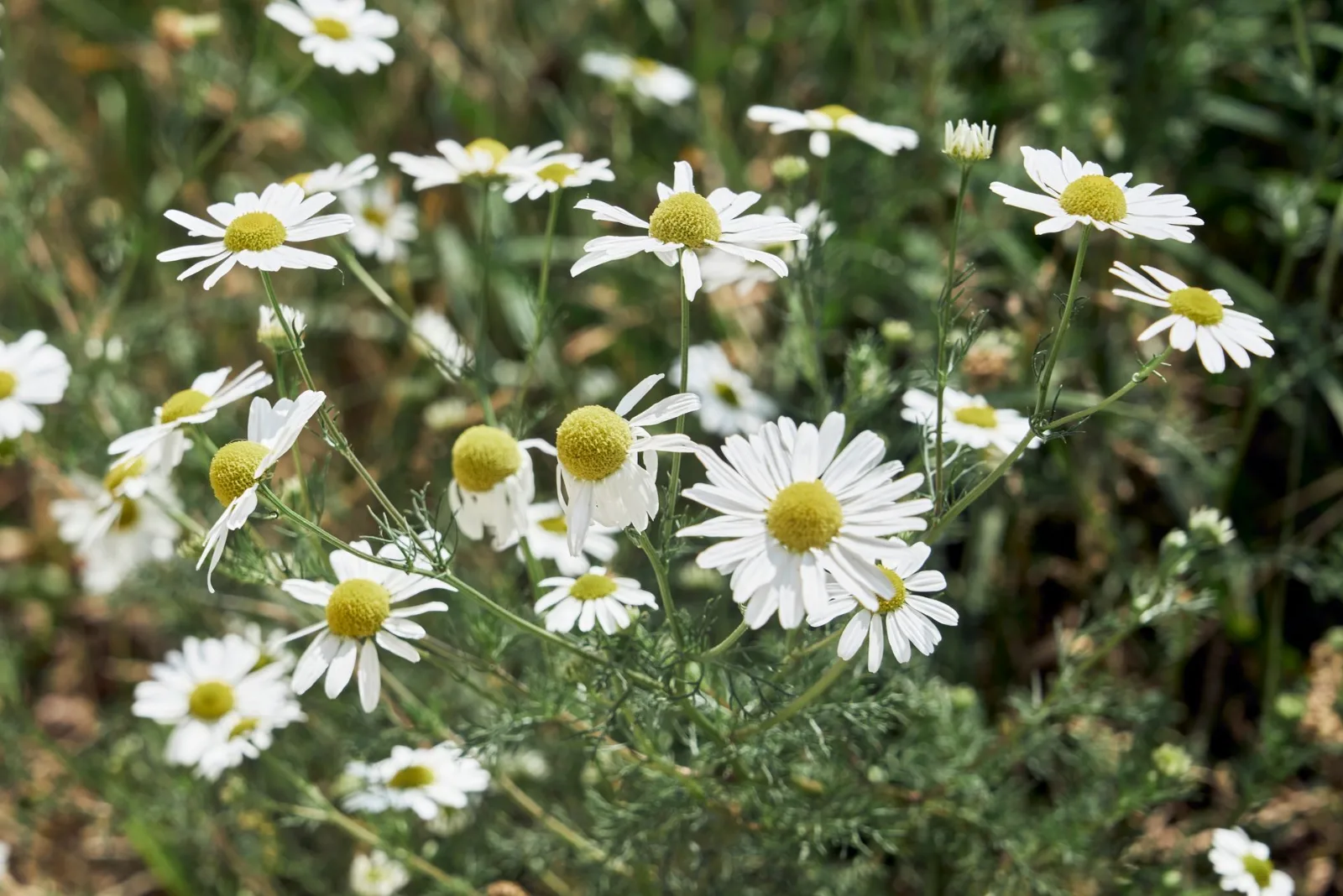
German chamomile is a fine-leaved annual that carries masses of small white-and-yellow flowers. It prefers mild weather, sun, good drainage and regular moisture, and the flowers are the part usually harvested.
- Grows well in
- Subtropical, Temperate, Cool / mountains, Mediterranean
- Lifecycle
- Annual herb
- Light
- Full sun
- Mature size
- Usually 20–60 cm tall with a loose, branching habit.
- Spacing
- Around 15–25 cm apart, with a little extra space in humid climates.
- Growth habit
- Soft, finely divided annual herb with branching stems and many small daisy flowers.
- Native range
- Atlantic islands off Europe and north-west Africa, then across North Africa and temperate Europe and Asia to mainland South-East Asia
- Natural habitat
- Temperate open ground, grassland and disturbed habitats.
When to plant
Tropical
April–July
Subtropical
March–September
Temperate
March–October
Cool / mountain
August–November
Mediterranean
March–September
Treat German chamomile as a cool-season annual in subtropical gardens. In temperate and cool climates it is commonly sown from autumn through spring depending on frost and local conditions.
Planting
Plant small seedlings gently because the stems and roots are delicate. Set them at the same depth they were growing and avoid burying the crown.
Position and light
Grow in a sunny position. In a hot subtropical garden, morning sun with some protection from harsh afternoon heat can extend the season.
Soil
Rich enough to support steady growth but still well drained. A compost-enriched loam is ideal; avoid a waterlogged bed.
Watering
Keep soil evenly moist while plants establish and during hot periods, but do not leave roots saturated. Small plants dry quickly.
Feeding
A modest amount of compost or light balanced feeding is enough. Excess nitrogen can produce soft leafy growth and fewer flowers.
Pruning
Light trimming or frequent flower picking helps keep German chamomile branching. Remove exhausted plants once flowering is finished.
Harvest
Pick open flower heads regularly, ideally when dry. Frequent picking encourages more flowers while the weather remains suitable.
Propagation
Best grown from seed. The tiny seed needs shallow sowing and good surface moisture while germinating.
Common problems
Aphids and thrips can occur. Hot weather, drought and poor airflow can shorten the season; very wet soil can weaken roots.
Safety notes
Chamomile is in the daisy family and can trigger reactions in people with strong Asteraceae allergies.
Worth knowing
German chamomile is different from perennial Roman chamomile. Pick flowers regularly as they open and dry them gently if you want to keep them for later use.
Grow German chamomile with Brancho
Add it to My Garden and Brancho works out what it needs next, timed for your climate.
How it grows around Australia
Growing this too? Share what you've noticed in your garden.
Grow a Little Wild
New plants to try, useful growing tips and a few garden jobs based on what you grow.