
Plant profile
Grass tree
Xanthorrhoea spp.
Also known as grass tree plant, Xanthorrhoea, balga, Australian grass tree.
Grass trees are slow-growing, long-lived Australian natives that do best in lean, free-draining soil. They need very little feeding, and wild plants are best left undisturbed.
- Grows well in
- Tropical, Subtropical, Temperate, Cool / mountains, Arid / inland, Mediterranean
- Lifecycle
- Extremely long-lived native perennial
- Light
- Full sun, Part shade
- Mature size
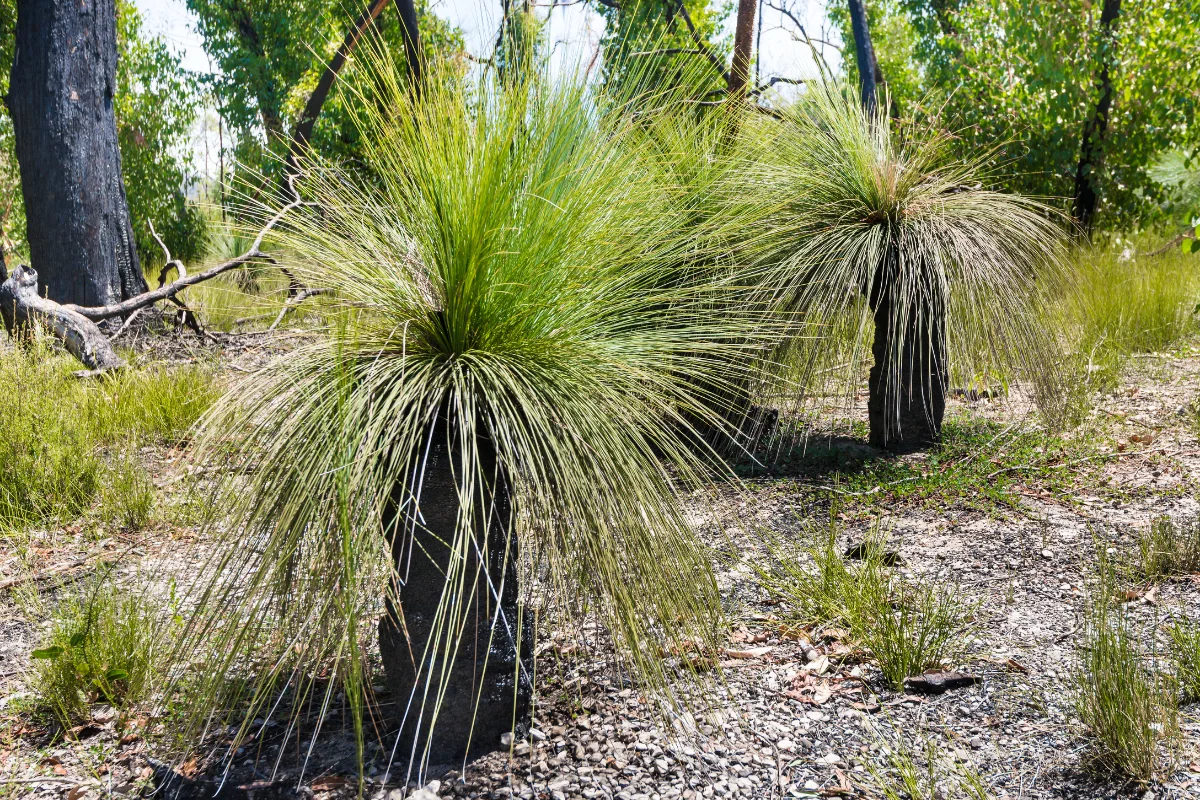
- Species vary from trunkless clumps to plants with trunks several metres tall. Growth is famously slow.
- Spacing
- Usually at least 1–2 m from neighbouring feature plants; large species need considerably more room.
- Growth habit
- Dense crown of narrow grass-like leaves; many species slowly form a trunk and eventually send up a tall flower spike.
- Native range
- Australia; exact range varies by Xanthorrhoea species
- Natural habitat
- Heath, dry sclerophyll forest, woodland and sandy or rocky slopes.
When to plant
Tropical
April–August
Subtropical
March–August
Temperate
March–May, August–October
Cool / mountain
September–October
Arid inland
March–May, August–October
Mediterranean
March–May, August–October
Plant nursery stock during mild weather so roots can establish without heat or waterlogging stress. Avoid unnecessary transplanting once established.
Planting
Buy nursery-propagated stock and disturb the root ball as little as possible. Match the species to your local climate and keep the crown and trunk base free-draining.
Position and light
Most garden-grown species suit full sun to open part shade. Match the position to the species and its natural habitat.
Soil
Free-draining, low-nutrient soil suits most species. Avoid rich wet garden beds and heavy phosphorus feeding.
Watering
Water new nursery plants while they establish, then reduce watering as roots settle. Established local species are usually drought-tough but still vary in moisture needs.
Feeding
Use little or no fertiliser. If feeding is necessary, choose a low-phosphorus native fertiliser at a conservative label rate.
Pruning
Do not routinely cut green leaves. Remove completely dead foliage only if needed for access or appearance.
Propagation
Grow from seed. Grass trees germinate readily compared with their very slow later growth, but a trunk can take decades to form.
Common problems
Phytophthora cinnamomi dieback is a serious risk, along with root damage after transplanting and rot in poorly drained sites.
Safety notes
Never dig a grass tree from bushland. Wild collection is illegal without the relevant approvals and transplants have a poor survival rate.
Worth knowing
A small nursery plant may stay trunkless for many years. That slow growth is normal, not a sign that it needs stronger fertiliser.
Grow Grass tree with Brancho
Add it to My Garden and Brancho works out what it needs next, timed for your climate.
How it grows around Australia
Growing this too? Share what you've noticed in your garden.
Grow a Little Wild
New plants to try, useful growing tips and a few garden jobs based on what you grow.