
Plant profile
Guava
Psidium guajava
Also known as common guava, apple guava, yellow guava.
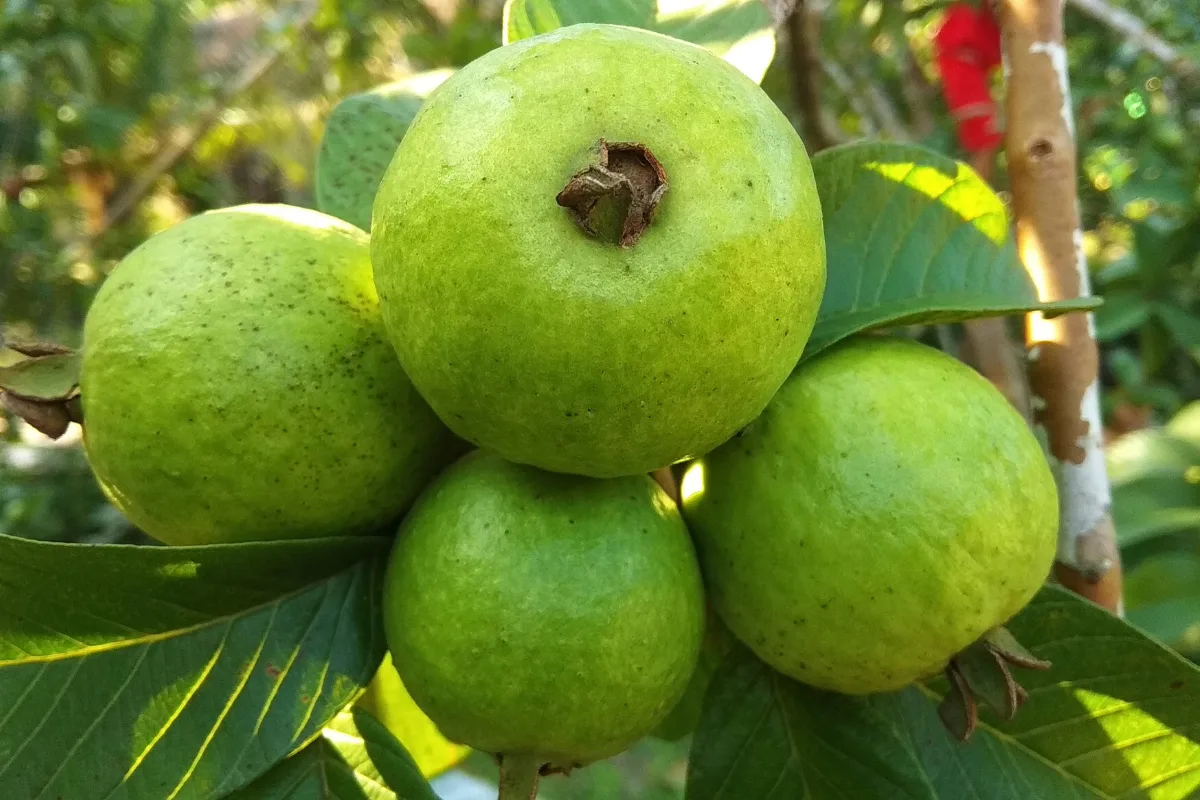
Guava is a fast-growing tropical to subtropical fruit tree with aromatic leaves, white flowers and round to pear-shaped fruit. It crops young, handles pruning well and can be kept to a practical backyard size.
- Grows well in
- Tropical, Subtropical, Temperate, Arid / inland, Mediterranean
- Lifecycle
- Evergreen to semi-evergreen perennial fruit tree
- Light
- Full sun
- Mature size
- Usually 3–6 m tall and wide; readily kept smaller by pruning
- Spacing
- About 3–5 m apart, or wider for unpruned trees
- Growth habit
- Dense evergreen or semi-evergreen small tree with smooth peeling bark
- Native range
- An ancient cultivated fruit originating in Peru
- Natural habitat
- Its origins are in seasonally dry tropical country in Peru, but guava has been cultivated for so long that it no longer has one simple wild habitat.
When to plant
Tropical
April–October
Subtropical
August–November
Temperate
September–November
Arid inland
September–November
Mediterranean
September–November
Tropical and subtropical: plant during warm weather when reliable moisture is available. Temperate and Mediterranean: spring after frost risk. Arid areas need irrigation and shelter while establishing.
Planting
Plant in full sun into free-draining soil and allow room for a broad crown. In high-rainfall areas, choose an open position with good airflow and avoid low spots that stay saturated.
Position and light
Full sun gives the best flowering and fruit quality. Light shade is tolerated but usually reduces cropping.
Soil
Adaptable to many soils, from sandy loam to heavier ground, provided drainage is adequate. Compost and mulch improve moisture buffering, but keep mulch clear of the trunk.
Watering
Water regularly while establishing and during dry periods when flowering and fruit are developing. Mature trees tolerate some drought but crop better with steady moisture.
Feeding
Feed in spring and during active fruiting with a balanced fruit-tree fertiliser if growth or cropping is weak. Avoid excessive nitrogen that creates dense leafy growth.
Pruning
Prune after harvest to control height, remove crossing branches and keep the canopy open. Guava tolerates heading back well, which makes it practical to keep a tree at picking height.
Harvest
Pick when fruit develops its mature colour, softens slightly and becomes strongly aromatic. Fruit bruises easily and is best handled gently.
Propagation
Seed is easy but seedlings vary. Named cultivars are more reliably propagated by cuttings, air-layering or grafting.
Common problems
Fruit fly is a major problem in susceptible areas. Scale, mealybugs and fruit rots may occur. Birds and bats also take ripe fruit. Seedlings can establish away from the parent tree where fruit is dispersed.
Safety notes
Ripe fruit is edible. Wash fruit well and use normal food hygiene, especially if fruit has fallen to the ground.
Worth knowing
Fruit flavour and texture vary a lot between cultivars, from strongly aromatic white-fleshed types to pink and red forms. Guavas can flower and crop more than once a year in warm climates when moisture and feeding are good.
Grow Guava with Brancho
Add it to My Garden and Brancho works out what it needs next, timed for your climate.
How it grows around Australia
Growing this too? Share what you've noticed in your garden.
Grow a Little Wild
New plants to try, useful growing tips and a few garden jobs based on what you grow.