


Plant profile
Heartleaf philodendron
Philodendron hederaceum
Also known as Sweetheart plant.
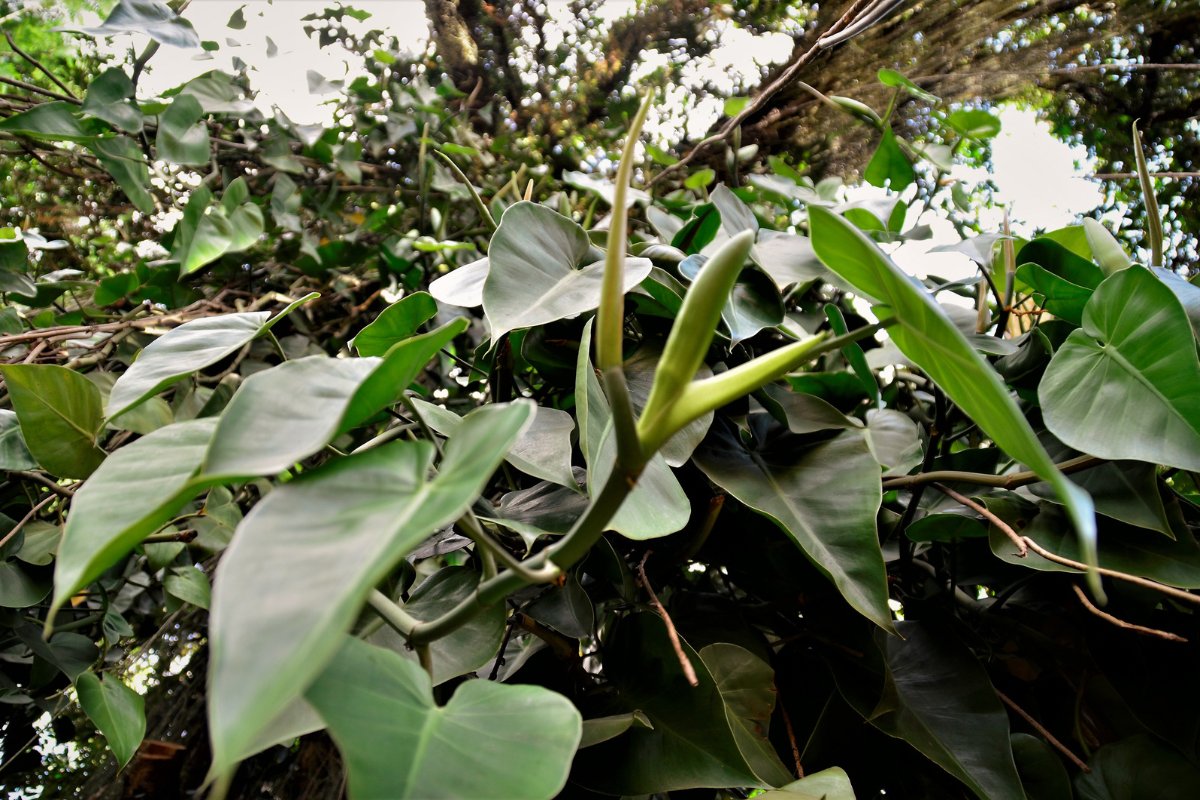
Heartleaf philodendron is an easy trailing or climbing aroid with glossy heart-shaped leaves. It suits shelves and hanging pots, or it can be trained up a support for larger leaves. It handles moderate indoor light well, although brighter filtered light gives denser growth.
- Grows well in
- Tropical, Subtropical, Temperate
- Lifecycle
- Evergreen tropical climbing or trailing perennial
- Light
- Part shade, Shade
- Mature size
- Trailing or climbing stems commonly reach 1–2 m indoors and can grow longer with support.
- Spacing
- One plant or several cuttings per pot; allow space for trailing stems or a vertical support.
- Growth habit
- Evergreen climbing aroid that trails when unsupported and climbs by aerial roots when given a suitable surface.
- Native range
- Mexico through tropical Central America, the Caribbean and tropical South America.
- Natural habitat
- Wet tropical forest, where it grows as a climber, epiphyte or hemiepiphyte on trees and other supports.
When to plant
Repot or take cuttings during warm active growth. Indoor plants can be started year-round in a warm house, but spring and summer give faster rooting and recovery.
Position and light
Bright indirect light is ideal, and heartleaf philodendron also grows well in moderate filtered light. Very low light produces longer gaps between leaves and smaller growth. Keep it out of harsh direct afternoon sun through glass.
Soil
Use an open indoor potting mix that drains freely but does not dry instantly. A mix with coarse bark or similar chunky material helps keep air around the roots.
Watering
Water thoroughly once the upper layer of mix has dried, then let excess water drain. Plants in lower light use water more slowly. Do not leave the pot standing in water.
Feeding
Feed lightly during active growth with a balanced indoor-plant fertiliser at the label rate. Reduce feeding when growth slows.
Pruning
Pinch or cut long stems back above a node to encourage branching. Remove yellow leaves and weak bare stems. Climbing plants can be tied loosely to a support until aerial roots begin to hold.
Propagation
Stem cuttings root readily when each cutting includes at least one healthy node. Root in water or a moist airy propagation mix.
Common problems
Long bare stretches between leaves usually mean light is too low. Yellowing and stem or root rot are common when the mix stays wet. Spider mites, mealybugs and scale can occur indoors.
Safety notes
Philodendron contains calcium oxalate crystals and can irritate the mouth and digestive tract if chewed.
Worth knowing
Heartleaf philodendron is Philodendron hederaceum. Older labels may use names such as P. scandens. Plants allowed to climb can develop larger leaves than the same plant left trailing.
Featured In

Grow Heartleaf philodendron with Brancho
Add it to My Garden and Brancho works out what it needs next, timed for your climate.
How it grows around Australia
Growing this too? Share what you've noticed in your garden.
Grow a Little Wild
New plants to try, useful growing tips and a few garden jobs based on what you grow.