
Plant profile
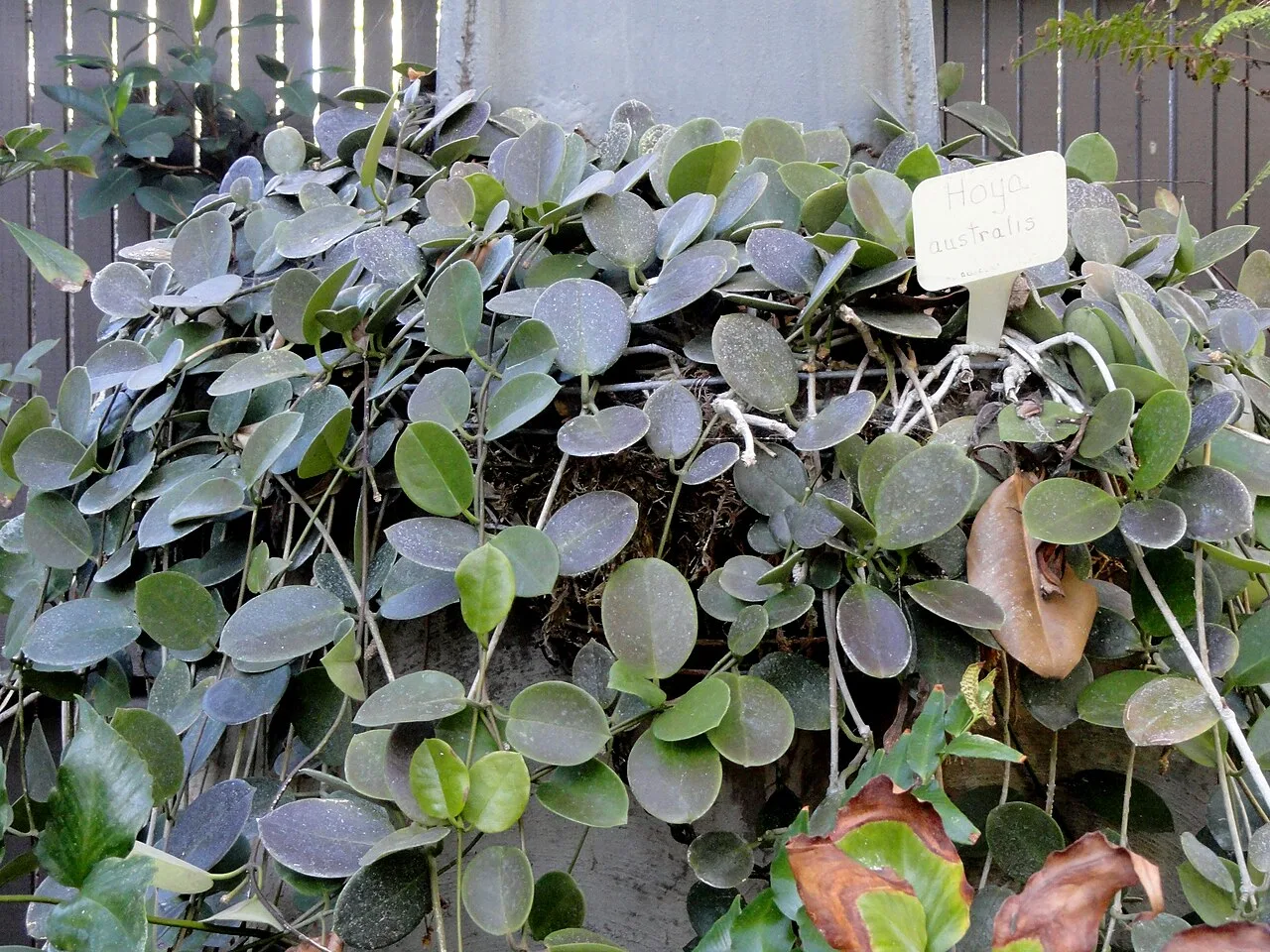
Hoya australis
Hoya australis
Also known as wax flower, common waxflower, Australian hoya.
Hoya australis is an Australian native climber with thick leaves and fragrant white flowers. An airy mix, bright filtered light and a slightly snug pot suit it better than a big pot of wet soil.
- Grows well in
- Tropical, Subtropical, Temperate
- Lifecycle
- Evergreen epiphytic or climbing perennial vine
- Light
- Part shade
- Mature size
- A vigorous vine that can climb or trail several metres when given support.
- Spacing
- One plant per hanging pot or support is usually enough; outdoors, allow a trellis or branch structure several metres long.
- Growth habit
- Twining or scrambling evergreen vine with thick leathery leaves and clusters of waxy fragrant flowers.
- Native range
- Northern Borneo and Sulawesi through New Guinea and Australia to the south-western Pacific
- Natural habitat
- Seasonally dry tropical forest and woodland, where it commonly climbs trees or grows on trunks and branches.
When to plant
Tropical
February–November
Subtropical
September–April
Temperate
October–March
Arid inland
September–April
Mediterranean
September–April
Repot and take cuttings during warm active growth. Avoid unnecessary repotting if a plant is healthy and flowering in a snug container.
Planting
Use a smallish pot and an open epiphyte-style mix such as coarse orchid bark with mineral aeration. Give the vine a support or let it trail from a basket.
Position and light
Bright filtered light or gentle morning sun encourages compact growth and flowering. Protect foliage from sudden hot direct sun.
Soil
Use a very airy, sharply drained epiphyte mix rather than dense garden soil. Hoya australis naturally grows with its roots in open organic pockets.
Watering
Water thoroughly, then wait until much of the mix has dried before watering again. Thick leaves store water, so constantly wet roots are a bigger problem than letting the mix dry somewhat between waterings.
Feeding
Feed lightly during active growth with a dilute balanced or flowering fertiliser. Do not push lush growth with heavy nitrogen.
Pruning
Trim only where the vine has outgrown its support. Leave old flower peduncles in place because hoyas can flower again from the same spur.
Propagation
Take stem cuttings with nodes and root them in a moist airy propagation mix. Layering a flexible stem also works.
Common problems
Root rot from dense wet mix, mealybugs, scale and lack of flowers in very low light are common. Moving or pruning budding vines can also sacrifice flowers.
Worth knowing
Australia has several native Hoya species. Hoya australis is one of the easiest and most widely grown, with thick leaves and fragrant white flower clusters.
Grow Hoya australis with Brancho
Add it to My Garden and Brancho works out what it needs next, timed for your climate.
How it grows around Australia
Growing this too? Share what you've noticed in your garden.
Grow a Little Wild
New plants to try, useful growing tips and a few garden jobs based on what you grow.