
Plant profile
Hoya carnosa
Hoya carnosa
Also known as wax plant, porcelain flower, wax flower.
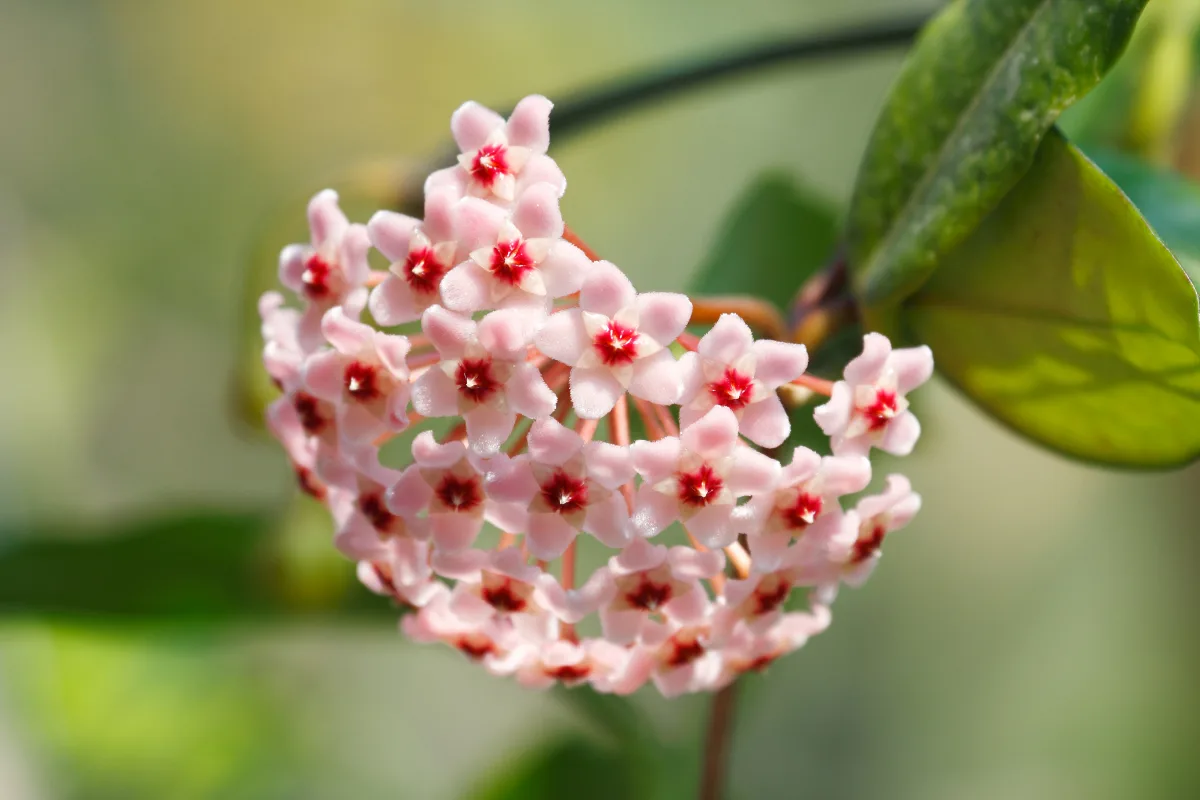
Hoya carnosa is the classic wax plant, grown for its thick leaves and clusters of fragrant, waxy flowers. It suits a hanging pot or small trellis indoors, on a veranda or outside in a warm sheltered garden.
- Grows well in
- Tropical, Subtropical, Temperate, Cool / mountains, Arid / inland, Mediterranean
- Lifecycle
- Evergreen climbing perennial vine
- Light
- Part shade
- Mature size
- A moderately vigorous vine with stems several metres long when mature.
- Spacing
- Usually one plant per pot or hanging basket is enough. Give climbing plants at least 1–2 m of usable support and expect mature vines to travel farther.
- Growth habit
- Twining, semi-succulent evergreen vine with thick glossy leaves and rounded clusters of waxy flowers.
- Native range
- Southern China to Laos, plus southern Japan and Taiwan
- Natural habitat
- Subtropical forest and woodland, where it climbs trees or grows on rocks.
When to plant
Tropical
February–November
Subtropical
September–April
Temperate
October–March
Cool / mountain
October–February
Arid inland
September–April
Mediterranean
September–April
Repot during warm active growth where possible. Healthy hoyas can stay in the same pot for long periods, so do not repot simply because another season has arrived.
Planting
Grow in a pot or basket with a very open, free-draining mix. Hoyas do not need a large pot; give climbing plants a small trellis, hoop or other support while the stems are still easy to train.
Position and light
Bright filtered light is ideal indoors or outside. Gentle morning sun can help flowering, but protect the leaves from sudden strong afternoon sun. Very low light usually means fewer flowers.
Soil
Use an airy potting mix that drains quickly, such as an orchid-style mix with coarse bark and added aeration. Avoid dense potting mix that stays wet around the roots.
Watering
Water thoroughly, then wait until much of the mix has dried before watering again. Water less often during cool or slow-growing periods. Constantly wet roots can quickly cause trouble.
Feeding
Feed lightly while the vine is actively growing. A controlled-release fertiliser in spring or a dilute balanced fertiliser during active growth is plenty; heavy feeding is unnecessary.
Pruning
Trim long or bare vines back to just above a node if you want a fuller plant. Leave old flower peduncles in place because Hoya carnosa can flower from the same spurs again.
Propagation
Take stem cuttings with at least one or two nodes and root them in a small pot of airy propagation mix. Flexible stems can also be layered while still attached to the parent plant.
Common problems
Mealybugs, aphids and scale can collect around stems, leaf joints and flower clusters. Yellow or soft leaves can follow prolonged wet roots. Poor flowering is often linked with low light.
Safety notes
Hoya carnosa is grown as an ornamental rather than a food plant. Wash sap from your skin after pruning if you are sensitive to plant latex.
Worth knowing
Unlike Hoya australis, Hoya carnosa is not an Australian native. It is one of the longest-grown houseplant hoyas and has many familiar cultivars, including variegated forms sold as 'Krimson Queen' and 'Krimson Princess' and the tightly curled 'Compacta' form. Care can vary a little between forms, but they belong under this Hoya carnosa profile rather than the Australian-native profile.
Featured In
Grow Hoya carnosa with Brancho
Add it to My Garden and Brancho works out what it needs next, timed for your climate.
How it grows around Australia
Growing this too? Share what you've noticed in your garden.
Grow a Little Wild
New plants to try, useful growing tips and a few garden jobs based on what you grow.