

Plant profile
Jackfruit
Artocarpus heterophyllus
Also known as Jack fruit.
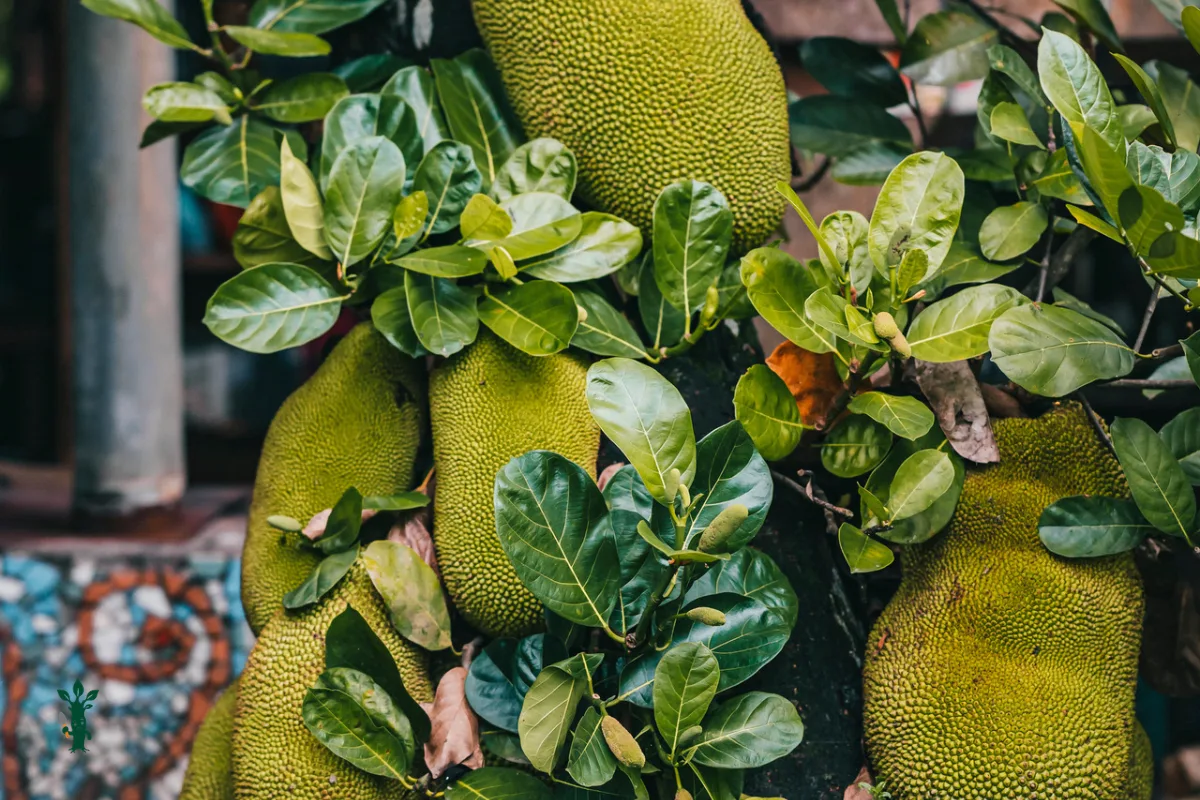
Jackfruit is a spectacular evergreen fruit tree that carries huge green fruit directly on its trunk and main branches. It loves warm humid conditions and is genuinely productive in subtropical south-east Queensland as well as the tropics, provided it has enough warmth, water and room for a substantial tree.
- Grows well in
- Tropical, Subtropical
- Lifecycle
- Evergreen tropical fruit tree
- Light
- Full sun
- Mature size
- Commonly 8–15 m in gardens and capable of reaching about 20 m; can be maintained much smaller with regular pruning
- Spacing
- Allow at least 7–10 m for a free-growing tree; smaller spacing requires deliberate long-term canopy control
- Growth habit
- Large evergreen tree with dense foliage and cauliflorous fruit borne on the trunk and older branches
- Native range
- South-western India.
- Natural habitat
- Wet tropical forest biome; now cultivated throughout humid tropical and warm subtropical regions.
When to plant
Tropical: plant during warm weather with reliable moisture. Subtropical: late spring to early summer after cold weather has passed gives the tree the longest possible warm establishment period. Avoid frost-prone hollows.
Planting
Plant in a warm, frost-free position with deep soil and plenty of room away from roofs, paths and powerlines. A jackfruit is not a small courtyard tree unless you are committed to regular size control. Young trees establish fast in summer warmth but dislike cold soil, drought and frost.
Position and light
Full sun gives the strongest growth and fruiting. Shelter young trees from severe wind, though established jackfruit handles ordinary coastal wind better than its huge leaves suggest.
Soil
Deep, fertile, well-drained alluvial, sandy loam or clay loam suits it. Jackfruit needs moisture but dislikes prolonged flooding. A broad mound is useful on heavy ground where water sits after intense rain.
Watering
Water regularly while young and keep fruiting trees supplied during hot dry weather. Jackfruit is not a drought-loving tree; prolonged dryness can slow growth and cause fruit to abort. Mulch broadly but keep mulch off the trunk.
Feeding
Feed through warm active growth with compost and a balanced fruit-tree fertiliser. Large fruit demand plenty from the tree, but avoid continuously pushing soft nitrogen-rich growth. Split feeds through spring and summer.
Pruning
Prune young trees to create a low branching framework, then shorten vigorous upright growth after harvest to keep the canopy manageable. Do not remove the trunk and main limbs that carry female flowers and fruit. Regular size control is far easier than trying to reduce an old 12 m tree.
Harvest
Mature fruit changes from a bright ringing sound to a duller sound when tapped, and the skin becomes less sharply textured as it fills. Fruit can be used green in savoury cooking or allowed to ripen for sweet aromatic bulbs. Wear clothes and tools you do not mind getting sticky because cut fruit releases latex.
Propagation
Seed germinates readily and grows fast, but seedlings vary in fruit size, flavour and latex content. Grafted named selections are a better option for a small garden where predictable fruit quality and earlier bearing matter.
Common problems
Fruit fly is less of a problem than on thin-skinned fruit, but rodents, possums and flying foxes can damage ripening crops. Root problems occur in flooded soil, and cold weather checks young trees. Scale and other sap suckers can also occur.
Safety notes
Jackfruit releases sticky latex when cut. Rare food-allergy reactions have been reported, including in people with latex or birch-pollen allergy. If you have known food or latex allergies, use normal medical caution when trying an unfamiliar fruit.
Worth knowing
Jackfruit produces the largest tree-borne fruit in the world. Ripe fruit is sweet and aromatic; mature green fruit is used as a savoury vegetable. The huge crop potential is fantastic if you want that much fruit, but tree size and harvest logistics are worth considering before planting.
Featured In

Grow Jackfruit with Brancho
Add it to My Garden and Brancho works out what it needs next, timed for your climate.
How it grows around Australia
Growing this too? Share what you've noticed in your garden.
Grow a Little Wild
New plants to try, useful growing tips and a few garden jobs based on what you grow.