
Plant profile
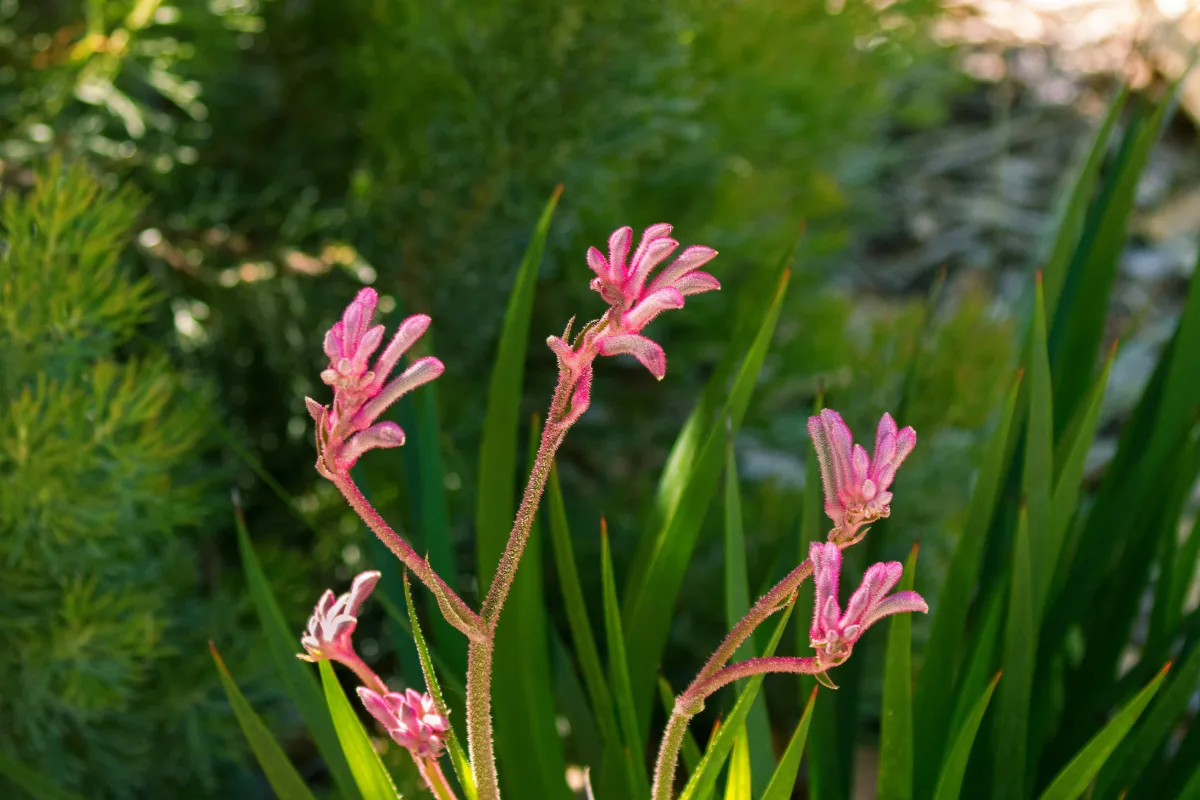
Kangaroo paw
Anigozanthos spp. and hybrids
Also known as kangaroo paw plant, Anigozanthos, kangaroo paw flower.
Kangaroo paws flower best in sun and sharp drainage, and the tougher tall hybrids cope with east-coast humidity better than many compact types. A hard clean-up after flowering keeps old black foliage from building up.
- Grows well in
- Subtropical, Temperate, Cool / mountains, Arid / inland, Mediterranean
- Lifecycle
- Clump-forming native perennial
- Light
- Full sun
- Mature size
- From compact 30–50 cm cultivars to tall Anigozanthos flavidus types with flower stems around 2 m.
- Spacing
- About 30–80 cm apart depending on cultivar size.
- Growth habit
- Rhizomatous clump of strappy leaves with tall velvety tubular flower stems.
- Native range
- South-western Australia, depending on Anigozanthos species and hybrid parentage
- Natural habitat
- Heath, open woodland and seasonally damp sandy ground.
When to plant
Subtropical
March–June, August–October
Temperate
March–May, August–October
Cool / mountain
September–November
Arid inland
March–May, August–October
Mediterranean
March–May, August–October
Autumn and spring are useful planting and dividing times in temperate climates. Avoid planting into cold waterlogged winter soil.
Planting
Plant into full sun and excellent drainage. Keep the crown at soil level and avoid burying it under mulch.
Position and light
Full sun gives the strongest flower stems and airflow. Light shade is possible for some types but usually reduces flowering.
Soil
Free-draining soil is essential. Sandy or gravelly beds work well; improve heavy clay before planting.
Watering
Water newly planted clumps regularly. During active spring and summer growth, steady moisture lengthens flowering, but do not keep the crown wet.
Feeding
Use a native-friendly fertiliser during active growth, especially after pruning or division. Avoid excessive phosphorus unless the product is known to suit the cultivar.
Pruning
After flowering, remove spent flower stems and old blackened foliage close to the base. Vigorous tall types can take a hard clean-up.
Harvest
Cut flower stems when the lower flowers begin opening for long-lasting arrangements.
Propagation
Divide established clumps after flowering or grow true species from seed. Named hybrids should be divided if you want an identical plant.
Common problems
Ink spot or blackened foliage, snails and slugs, crown rot and frost damage can occur. Humid climates need especially good airflow and drainage.
Safety notes
The fine hairs on flower stems can irritate skin and eyes. Wear gloves and eye protection if you react to them or are doing a large prune.
Worth knowing
If you garden on the humid east coast, Anigozanthos flavidus and flavidus-based hybrids are usually a better starting point than delicate short-lived forms.

Grow Kangaroo paw with Brancho
Add it to My Garden and Brancho works out what it needs next, timed for your climate.
How it grows around Australia
Growing this too? Share what you've noticed in your garden.
Grow a Little Wild
New plants to try, useful growing tips and a few garden jobs based on what you grow.