

Plant profile
Lemon myrtle
Backhousia citriodora
Also known as Lemon ironwood, Lemon-scented myrtle, Sweet verbena tree.
Lemon myrtle is a Queensland rainforest tree famous for intensely lemon-scented leaves. It can be grown as a small tree, clipped shrub or hedge, and is particularly at home in warm, moist east-coast gardens.
- Grows well in
- Tropical, Subtropical, Temperate
- Lifecycle
- Evergreen rainforest tree or large shrub
- Light
- Full sun, Part shade
- Mature size
- Up to about 20 m in rainforest habitat, but commonly around 3–8 m in cultivation and readily kept smaller by pruning.
- Spacing
- For a specimen tree allow several metres. For a clipped hedge, spacing around 1–1.5 m is practical depending on the desired density.
- Growth habit
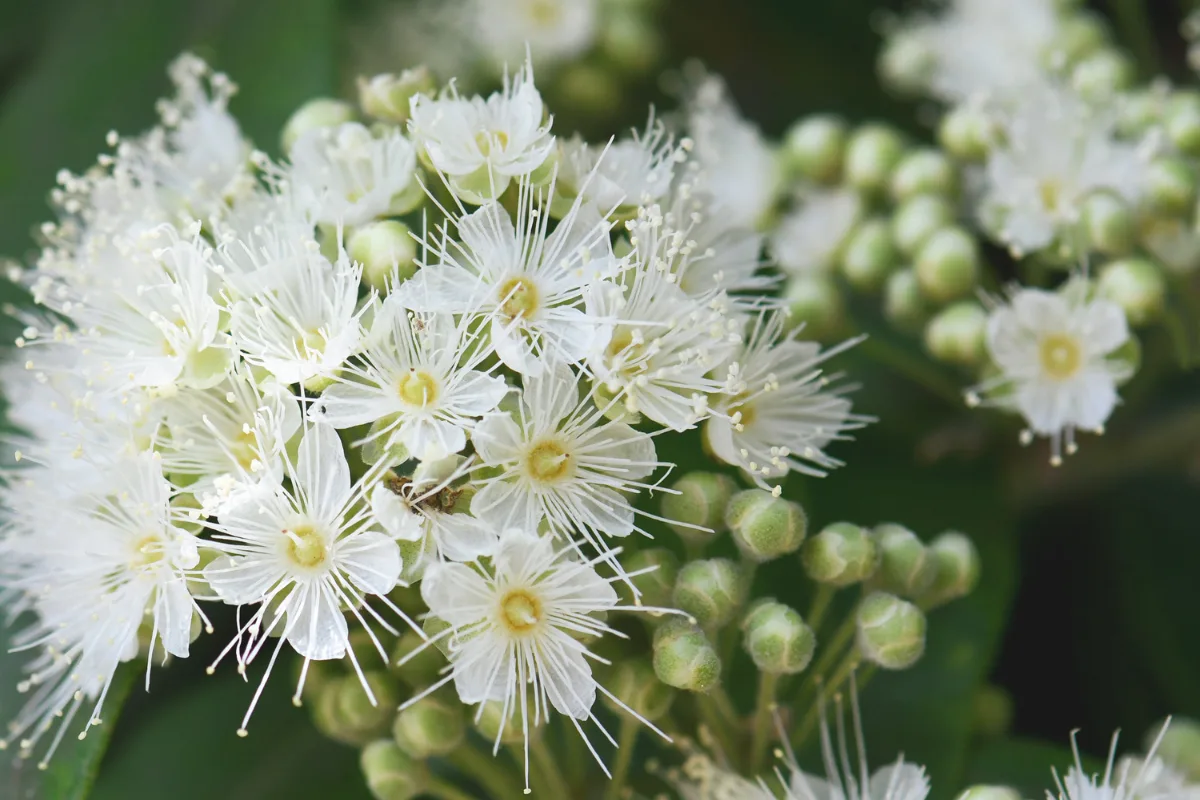
- Evergreen, aromatic rainforest tree with naturally dense branching and clusters of white flowers.
- Native range
- Coastal Queensland, from around Brisbane north to the Mackay region
- Natural habitat
- Subtropical to tropical rainforest in coastal Queensland.
When to plant
Tropical
February–November
Subtropical
March–October
Temperate
September–April
Mediterranean
September–April
Plant during warm, settled weather when regular watering is easy. In tropical and subtropical regions, avoid putting a tiny plant into the harshest dry period unless you can irrigate it reliably.
Planting
Plant into rich, moisture-retentive but drained soil and mulch well. Keep the root ball moist while the tree establishes and avoid planting deeper than it grew in the pot.
Position and light
Full sun to part shade. Young trees prefer shelter while establishing, especially in exposed or frosty sites.
Soil
Rich, composted, moisture-retentive soil with good structure. It tolerates a range of soils but dislikes poor drainage.
Watering
Water regularly while young. Established trees are tougher, but growth and leaf quality are best with reliable moisture during dry weather.
Feeding
A slow-release fertiliser or compost during active growth is useful. Avoid excessive phosphorus with native-plant products unless the product is suitable for Myrtaceae.
Pruning
Tip-prune young plants to encourage branching. Lemon myrtle responds well to clipping and can be maintained as a hedge or compact harvest shrub rather than allowed to become a large tree.
Harvest
Pick healthy mature leaves a little at a time, leaving enough foliage to keep the plant vigorous. Fresh or dried leaves are used as a culinary flavouring.
Propagation
Best propagated from cuttings; seed can be difficult or slow. Low branches may also root where they contact moist soil.
Common problems
Watch for scale, sooty mould and myrtle rust symptoms. Poor drainage can cause root problems. Young trees can be frost tender outside their natural warm range.
Safety notes
The leaves are used as a culinary herb, but concentrated essential oil is not equivalent to using leaves in food and can irritate skin or mucous membranes.
Worth knowing
Lemon myrtle occurs naturally in coastal Queensland from around Brisbane to Mackay, making it an especially relevant native edible tree for central-eastern Queensland gardens.
Grow Lemon myrtle with Brancho
Add it to My Garden and Brancho works out what it needs next, timed for your climate.
How it grows around Australia
Growing this too? Share what you've noticed in your garden.
Grow a Little Wild
New plants to try, useful growing tips and a few garden jobs based on what you grow.