


Plant profile
Loofah
Luffa aegyptiaca
Also known as Luffa, Sponge gourd, Smooth luffa, Vegetable sponge.
Loofah is a vigorous warm-season vine grown for tender young fruits and the fibrous sponge inside mature fruits. Luffa aegyptiaca needs a long warm growing season, plenty of sun and a strong support for its large vines and hanging fruit.
- Grows well in
- Tropical, Subtropical, Temperate, Mediterranean
- Lifecycle
- Warm-season annual vine
- Light
- Full sun
- Mature size
- Vines commonly reach 3–8 m or more; fruits can reach roughly 30–60 cm depending on selection.
- Spacing
- Allow roughly 60–100 cm between plants along a strong trellis.
- Growth habit
- Fast-growing annual cucurbit vine with tendrils, separate male and female flowers on the same plant and elongated hanging fruits.
- Native range
- Indian Subcontinent.
- Natural habitat
- Seasonally dry tropical habitats in the Indian Subcontinent; now widely cultivated through warm regions.
When to plant
Tropical
August–February
Subtropical
September–January
Temperate
October–December
Mediterranean
September–November
In tropical and warm subtropical Australia, sow through the warm growing period with enough time for fruit to mature. In cooler districts, sow in spring after frost risk or start early under protection.
Planting
Sow once soil is genuinely warm. In cooler districts, start seed under protection before the last frost so plants have enough season to mature sponge fruits. Transplant carefully because young cucurbits dislike root disturbance and install the support before vines run.
Position and light
Full sun is best. Loofah needs strong light and warmth to build enough vine to flower and carry fruit. In very hot inland conditions, mulch and regular moisture protect roots, while heavy shade reduces flowering and fruit production.
Soil
Grow in fertile, well-drained soil enriched with compost. A loam that holds moisture between waterings suits the large root system better than lean sand. Avoid compacted ground around the crown and use a very large pot if growing loofah in one.
Watering
Keep moisture steady during rapid vine growth, flowering and fruit filling. Deep watering is more useful than frequent surface splashes. Mulch after soil warms and avoid repeatedly soaking foliage late in the day where mildew is common.
Feeding
Mix compost into the planting area and feed during active growth if fertility is modest. Once flowering begins, avoid excessive nitrogen that drives vine growth at the expense of flowers and fruit.
Pruning
Guide young vines onto a sturdy trellis and redirect runners before they tangle through nearby plants. Remove damaged or diseased foliage. Pinch excessive side growth where space is limited, but avoid heavy pruning once vines carry a crop.
Harvest
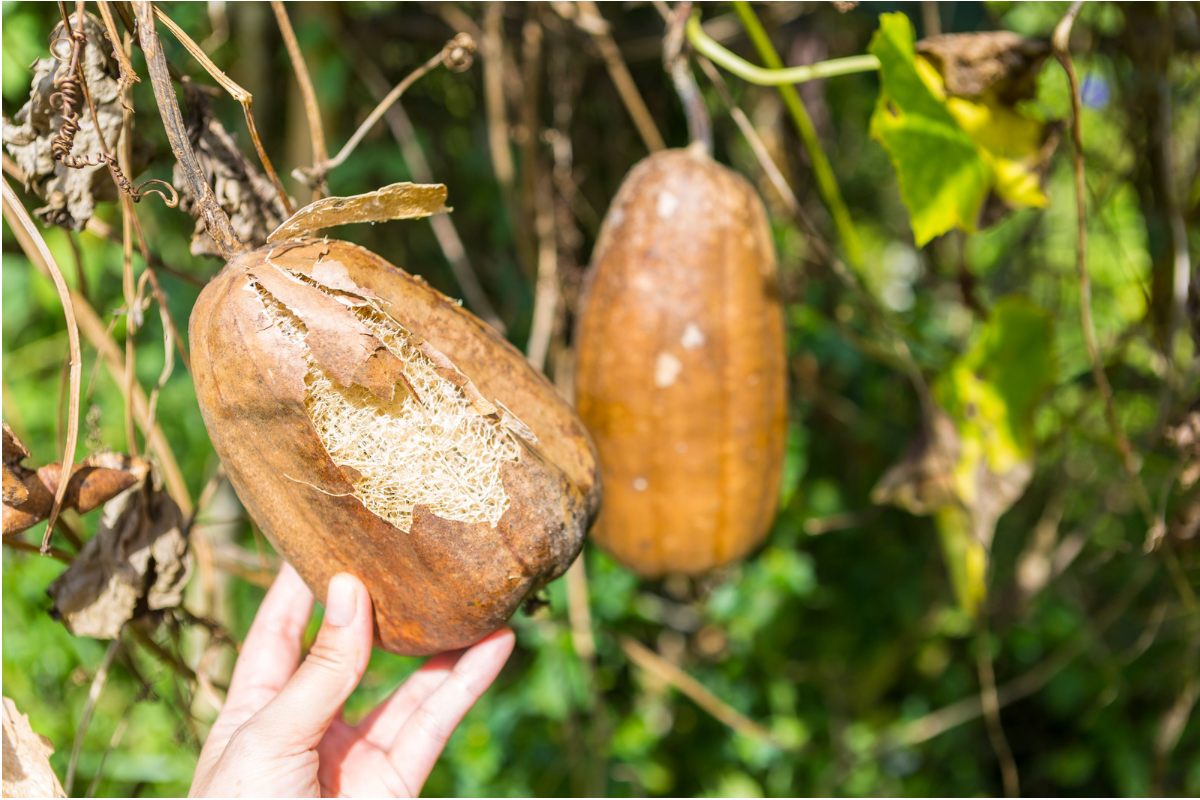
Pick young fruits while tender for cooking. For sponges, leave selected fruits until fully mature and beginning to dry, then peel the outer skin and wash out pulp and seed. Dry the fibre thoroughly before storage.
Propagation
Sow directly into warm soil or raise seedlings individually to minimise root disturbance. Warmth and even moisture help germination. Save seed from fully mature fruits and dry it thoroughly before storage.
Common problems
Powdery mildew commonly affects older leaves, especially with cool nights or poor airflow. Cucurbit-feeding insects may attack young growth. Poor fruit set can result from low pollinator activity, cool weather or a lack of female flowers early in the season.
Safety notes
Young fruit of correctly identified Luffa aegyptiaca is edible when cooked. Mature fibrous fruit is used as a sponge. Do not confuse it with unrelated plants sold under similar common names.
Worth knowing
The first flowers are often male. Female flowers have a small immature fruit behind the petals, so early flowering without fruit does not mean the plant has failed. Bees usually handle pollination, but hand pollination is possible when fruit set is poor.

Grow Loofah with Brancho
Add it to My Garden and Brancho works out what it needs next, timed for your climate.
How it grows around Australia
Growing this too? Share what you've noticed in your garden.
Grow a Little Wild
New plants to try, useful growing tips and a few garden jobs based on what you grow.