
Plant profile
Lychee
Litchi chinensis
Also known as Litchi.
Lychee is a subtropical evergreen fruit tree that needs warm humid summers, a brief cool period before flowering and reliable water while young.
- Grows well in
- Tropical, Subtropical
- Lifecycle
- Evergreen subtropical fruit tree
- Light
- Full sun
- Mature size
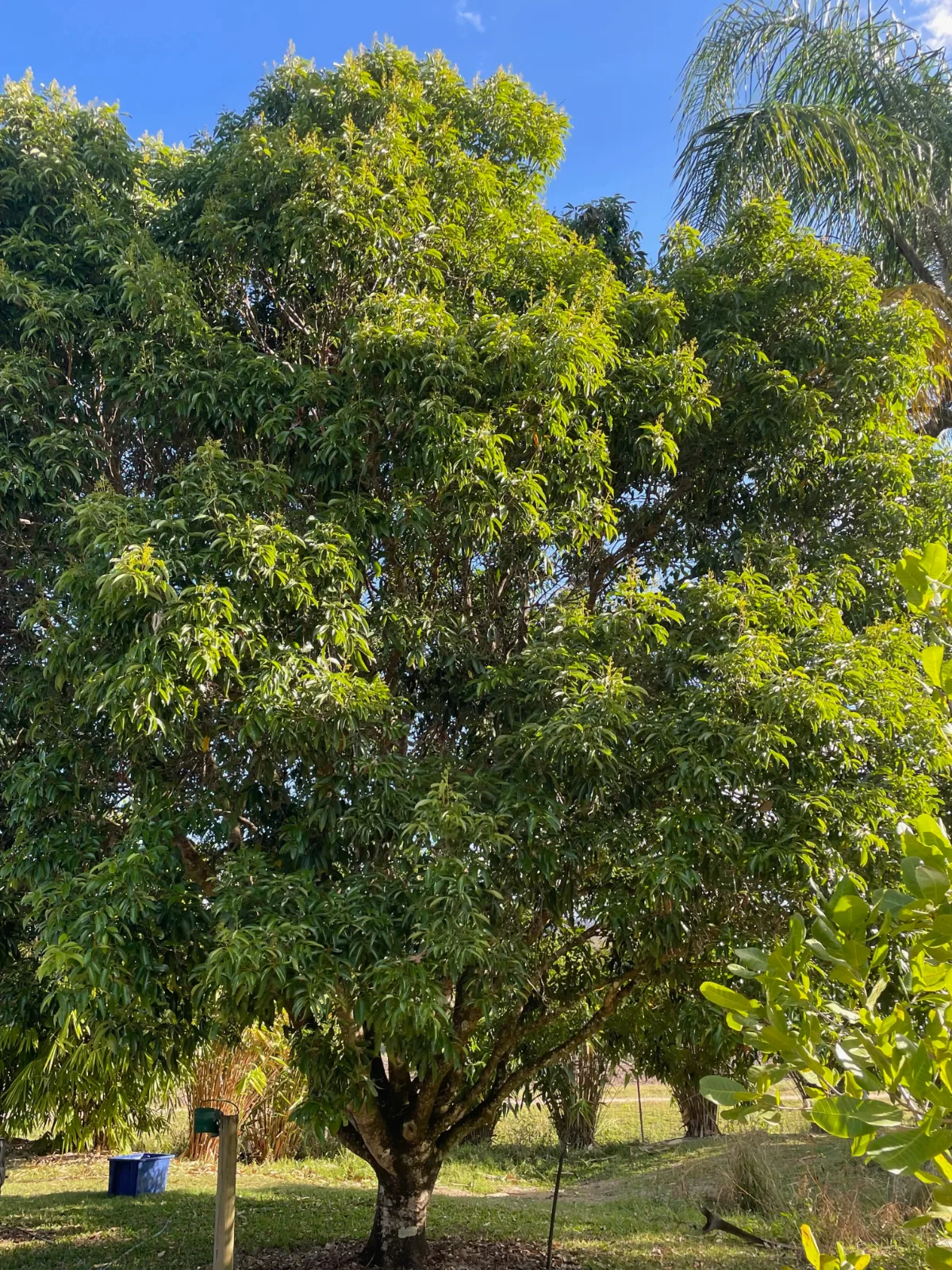
- A mature lychee can reach about 6–12 m tall, developing a broad, dense evergreen canopy.
- Spacing
- Allow roughly 5–7 m between backyard trees if they are to develop naturally, or closer where regular canopy pruning will keep them smaller.
- Growth habit
- Slow to moderately growing evergreen fruit tree with a dense, rounded canopy and glossy compound leaves.
- Native range
- South-western Guangdong in China through mainland South-East Asia to Peninsular Malaysia, Borneo and the Philippines
- Natural habitat
- Wet tropical forest and humid forest margins.
When to plant
Tropical
February–May
Subtropical
February–May, September–November
Planting
Plant a named nursery tree in a warm, sheltered, well-drained position. Lychees are self-pollinating, so one tree can fruit.
Position and light
Full sun with shelter from strong drying winds.
Soil
Fertile, well-drained soil with organic matter.
Watering
Keep young trees well watered and avoid drought stress during flowering and fruit development.
Feeding
Feed during active growth with a suitable fruit-tree fertiliser at the label rate.
Pruning
Prune lightly after harvest to manage size and remove damaged or badly placed growth.
Harvest
Harvest bunches once fruit has developed full colour and flavour for the variety. Lychees do not continue to ripen after picking, so wait for full flavour and colour on the tree before harvesting.
Propagation
Marcotting or air-layering is a reliable way to copy a productive tree. Seed is possible but seedlings are variable and can take much longer to fruit.
Common problems
Poor flowering after very warm winters, bird and bat damage, erinose mite and drought stress can reduce crops. Erinose mite causes distorted, blistered leaves with felt-like growth underneath; badly affected new flushes are worth removing before the next growth cycle. Protect ripening fruit with wildlife-safe netting.
Worth knowing
Lychees are self-pollinating, so you do not need a male and female tree. Fruiting is strongly affected by climate, though: a period of cooler nights before flowering helps trigger a productive bloom. In Australia lychees crop mainly in subtropical and tropical coastal districts of Queensland and northern New South Wales, where winters are mild but still cool enough to set flower buds.
Featured In
Grow Lychee with Brancho
Add it to My Garden and Brancho works out what it needs next, timed for your climate.
How it grows around Australia
Growing this too? Share what you've noticed in your garden.
Grow a Little Wild
New plants to try, useful growing tips and a few garden jobs based on what you grow.