



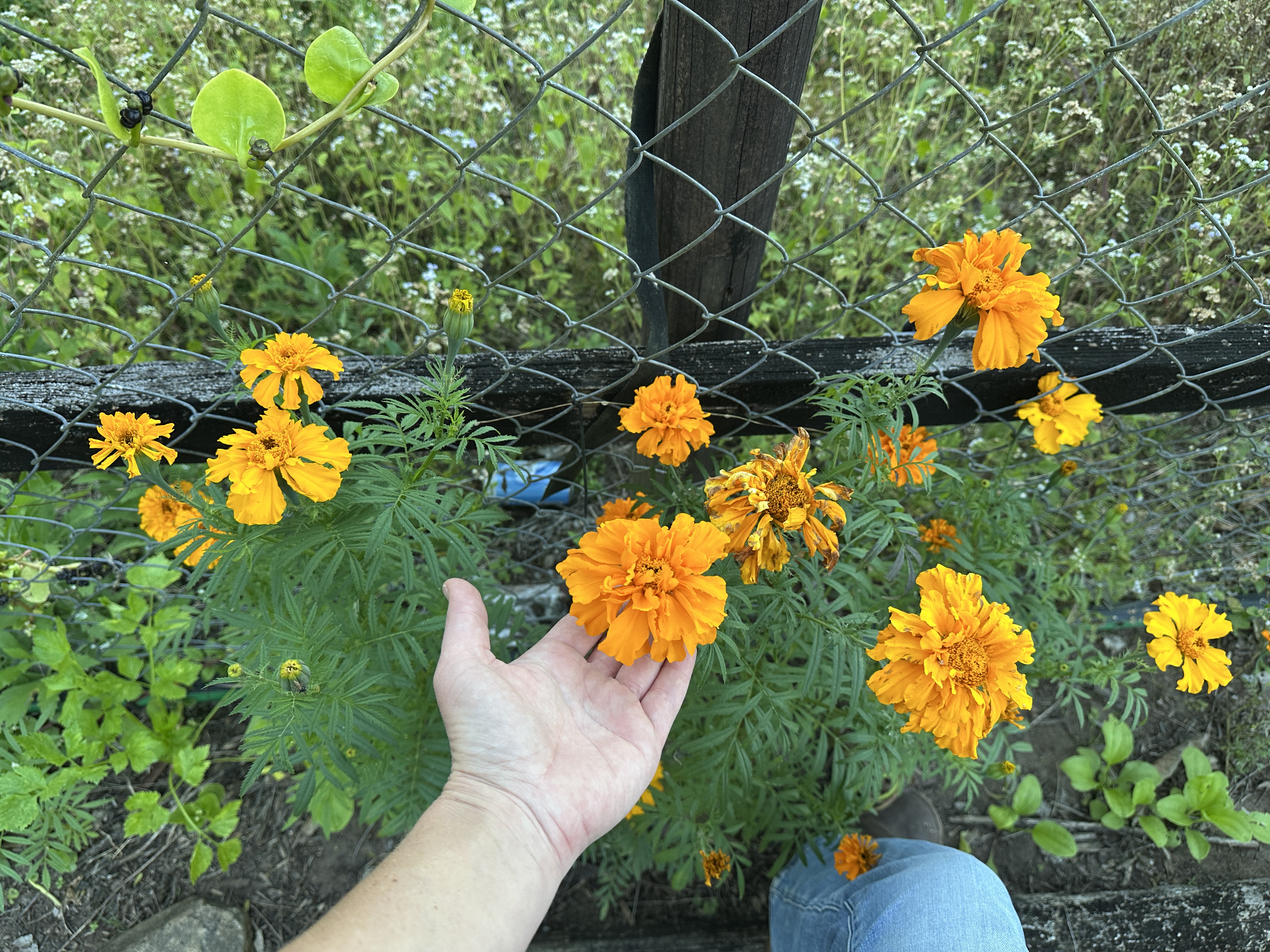
Plant profile
Marigold
Tagetes spp.
Also known as French marigold, African marigold, Tagetes.
Marigolds flower for months and handle hot, dry weather well. Grow them in veggie beds, flower gardens or pots, and remove spent flowers regularly to keep them producing.
- Grows well in
- Tropical, Subtropical, Temperate, Cool / mountains, Arid / inland, Mediterranean
- Lifecycle
- Warm-season annual
- Light
- Full sun
- Mature size
- 20 to 40 cm for French types, up to 90 cm for African types
- Spacing
- 20 to 30 cm apart for small types, 40 cm for tall ones
- Growth habit
- Bushy, branching mound with strongly scented ferny leaves
- Native range
- Subtropical parts of the Americas, from the southern United States through Central and South America
- Natural habitat
- Sunny grassland, open woodland, scrub and disturbed ground.
When to plant
Tropical
April–August
Subtropical
March–September
Temperate
September–December
Cool / mountain
October–December
Arid inland
August–October
Mediterranean
September–November
Temperate and cool: spring to early summer, after frost. Subtropical and tropical: autumn through spring, avoiding the wettest months. Arid: spring and again in autumn.
Planting
Sow seed straight into the ground or into punnets. Seed germinates in about a week in warm soil. In temperate and cool gardens sow from spring after the frosts. In the subtropics and tropics sow through the cooler dry months as well, when humidity is lower and the flowers last longer.
Position and light
Full sun. Shade gives soft stems, few flowers and more mildew.
Soil
Any reasonable garden soil that drains. Marigolds flower well in soil that is not especially rich, so do not over-improve the bed.
Watering
Water in well at planting, then water deeply once or twice a week rather than lightly every day. Water the soil, not the flowers, to keep grey mould off the blooms.
Feeding
Very little needed. A single dose of a balanced fertiliser at planting is plenty. Rich soil and heavy nitrogen give a big leafy plant with few flowers.
Pruning
Pick or snip spent flowers regularly. This is the single job that keeps a marigold flowering for months instead of weeks. Trim the whole plant back by a third if it gets straggly mid-season.
Harvest
Flowers can be picked for the vase or dried for colour. Tagetes petals are used in some cooking, but check the species and treat them as a garnish rather than a crop.
Propagation
From seed, and easy to save. Let a few flowers dry on the plant, pull out the dark seed with the pale tuft attached, and keep it dry until next season.
Common problems
Snails and slugs strip seedlings. Spider mite shows as fine speckling in hot dry weather. Grey mould rots the flowers in humid, wet spells, which is why marigolds often do better in the dry season up north. Powdery mildew appears in shade and crowding.
Safety notes
The foliage has a strong scent and can irritate sensitive skin, so wear gloves if you are pulling out a lot of it. Do not eat garden flowers that have been sprayed.
Worth knowing
Marigolds are often grown alongside vegetables, partly because some Tagetes species can reduce root-knot nematode numbers when grown densely as a cover crop. A few marigolds dotted between tomatoes will not eliminate these soil-dwelling worms. The flowers are a good reason to grow them anyway: bees and hoverflies use the blooms, especially more open-flowered varieties.

Grow Marigold with Brancho
Add it to My Garden and Brancho works out what it needs next, timed for your climate.
How it grows around Australia
Growing this too? Share what you've noticed in your garden.

Grow a Little Wild
New plants to try, useful growing tips and a few garden jobs based on what you grow.