

Plant profile
Monstera
Monstera deliciosa
Also known as Fruit salad plant, Swiss cheese plant, Ceriman, Split-leaf philodendron.
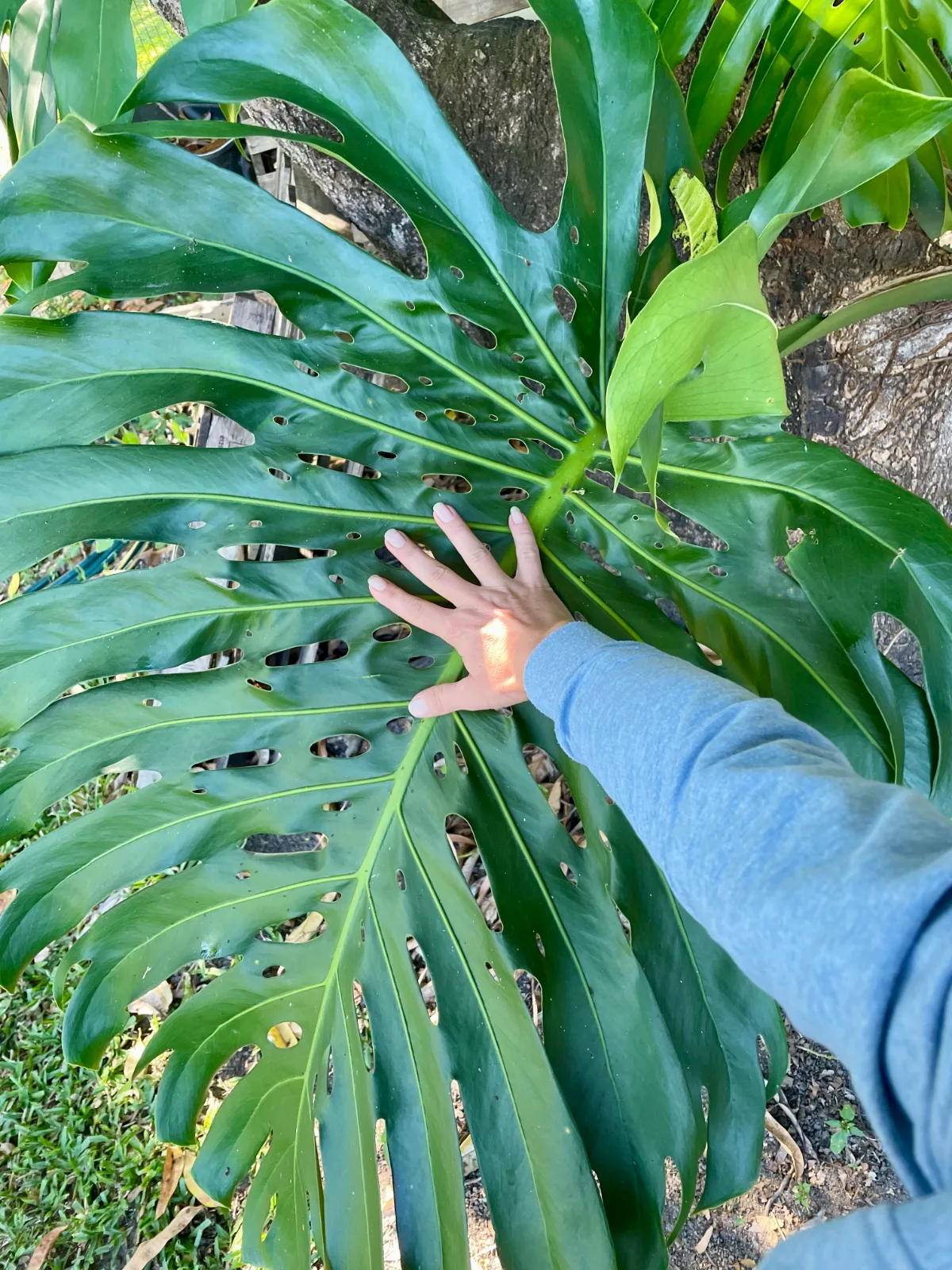
Monstera is a tropical climber with large split and perforated leaves. Give it a sturdy support and bright filtered light and the leaves become much larger as the plant matures.
- Grows well in
- Tropical, Subtropical, Temperate
- Lifecycle
- Evergreen perennial climbing vine
- Light
- Part shade, Shade
- Mature size
- Commonly 2–5 m on a support in pots or gardens; outdoors it can climb much higher into trees if left unmanaged.
- Spacing
- Allow roughly 1.5–2 m between garden plants, or one plant per large pot and support where it can be pruned to size.
- Growth habit
- Vigorous evergreen climbing aroid with thick stems, aerial roots and progressively larger, more deeply divided leaves as it matures.
- Native range
- Southern Mexico, from Veracruz through Oaxaca and Chiapas, to Guatemala
- Natural habitat
- Wet tropical forest, where it climbs trees and can root both along trunks and on the forest floor.
When to plant
Tropical
February–October
Subtropical
September–April
Temperate
October–March
Mediterranean
October–March
Repot or plant during warm active growth, ideally from late winter through spring in cooler regions. Avoid disturbing roots immediately before cold weather.
Planting
Plant into a free-draining but moisture-retentive mix and provide a strong support from the start. Outdoors, choose a sheltered shaded position with enough room for the vine to climb.
Position and light
Medium to very bright indirect light is ideal. Outdoors, use filtered light or part shade. Low light is tolerated but produces slower, leggier growth and smaller leaves.
Soil
Use a chunky, free-draining potting mix with good aeration around the fleshy roots. In the ground it likes fertile organic soil that drains well while holding some moisture.
Watering
Water when the upper few centimetres of mix have dried, then soak thoroughly and drain. Mature plants tolerate short dry times better than waterlogged roots. Reduce watering in cool or low-light conditions.
Feeding
Feed during active warm-season growth with a balanced foliage-plant fertiliser at the label rate. Container plants also benefit from periodic fresh potting mix as roots fill the pot.
Pruning
Cut long bare stems back above a node to control size and encourage fresh shoots. Guide aerial roots into the potting mix or onto the support where practical.
Harvest
Outdoor plants in warm climates may produce edible fruit. Only fully ripe fruit should be eaten; unripe fruit and all other plant parts contain irritating calcium oxalate crystals.
Propagation
Take a stem cutting with at least one node and preferably an aerial-root bud. Root it in a moist, airy medium or water, then pot once a healthy root system has formed.
Common problems
Yellowing can come from overwatering, root stress or poor drainage. Watch for scale, mealybugs and thrips. Unsupported plants sprawl, while aerial roots can mark or damage walls and other surfaces.
Safety notes
All parts contain calcium oxalate crystals and can cause immediate burning and swelling if chewed. Only fully ripe fruit is considered edible, and even ripe fruit can cause reactions in some people.
Worth knowing
The famous holes and splits become more pronounced as the plant matures and climbs in good light. A juvenile monstera may have completely uncut leaves.
Featured In
Grow Monstera with Brancho
Add it to My Garden and Brancho works out what it needs next, timed for your climate.
How it grows around Australia
Growing this too? Share what you've noticed in your garden.
Grow a Little Wild
New plants to try, useful growing tips and a few garden jobs based on what you grow.