
Plant profile
Oakleaf hydrangea
Hydrangea quercifolia
Also known as oak-leaf hydrangea, oak leaf hydrangea.
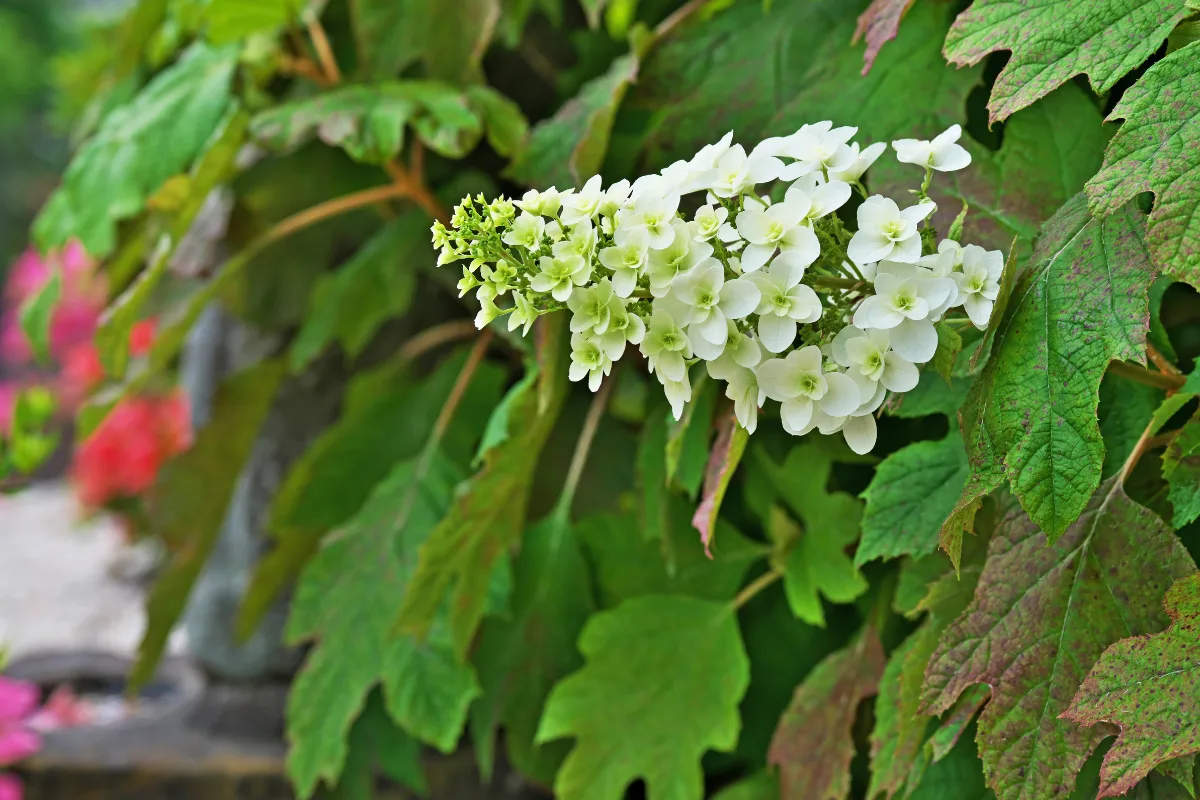
Oakleaf hydrangea is grown as much for its foliage as its flowers. Large oak-shaped leaves turn rich bronze, red and burgundy in autumn, while long white flower clusters appear through summer.
- Grows well in
- Subtropical, Temperate, Cool / mountains, Mediterranean
- Lifecycle
- Deciduous flowering shrub
- Light
- Full sun, Part shade
- Mature size
- Usually around 1–2 m tall and wide, although cultivar size varies.
- Spacing
- Allow roughly 1–2 m between plants, adjusting for the mature width of the cultivar.
- Growth habit
- Rounded to spreading deciduous shrub with large lobed leaves, upright flower panicles and strong autumn colour. Established plants can slowly spread by suckering.
- Native range
- South-eastern United States
- Natural habitat
- Temperate woodland, ravines, stream valleys and shaded rocky slopes.
When to plant
Subtropical
April–August
Temperate
April–September
Cool / mountain
May–September
Mediterranean
May–September
Autumn to early spring is a good planting window in most suitable Australian climates, avoiding frozen soil and the hottest part of summer.
Planting
Plant into rich, well-drained soil with room for the shrub to spread. Morning sun or gentle sun suits warmer gardens, while cooler areas can give it more sun. Protect it from harsh reflected heat and drying winds.
Position and light
Oakleaf hydrangea needs more sun than many mophead hydrangeas for strong flowering and good autumn colour. Full sun can suit cool districts; in warmer parts of Australia, morning sun with afternoon shade is a safer position.
Soil
Rich, moist, well-drained soil is ideal. Slightly acidic soil suits it well, although it tolerates a fairly broad pH range. Mulch helps keep the root zone cooler and more evenly moist.
Watering
Water deeply during hot or dry weather, particularly while the plant is establishing and flowering. Do not leave the root zone permanently saturated.
Feeding
Feed in spring as new growth begins with compost and a suitable flowering-shrub fertiliser at the label rate.
Pruning
Prune lightly after flowering if the shrub needs shaping. Oakleaf hydrangea flowers mainly on older wood, so heavy winter pruning can remove the next crop of flowers. Remove dead or damaged stems whenever you find them.
Harvest
Cut mature flower panicles for fresh arrangements, or leave them on the shrub to age through pink and brown tones. Older flower heads can also be dried.
Propagation
Propagate from cuttings, seed or by dividing established suckering growth where appropriate. Cuttings are the best option when you want to keep a named cultivar true to type.
Common problems
Young growth can be damaged by slugs and snails. Root rot and fungal problems are more likely where soil stays constantly wet or airflow is poor.
Safety notes
Hydrangea plant material is poisonous if eaten and may irritate skin or eyes. Keep prunings away from children and animals that may chew plants.
Worth knowing
Oakleaf hydrangea is quite different from the familiar Hydrangea macrophylla. Its flowers are long panicles rather than mopheads, its leaves colour strongly in autumn, and it generally tolerates more sun. The flowers do not change blue or pink according to soil pH in the same way as H. macrophylla.

Grow Oakleaf hydrangea with Brancho
Add it to My Garden and Brancho works out what it needs next, timed for your climate.
How it grows around Australia
Growing this too? Share what you've noticed in your garden.
Grow a Little Wild
New plants to try, useful growing tips and a few garden jobs based on what you grow.