


Plant profile
Okinawa spinach
Gynura bicolor
Also known as Hong tsoi, Cranberry hibiscus spinach, Gynura.
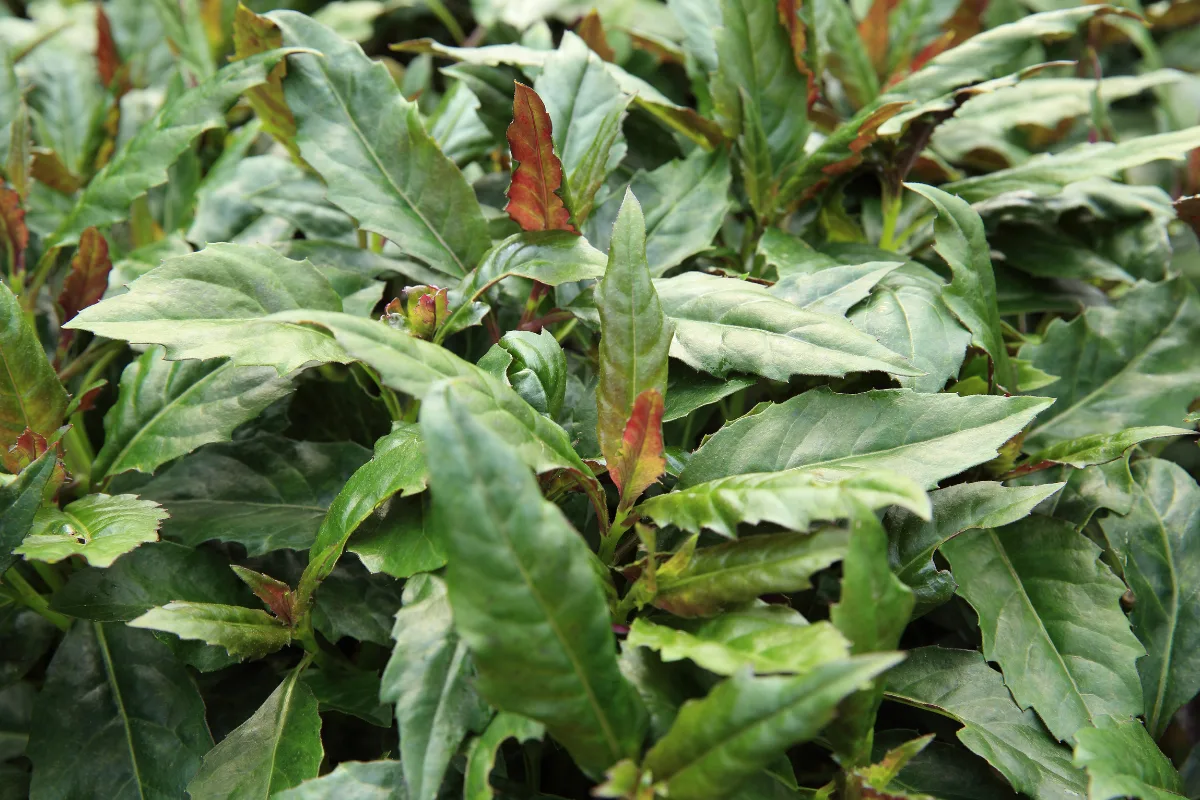
Okinawa spinach is a low, spreading perennial green with purple undersides to the leaves. Once it is in, you can harvest it over many seasons and it strikes from any piece you break off.
- Grows well in
- Tropical, Subtropical, Temperate
- Lifecycle
- Perennial leafy green
- Light
- Part shade, Full sun
- Mature size
- 30 to 60 cm tall, spreading 60 cm to 1 m
- Spacing
- 40 to 50 cm apart
- Growth habit
- Low, spreading, soft-stemmed perennial
- Native range
- Indian subcontinent to southern China and Taiwan, plus the Caroline Islands
- Natural habitat
- Subtropical woodland, forest margins and moist open slopes.
When to plant
Tropical
August–April
Subtropical
September–April
Temperate
October–March
Tropical and subtropical: any warm month. Temperate: spring to early autumn, with frost protection or a pot for winter.
Planting
Plant cuttings in the warm months. Push a 10 to 15 cm piece into damp soil or potting mix, keep it shaded for a week or two, and it roots on its own. It spreads sideways, so it works as an edible groundcover under fruit trees.
Position and light
Part shade suits it best, especially in hot areas. Full sun works in mild gardens with steady moisture, but the leaves are tougher.
Soil
Moist, compost-rich soil that still drains. Mulch well.
Watering
Keep the soil damp through the warm months. The leaves wilt quickly when dry and recover slowly.
Feeding
A dose of compost or a balanced fertiliser two or three times through the warm season keeps the leaves soft and productive.
Pruning
Pick the tips regularly and cut the plant back by half whenever it gets straggly or woody. It shoots again from the base, and the prunings make new plants.
Harvest
Pick young tips and leaves. Cook them rather than eating a big raw salad of them, in stir fries, soups or tempura. The colour fades to green when cooked.
Propagation
Stem cuttings, any time in warm weather. Almost every piece strikes.
Common problems
Caterpillars and grasshoppers chew leaves in the wet season. Fungal spotting in humid weather, helped by thinning the clump. Frost knocks it back hard. Plants go woody and unproductive after a few years, so restart from cuttings.
Safety notes
Eaten cooked as a leafy green in Okinawan and southern Chinese cooking. Gynura species contain compounds that are not recommended in large or medicinal doses, so treat it as an occasional cooked vegetable rather than a daily bulk green, and avoid it if you are pregnant or have liver problems.
Worth knowing
This is one of the easiest perennial greens for a warm Australian garden and it needs almost no seed-raising. One plant from a friend can fill a bed within a season.

Grow Okinawa spinach with Brancho
Add it to My Garden and Brancho works out what it needs next, timed for your climate.
How it grows around Australia
Growing this too? Share what you've noticed in your garden.
Grow a Little Wild
New plants to try, useful growing tips and a few garden jobs based on what you grow.