
Plant profile
Okra
Abelmoschus esculentus
Also known as Ladies fingers, Bhindi, Gumbo.
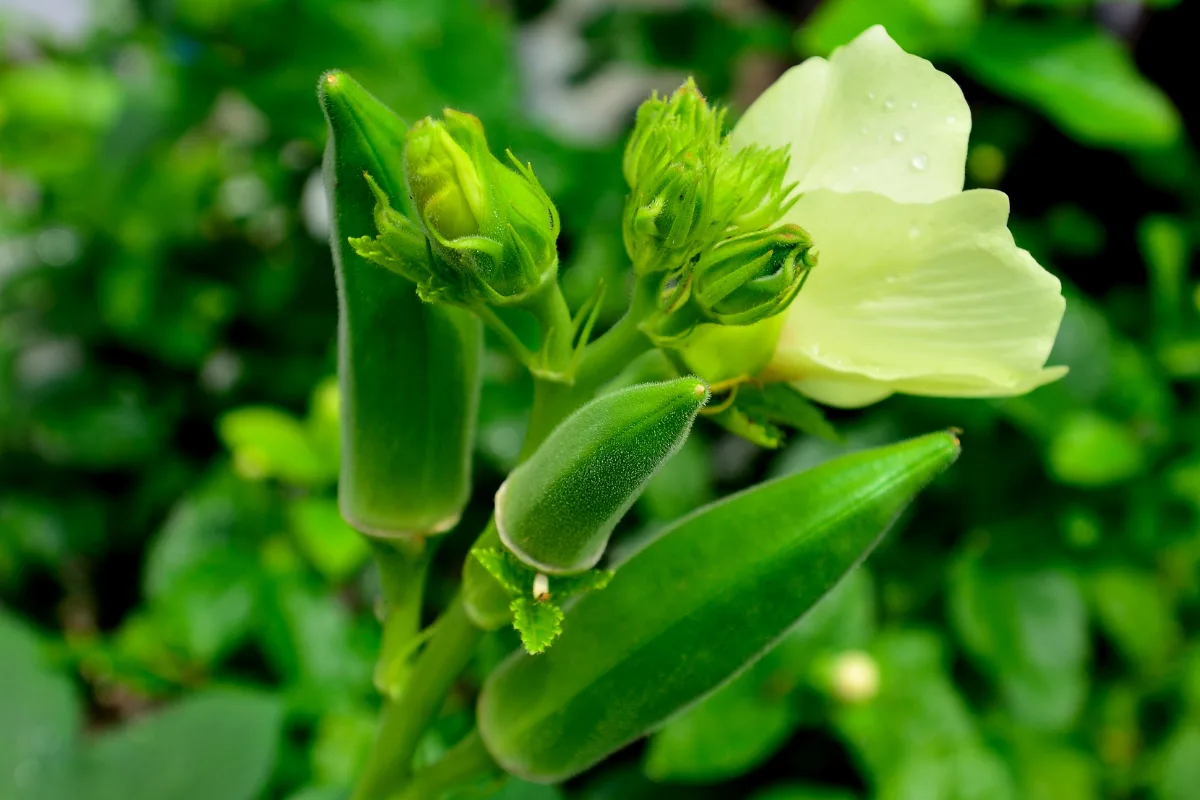
Okra thrives in the kind of heat that stops most vegetables, and it produces for months if you pick every day or two. The flowers alone are worth the space.
- Grows well in
- Tropical, Subtropical, Temperate, Arid / inland
- Lifecycle
- Warm-season annual
- Light
- Full sun
- Mature size
- 1 to 2 m tall
- Spacing
- 40 to 50 cm apart
- Growth habit
- Upright, single-stemmed plant with large lobed leaves and hibiscus-like flowers
- Native range
- South-western Uttarakhand to western and central India
- Natural habitat
- Seasonally dry tropical open ground, grassland and woodland margins.
When to plant
Tropical
April–November
Subtropical
September–January
Temperate
October–December
Arid inland
September–December
Tropical: dry season through to the wet. Subtropical: spring to midsummer. Temperate: late spring to early summer, once the soil is properly warm. Arid: spring.
Planting
Sow seed 2 cm deep directly into warm soil, ideally above 20 degrees. Soaking the seed overnight improves germination. Cold soil rots the seed, so waiting a fortnight in spring is better than sowing too early. Okra does not like root disturbance, so sow in place if you can.
Position and light
Full sun, all day.
Soil
Free-draining soil with compost. Okra copes with heat and moderate dryness but crops much better with good soil.
Watering
Water deeply once or twice a week rather than lightly every day. Steady moisture during flowering keeps pods coming.
Feeding
Compost at planting, then a balanced or potassium-leaning feed every four weeks once flowering starts. Heavy nitrogen gives a tall leafy plant with few pods.
Pruning
Remove the lower leaves as the plant gets tall to improve airflow. In long warm seasons you can cut the plant back by a third after the first flush and get a second one.
Harvest
Pick pods small, at 5 to 10 cm, and pick every day or two. Pods go woody and stringy within days. If you find a big one, cut it off anyway, because leaving mature pods on the plant shuts down flowering.
Propagation
From seed. Leave one or two pods to dry brown on the plant and save the seed.
Common problems
Poor germination in cold soil is the most common issue. Aphids on the growing tips, and stink bugs on pods. Powdery mildew late in the season. Root knot nematodes in sandy soil, so rotate the bed.
Safety notes
The leaves and pods carry fine bristly hairs that irritate skin, so wear long sleeves and gloves when picking. Some varieties are spinier than others.
Worth knowing
The slippery texture people dislike comes out mostly in slow wet cooking. Fast, hot cooking such as grilling, roasting or a hard fry keeps the pods firm.
Grow Okra with Brancho
Add it to My Garden and Brancho works out what it needs next, timed for your climate.
How it grows around Australia
Growing this too? Share what you've noticed in your garden.
Grow a Little Wild
New plants to try, useful growing tips and a few garden jobs based on what you grow.