
Plant profile
Oleander
Nerium oleander
Also known as Rose laurel, Pink oleander, White oleander.
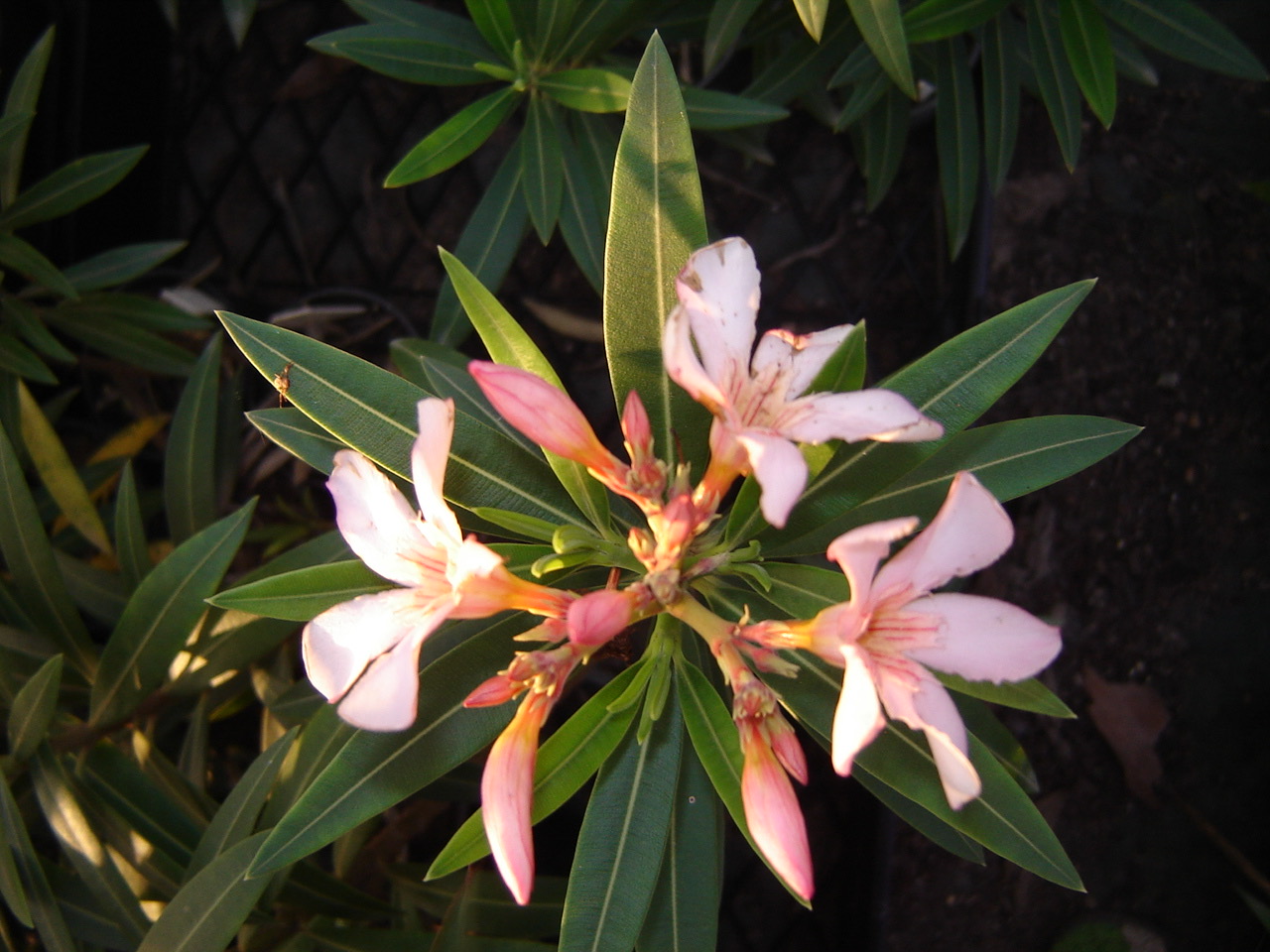
Oleander is a tough evergreen shrub with long narrow leaves and clusters of pink, red, white or apricot flowers. It handles heat, dry conditions and regular pruning extremely well.
- Grows well in
- Tropical, Subtropical, Temperate, Cool / mountains, Arid / inland, Mediterranean
- Lifecycle
- Evergreen flowering shrub or small tree
- Light
- Full sun, Part shade
- Mature size
- Usually 2–4 m tall, sometimes reaching about 6 m, with a broad multi-stemmed habit.
- Spacing
- Allow about 2–3 m for an unmanaged shrub.
- Growth habit
- Dense multi-stemmed evergreen shrub or small tree.
- Native range
- Mediterranean region east to Myanmar
- Natural habitat
- Subtropical riverbeds, stream margins, rocky valleys and seasonally dry scrub.
When to plant
Plant during mild to warm weather when regular watering is available. In cooler districts, wait until frost risk has passed.
Planting
Plant in full sun with enough room for the shrub to develop. It handles heat and dry conditions once established, but young plants still need regular watering while the roots settle in.
Position and light
Full sun gives the strongest flowering. It tolerates exposed hot sites once established.
Soil
Adaptable to many soils if drainage is reasonable.
Watering
Water while establishing. Mature plants are drought tolerant, although flowering and growth are stronger with occasional deep watering in long dry periods.
Feeding
Usually little is needed in garden soil. Heavy feeding is unnecessary.
Pruning
Prune only where size or safety requires it. Wear gloves, avoid sap contact and never burn oleander prunings.
Propagation
Stem cuttings root readily in warm weather. Wear gloves when handling cut stems because the sap is toxic.
Common problems
Scale can occur. Dense old shrubs can become woody and difficult to handle because every part of the plant is toxic. Dense old growth can shelter scale and other sap-sucking insects. Inspect stems and leaf undersides before treating; opening the centre slightly can make monitoring easier while keeping the shrub from becoming a solid woody mass.
Safety notes
All parts are highly toxic if eaten and the sap can irritate skin. Smoke from burning oleander is also hazardous. Keep plant material away from children, pets and livestock.
Worth knowing
Flowering is strongest when plants are allowed to make some fresh growth between trims, so constant clipping can reduce the display.
Grow Oleander with Brancho
Add it to My Garden and Brancho works out what it needs next, timed for your climate.
How it grows around Australia
Growing this too? Share what you've noticed in your garden.
Grow a Little Wild
New plants to try, useful growing tips and a few garden jobs based on what you grow.