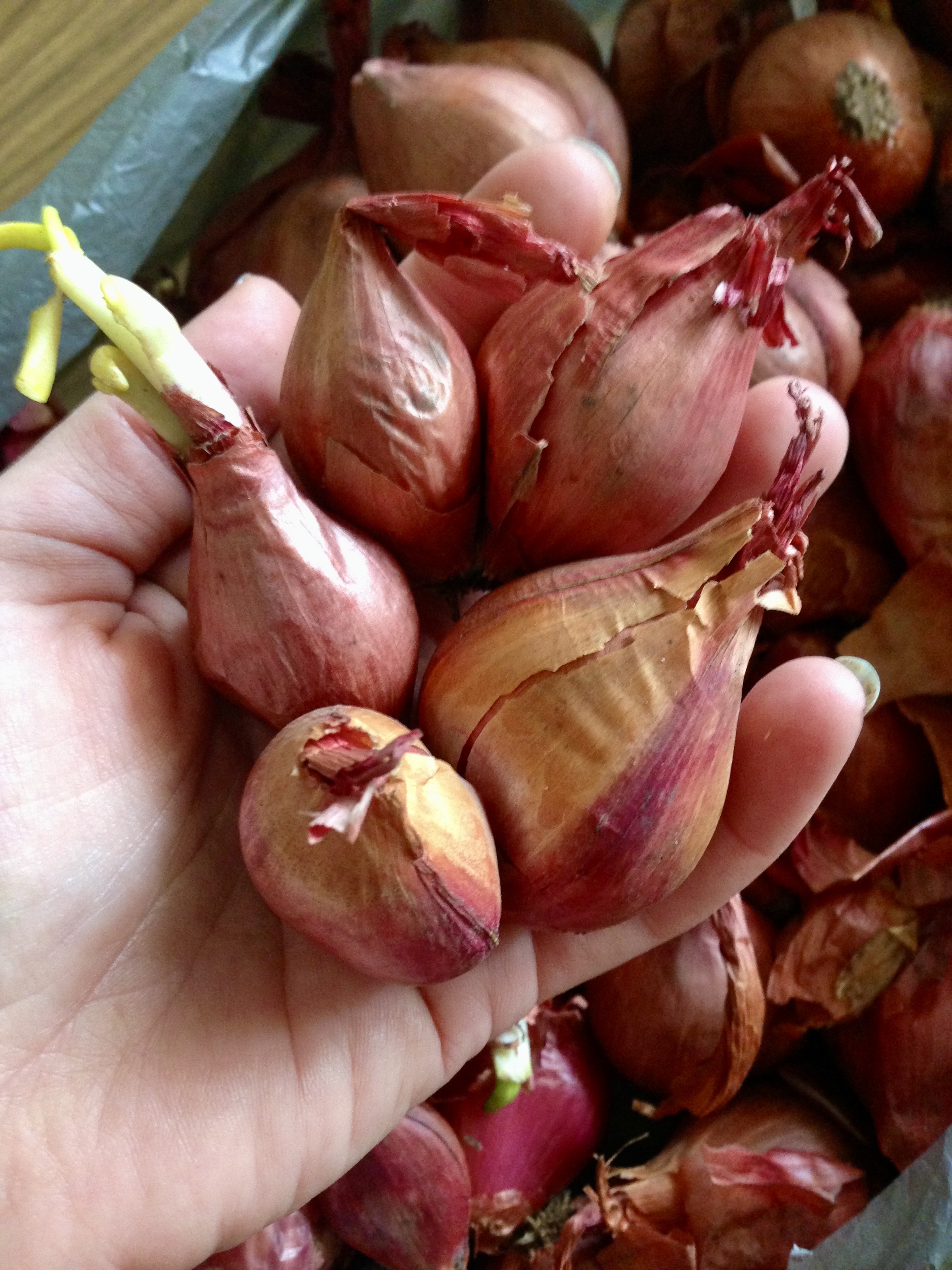
Plant profile
Onion
Allium cepa
Also known as Bulb onion.
Bulb onions need the right day-length type for the local climate and a long growing season. Variety choice matters as much as planting date.
- Grows well in
- Tropical, Subtropical, Temperate, Cool / mountains, Arid / inland, Mediterranean
- Lifecycle
- Annual or biennial bulb crop grown as an annual
- Light
- Full sun
- Mature size
- Usually about 30–60 cm tall while growing, with bulb diameter depending on the variety and how much space the plant receives.
- Spacing
- Plant or thin bulb onions to roughly 10–15 cm apart for good-sized bulbs.
- Growth habit
- Upright bulb-forming allium with hollow or tubular leaves arising from a short stem above the developing underground bulb.
- Native range
- An ancient cultivated onion originating in Central Asia
- Natural habitat
- A long-cultivated temperate crop rather than a plant with one clearly defined wild habitat.
When to plant
Tropical
March–May
Subtropical
March–June
Temperate
March–June
Cool / mountain
April–July
Arid inland
March–June
Mediterranean
March–June
Planting
Choose short-, intermediate- or long-day onions suited to your district. Sow seed or transplant small seedlings into full sun and well-prepared soil, usually through the cooler part of the year.
Position and light
Full sun.
Soil
Fertile, well-drained soil with organic matter, around mildly acidic to neutral. Avoid very high nitrogen levels once bulbs are forming.
Watering
Keep moisture fairly steady through leaf growth and early bulbing. Reduce watering as tops yellow and bulbs mature.
Feeding
Feed lightly during strong leaf growth if needed. Avoid heavy nitrogen feeding once bulbing is underway.
Pruning
No pruning is needed. Do not bend healthy tops down to force maturity.
Harvest
Harvest when tops naturally yellow and fall over and bulbs have reached useful size. Cure before long storage. After lifting mature bulbs, cure them in a dry, airy, shaded place until the outer skins and necks are papery before storing. Thick-necked or damaged bulbs are better used first.
Propagation
Grow from seed or seedlings. Bulb development depends strongly on day length, so save or buy seed from varieties suited to the local climate.
Common problems
Thrips, fungal disease, bulb rots and poor bulb development from unsuitable varieties or excess nitrogen can occur.
Safety notes
Onions are toxic to dogs and cats in significant amounts.
Worth knowing
Bulb formation is controlled strongly by day length. Choosing a short-, intermediate- or long-day onion suited to your latitude matters just as much as ordinary soil and feeding care if you want proper bulbs rather than lots of leaves.
Grow Onion with Brancho
Add it to My Garden and Brancho works out what it needs next, timed for your climate.
How it grows around Australia
Growing this too? Share what you've noticed in your garden.
Grow a Little Wild
New plants to try, useful growing tips and a few garden jobs based on what you grow.