


Plant profile
Panicle hydrangea
Hydrangea paniculata
Also known as panicled hydrangea, tree hydrangea.
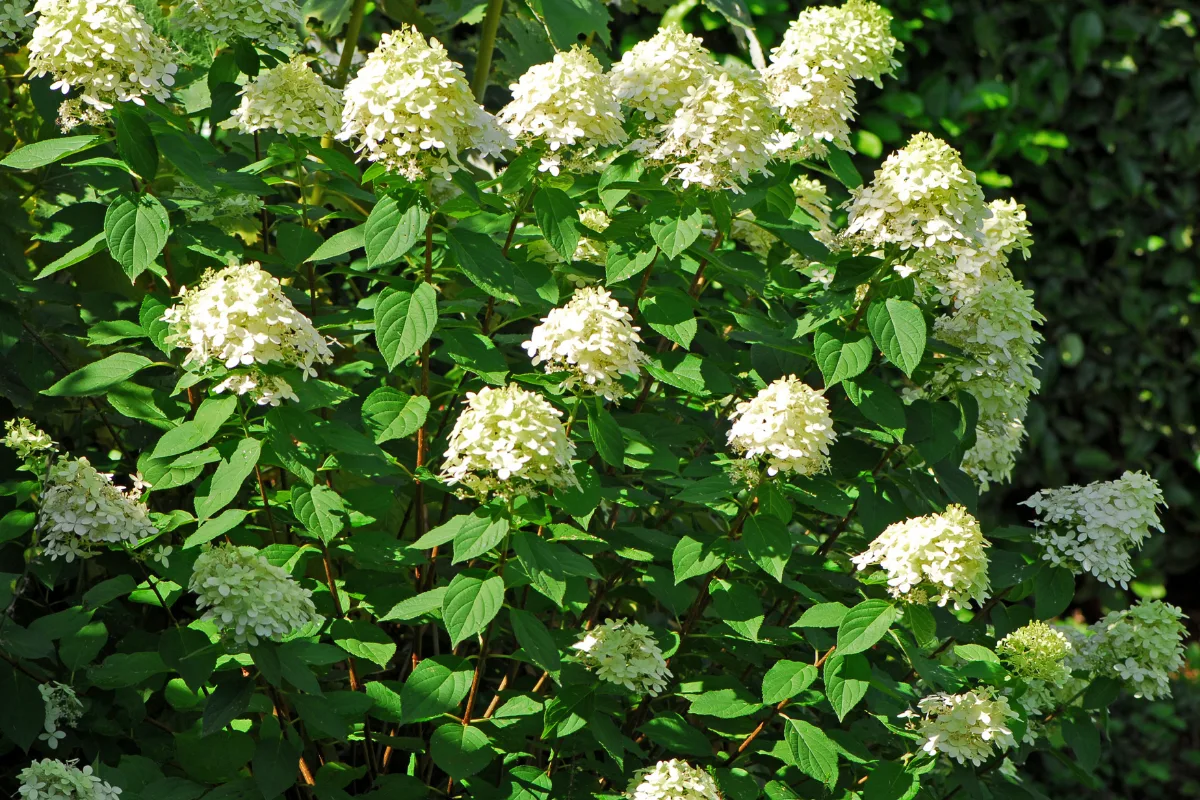
Panicle hydrangea is the sun-tolerant hydrangea of the group, with upright cone-shaped flower clusters that usually open cream or white and often deepen to pink or red as they age.
- Grows well in
- Subtropical, Temperate, Cool / mountains, Mediterranean
- Lifecycle
- Deciduous flowering shrub
- Light
- Full sun, Part shade
- Mature size
- Many modern cultivars grow around 1.2–2.5 m tall and wide, while older vigorous forms can become considerably larger.
- Spacing
- Allow about 1.2–2.5 m between plants depending on the cultivar and whether you want separate shrubs or a hedge.
- Growth habit
- Upright deciduous shrub with strong new stems carrying large cone-shaped flower panicles in summer.
- Native range
- Central and southern China, Taiwan, Sakhalin and Japan
- Natural habitat
- Temperate woodland, mountain forest margins and open slopes.
When to plant
Subtropical
April–August
Temperate
April–September
Cool / mountain
May–September
Mediterranean
May–September
Plant from autumn to early spring in most suitable Australian climates. In cold areas, avoid planting into frozen ground; in warmer areas, establish the shrub before summer heat arrives.
Planting
Plant into rich, well-drained soil with space for the cultivar to reach its mature size. Panicle hydrangeas can take considerably more sun than mophead hydrangeas, although protection from severe afternoon heat and hot drying winds is useful in warmer districts.
Position and light
Full sun to part shade. Good light produces strong flowering, but afternoon shade can help in hotter parts of Australia. Protect plants from searing winds.
Soil
Rich, fertile, well-drained soil that holds enough moisture through summer. Panicle hydrangeas are less dependent on acidic soil than blue-flowered Hydrangea macrophylla.
Watering
Keep the root zone evenly moist through active growth and flowering. Established plants cope with more sun than most hydrangeas but still benefit from deep watering during hot weather.
Feeding
Feed in spring as new growth starts with compost and a suitable flowering-shrub fertiliser at the label rate.
Pruning
Panicle hydrangea flowers on new season's growth, so it can be pruned in winter without removing the coming flower crop. Cut back last season's growth to shape the shrub and encourage strong new flowering stems. How hard you prune depends on the cultivar and the size you want.
Harvest
Cut flower panicles once they are well developed for fresh arrangements. Flowers left to mature on the shrub often develop pink, red or antique tones and can also be dried.
Propagation
Propagate named cultivars from cuttings so the new plant keeps the same flower and growth characteristics.
Common problems
Heat stress and wilting can occur if the root zone becomes too dry. Poor drainage can lead to root problems, while dense growth may develop fungal disease where airflow is limited.
Safety notes
Hydrangea plant material is poisonous if eaten and may irritate skin or eyes. Keep prunings away from children and animals that may chew plants.
Worth knowing
Panicle hydrangea flowers on new wood, which makes pruning much simpler than with many Hydrangea macrophylla and oakleaf hydrangeas. Cultivars vary enormously in size and flower colour. 'Grandiflora', often called Pee Gee hydrangea, is an old vigorous form; many newer cultivars stay much smaller.

Grow Panicle hydrangea with Brancho
Add it to My Garden and Brancho works out what it needs next, timed for your climate.
How it grows around Australia
Growing this too? Share what you've noticed in your garden.
Grow a Little Wild
New plants to try, useful growing tips and a few garden jobs based on what you grow.