

Plant profile
Papaya
Carica papaya
Also known as pawpaw, papaw.
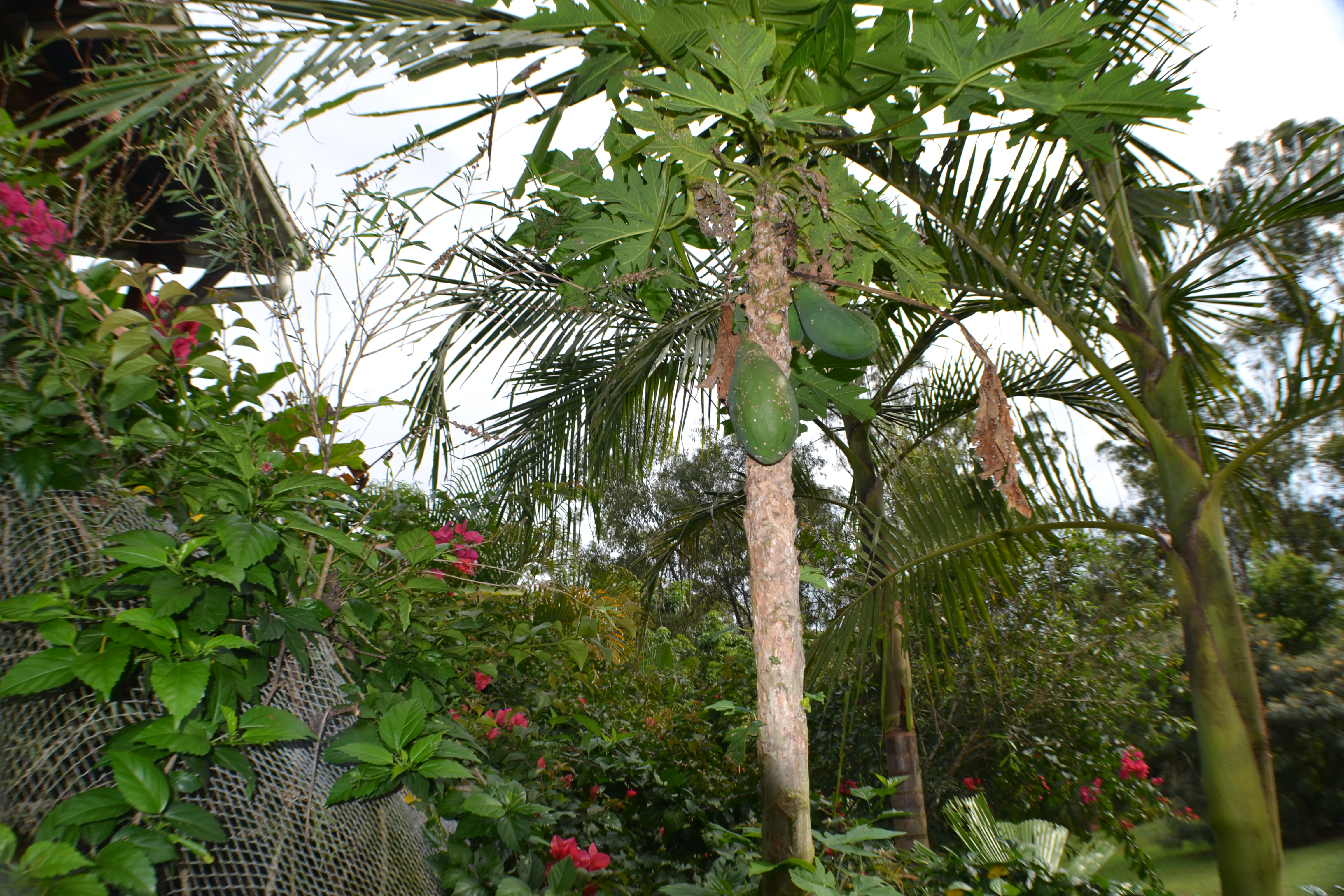
Papaya is a fast-growing tropical fruit plant with a single soft trunk, a crown of large leaves and fruit carried close to the stem. It needs warmth, excellent drainage and protection from frost and strong wind. Seedling sex matters: some plants are male only, while bisexual cultivars can fruit without a separate pollinator.
- Grows well in
- Tropical, Subtropical, Temperate
- Lifecycle
- Short-lived evergreen tropical fruit plant
- Light
- Full sun
- Mature size
- Usually 2–5 m tall with a narrow crown, often shorter-lived in cool climates
- Spacing
- About 2–3 m apart
- Growth habit
- Fast upright soft-stemmed plant with leaves and fruit clustered near the trunk top
- Native range
- Southern Mexico to Venezuela
- Natural habitat
- Wet tropical forest margins, river valleys and open sunny gaps.
When to plant
Tropical
April–October
Subtropical
September–January
Temperate
October–December
Tropical: plant in warm weather, preferably where drainage is reliable before the wet season. Subtropical: spring to early summer after cold weather. Warm temperate: late spring in a protected frost-free site.
Planting
Plant into warm, free-draining soil and avoid burying the stem. Choose a raised mound where heavy rain or clay causes waterlogging. Papayas dislike root disturbance, so transplant young plants carefully and avoid damaging the fleshy roots.
Position and light
Full sun with shelter from strong wind. In marginal temperate climates, choose the warmest frost-free microclimate available.
Soil
Deep, fertile, free-draining soil with organic matter. Drainage is critical; roots and lower stems rot quickly in saturated ground.
Watering
Water regularly through dry weather and while fruit is sizing, but let excess water drain away. Reduce watering in cool periods when growth slows.
Feeding
Feed little and often during warm active growth with a complete fertiliser containing potassium and trace elements. Mulch helps, but keep mulch and compost away from direct contact with the soft trunk.
Pruning
Routine pruning is minimal. Remove dead leaves and old fruit stalks. If a tall trunk is cut back it may reshoot, but recovery is variable and wound rot is a risk in wet conditions.
Harvest
Pick when the skin begins changing from green to yellow. The fruit can finish ripening indoors, although leaving it to colour further on the plant usually gives better flavour where fruit flies and the weather allow.
Propagation
Usually grown from seed. Named bisexual cultivars give more predictable fruiting than random seedlings. Germinate seed warm and transplant before roots become crowded.
Common problems
Papaya roots and the base of the stem can rot in poorly drained soil. Fruit flies may lay eggs in ripening fruit, while mites and scale can feed on leaves and stems. Humid weather can encourage fungal leaf or fruit diseases. Give the plant drainage, some shelter from strong wind and enough warmth to keep growing.
Safety notes
Ripe fruit is widely eaten. Unripe fruit and latex are much more irritant; sensitive people can react to sap, so avoid eye and skin contact when cutting green fruit or stems.
Worth knowing
Papaya plants may be male, female or bisexual. A male-only seedling may flower but never carry normal fruit. Bisexual cultivars are useful in small gardens because one plant can set fruit.
Featured In
Grow Papaya with Brancho
Add it to My Garden and Brancho works out what it needs next, timed for your climate.
How it grows around Australia
Growing this too? Share what you've noticed in your garden.
Grow a Little Wild
New plants to try, useful growing tips and a few garden jobs based on what you grow.