

Plant profile
Peace lily
Spathiphyllum wallisii
Also known as spathiphyllum.
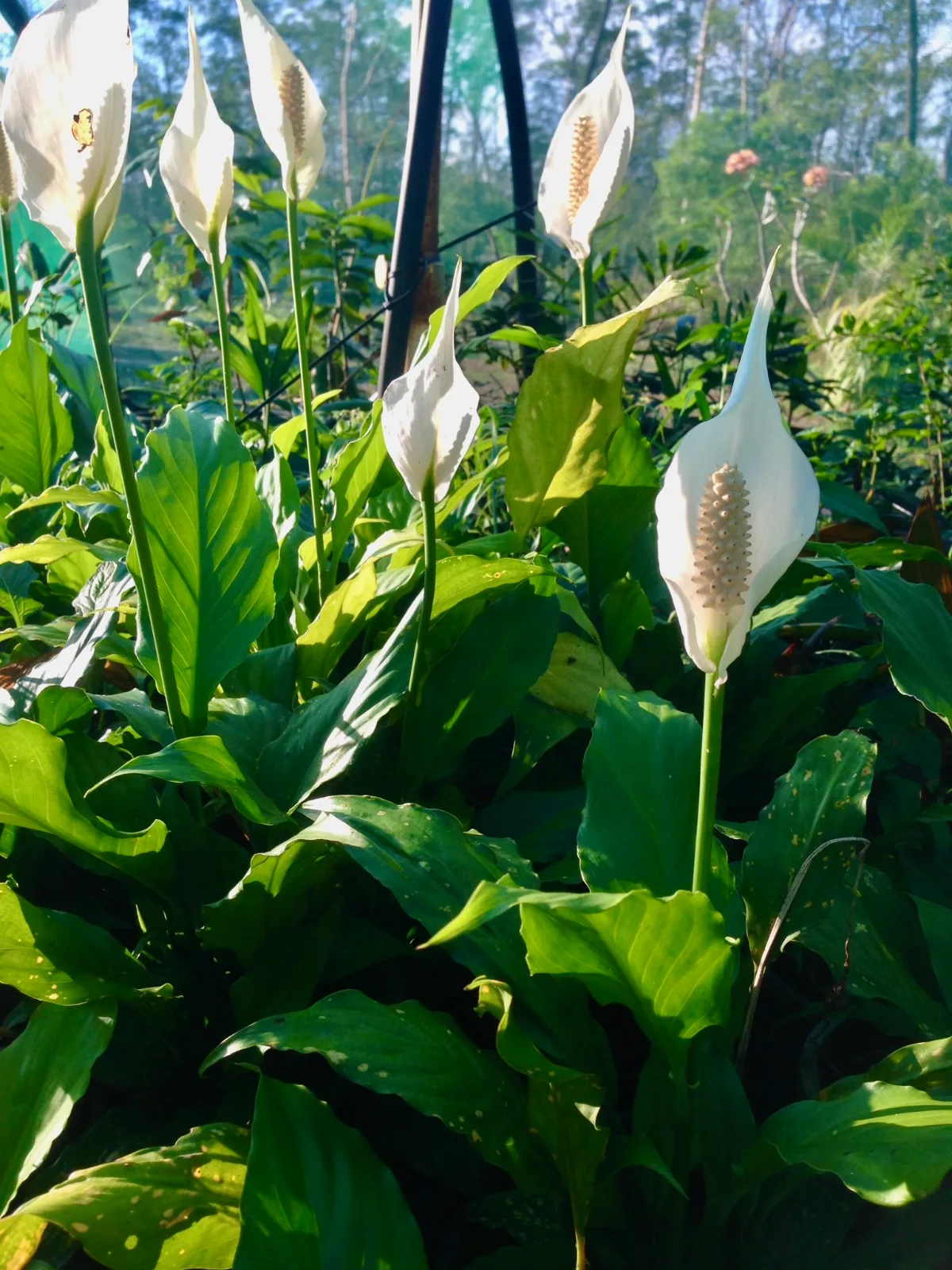
Peace lily is a shade-loving tropical perennial with glossy leaves and white spathes. It handles ordinary indoor light better than many flowering houseplants, but grows best with bright filtered light and evenly moist, well-drained mix.
- Grows well in
- Tropical, Subtropical, Temperate, Cool / mountains, Mediterranean
- Lifecycle
- Evergreen tropical perennial
- Light
- Part shade, Shade
- Mature size
- Usually 40–80 cm tall and wide
- Spacing
- One clump per pot; 40–60 cm in suitable outdoor shade
- Growth habit
- Clumping evergreen perennial
- Native range
- Colombia to Venezuela
- Natural habitat
- Wet tropical forest understorey and other humid shaded sites.
When to plant
Tropical
August–April
Subtropical
September–March
Temperate
September–February
Cool / mountain
September–December
Mediterranean
September–March
Repot or divide during spring and warm active growth. Protect outdoor plants from frost.
Planting
Plant into a pot with drainage using quality potting mix. Outdoors, restrict it to frost-free shaded sites with moist but drained soil.
Position and light
Bright indirect light gives the best balance of leaves and flowers. It tolerates lower light but usually flowers less.
Soil
Rich free-draining potting mix that holds some moisture.
Watering
Water when the surface begins to dry and drain the pot well. Repeated severe wilting stresses the plant.
Feeding
Feed lightly during active growth with a balanced indoor-plant fertiliser, roughly monthly in spring and summer, and stop over winter when growth and light levels drop.
Pruning
Remove yellow leaves and spent flower stems at the base. Divide crowded clumps rather than repeatedly using much larger pots.
Propagation
Divide established clumps, keeping roots attached to each section.
Common problems
Brown tips, yellow leaves and reduced flowering can follow low humidity, uneven water, salt build-up or low light.
Safety notes
Contains calcium oxalate crystals and can irritate the mouth and digestive tract. Keep away from pets and children who chew plants.
Worth knowing
Peace lily is not a true lily. Its white display is a spathe surrounding a central spadix, similar in structure to arum lilies and other members of the Araceae family. It is native to tropical forest floors of Central and South America, which explains its preference for filtered light and steady humidity indoors. Flowering slows noticeably in low light, even though the leaves stay healthy, so a plant kept purely for foliage can be positioned further from a window than one grown for its flowers.
Featured In

Grow Peace lily with Brancho
Add it to My Garden and Brancho works out what it needs next, timed for your climate.
How it grows around Australia
Growing this too? Share what you've noticed in your garden.
Grow a Little Wild
New plants to try, useful growing tips and a few garden jobs based on what you grow.