
Plant profile
Pigeon pea
Cajanus cajan
Also known as Toor dal, Arhar, Gungo pea, Congo pea.
Pigeon pea is a short-lived shrub that gives you edible peas, light shelter for smaller crops and useful biomass for the soil. It handles heat and dry conditions well and works especially well in productive tropical and subtropical gardens.
- Grows well in
- Tropical, Subtropical, Temperate, Arid / inland
- Lifecycle
- Short-lived perennial legume shrub, two to four years
- Light
- Full sun
- Mature size
- 1.5 to 3 m tall and around 1.5 m wide
- Spacing
- 1 to 1.5 m apart
- Growth habit
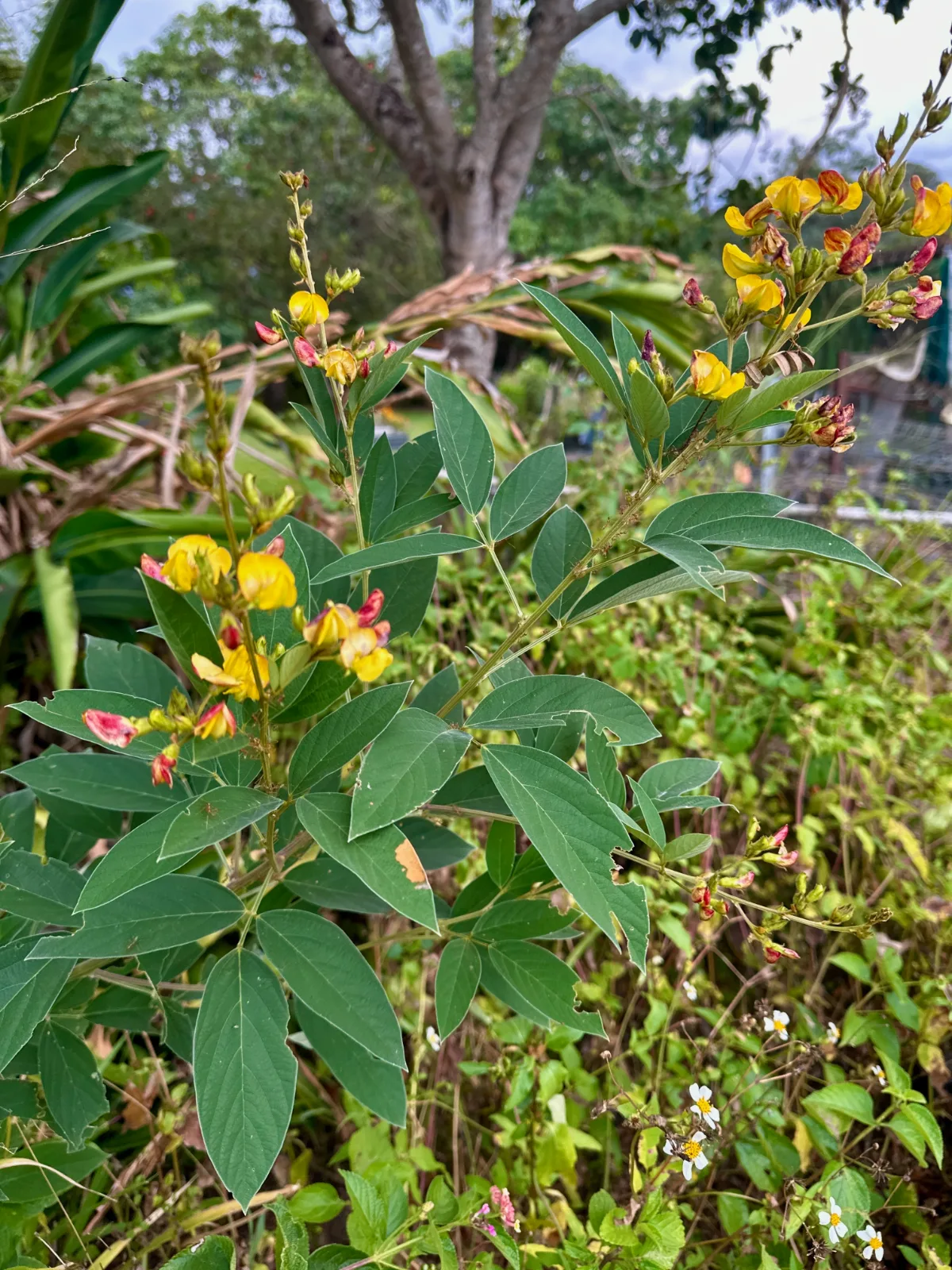
- Upright woody shrub with three-part leaves and yellow flowers
- Native range
- Indian subcontinent
- Natural habitat
- Seasonally dry tropical country. Pigeon pea is an ancient cultivated crop and is not known as a truly wild plant.
When to plant
Tropical
September–January
Subtropical
September–December
Temperate
October–December
Arid inland
September–November
Tropical and subtropical: spring to early summer. Temperate: late spring, so it has a full warm season. Arid: spring with water for establishment.
Planting
Sow seed 2 to 3 cm deep straight into the ground in spring or early summer. It grows into a shrub around 2 m tall, so give it room and use it where you want a windbreak or a nurse plant for young fruit trees.
Position and light
Full sun.
Soil
Almost any free-draining soil, including poor and sandy ground. Pigeon pea works with soil bacteria on its roots to fix nitrogen from the air, and its roots and prunings can add organic matter and nitrogen back to the soil.
Watering
Water to get it established, then only during very dry weather. Deep roots make it one of the most drought-hardy legumes you can grow.
Feeding
Little to none. Compost at planting is usually enough. Once established, pigeon pea gets much of its nitrogen through bacteria on its roots, so extra nitrogen fertiliser is rarely needed.
Pruning
Tip prune young plants to make them branch low and stay sturdy. Cut the bush back by a third after harvest to keep it productive and stop it going woody. Prunings are good chop-and-drop mulch.
Harvest
Pick green pods for fresh peas while they are plump and still green. Leave pods on the plant to dry brown if you want dal-style dried peas, then shell and store them fully dry.
Propagation
From seed. Save dry seed from your best plants and keep it in a dry, airtight jar.
Common problems
Pod-boring caterpillars and sap-feeding bugs sometimes feed on the developing pods, especially in humid weather. Check pods if you are saving seed or picking dry peas, while leaving other insect visitors alone. Roots can rot in saturated soil. Older plants become woody and less productive, so replace them with new plants after a few years.
Safety notes
Cook pigeon peas before eating, both green and dried, as with other dried beans and peas.
Worth knowing
Pigeon pea is often used in permaculture as a nurse plant. It shelters young fruit trees from sun and wind for a couple of years, then gets cut down as the tree takes over.
Grow Pigeon pea with Brancho
Add it to My Garden and Brancho works out what it needs next, timed for your climate.
How it grows around Australia
Growing this too? Share what you've noticed in your garden.
Grow a Little Wild
New plants to try, useful growing tips and a few garden jobs based on what you grow.