
Plant profile
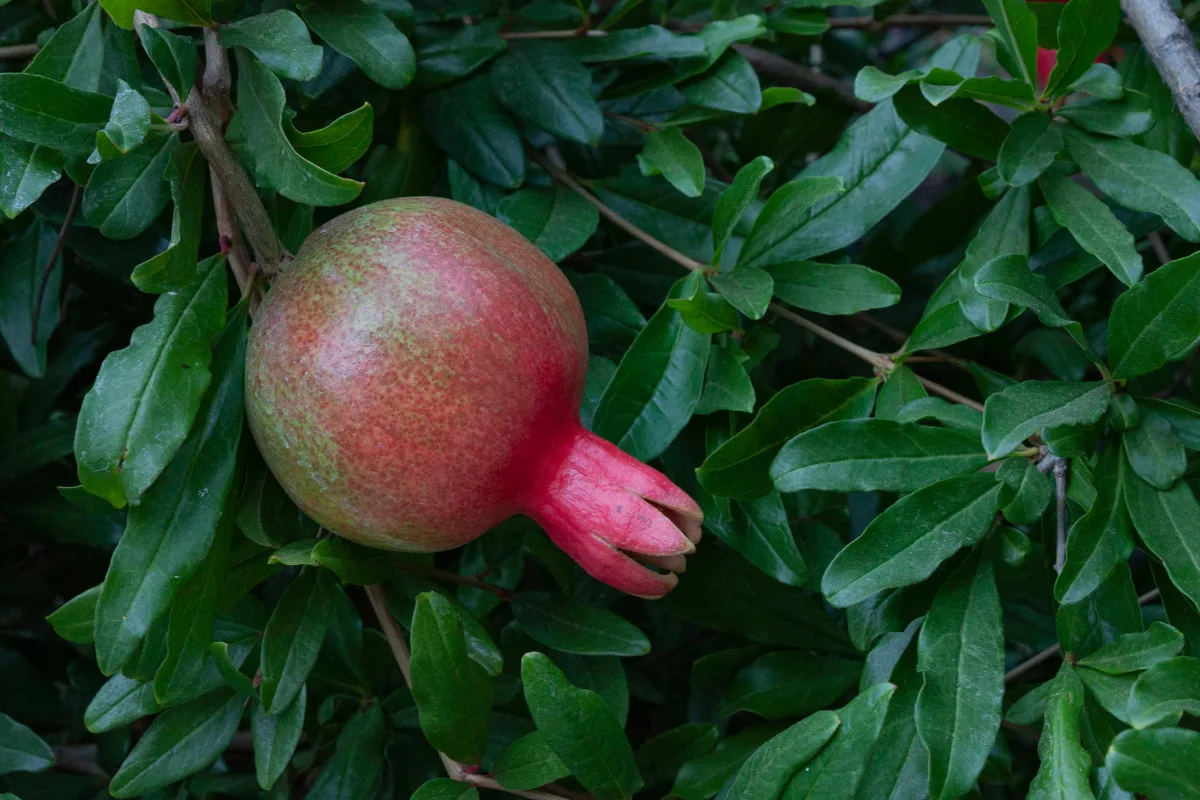
Pomegranate
Punica granatum
Also known as Pomegranate tree.
Pomegranate is a tough deciduous shrub or small tree that likes sun, good drainage and warm summers. It can grow across much of Australia.
- Grows well in
- Subtropical, Temperate, Cool / mountains, Arid / inland, Mediterranean
- Lifecycle
- Deciduous fruiting shrub or small tree
- Light
- Full sun
- Mature size
- Usually about 3–5 m tall and 2.5–4 m wide in gardens, although unpruned plants can grow larger.
- Spacing
- Allow roughly 3–4 m between full-sized plants, or less where regular pruning will keep them compact.
- Growth habit
- Deciduous, multi-stemmed shrub or small tree with a naturally open, suckering habit and sometimes thorny branches.
- Native range
- North-eastern Türkiye to western and northern Pakistan
- Natural habitat
- Temperate to subtropical dry woodland, scrub and rocky valleys.
When to plant
Subtropical
May–August
Temperate
May–August
Cool / mountain
June–August
Arid inland
May–August
Mediterranean
May–August
Temperate, Mediterranean and arid districts: plant in winter while dormant or in mild autumn or spring weather. Subtropical gardens can grow pomegranates where there is enough seasonal cool and a hot, sunny ripening period.
Planting
Plant in full sun into a well-drained position and give the shrub room to sucker or plan from the start to keep it as a single-trunked small tree. Container-grown trees can be planted during mild weather if you can water them deeply through establishment.
Position and light
Full sun gives the best flowering, fruit colour and sweetness. Shaded plants become more open and usually crop less heavily.
Soil
Pomegranates adapt to many soils, including relatively lean or alkaline ground, but drainage matters. Improve compacted sites before planting and avoid low ground that stays saturated after rain.
Watering
Water young trees deeply while they establish and keep moisture reasonably steady while fruit develops. Mature trees tolerate dry conditions well, but severe moisture swings close to ripening can increase fruit splitting.
Feeding
Feed lightly as spring growth starts if soil is poor, using compost or a balanced fruit-tree fertiliser. Avoid heavy nitrogen that pushes long leafy shoots at the expense of flowering.
Pruning
Prune lightly in late winter to manage size, remove suckers and improve the framework. Pomegranates fruit on established wood, so repeated hard annual pruning can remove productive growth and reduce the next crop.
Harvest
Harvest when fruit has reached full colour, feels heavy and gives a metallic sound when tapped. Pick before splitting becomes a problem.
Propagation
Named cultivars are commonly propagated from hardwood or semi-hardwood cuttings because cuttings preserve fruit quality. Seed grows readily but seedlings vary and may take longer to produce worthwhile fruit.
Common problems
Fruit splitting, suckers, fungal spotting in wet weather and bird damage are the main garden problems. Splitting becomes more likely when dry soil is followed by a large increase in water close to ripening.
Worth knowing
Named cultivars differ greatly in sweetness, seed hardness, fruit colour and acidity, so a known fruiting selection is a better choice than a random seedling. Established plants are very long-lived and can be maintained as either multi-stemmed shrubs or small trees.
Grow Pomegranate with Brancho
Add it to My Garden and Brancho works out what it needs next, timed for your climate.
How it grows around Australia
Growing this too? Share what you've noticed in your garden.
Grow a Little Wild
New plants to try, useful growing tips and a few garden jobs based on what you grow.