
Plant profile
Snake plant
Dracaena trifasciata
Also known as Mother-in-law's tongue, Sansevieria, Sansevieria trifasciata, Viper's bowstring hemp.
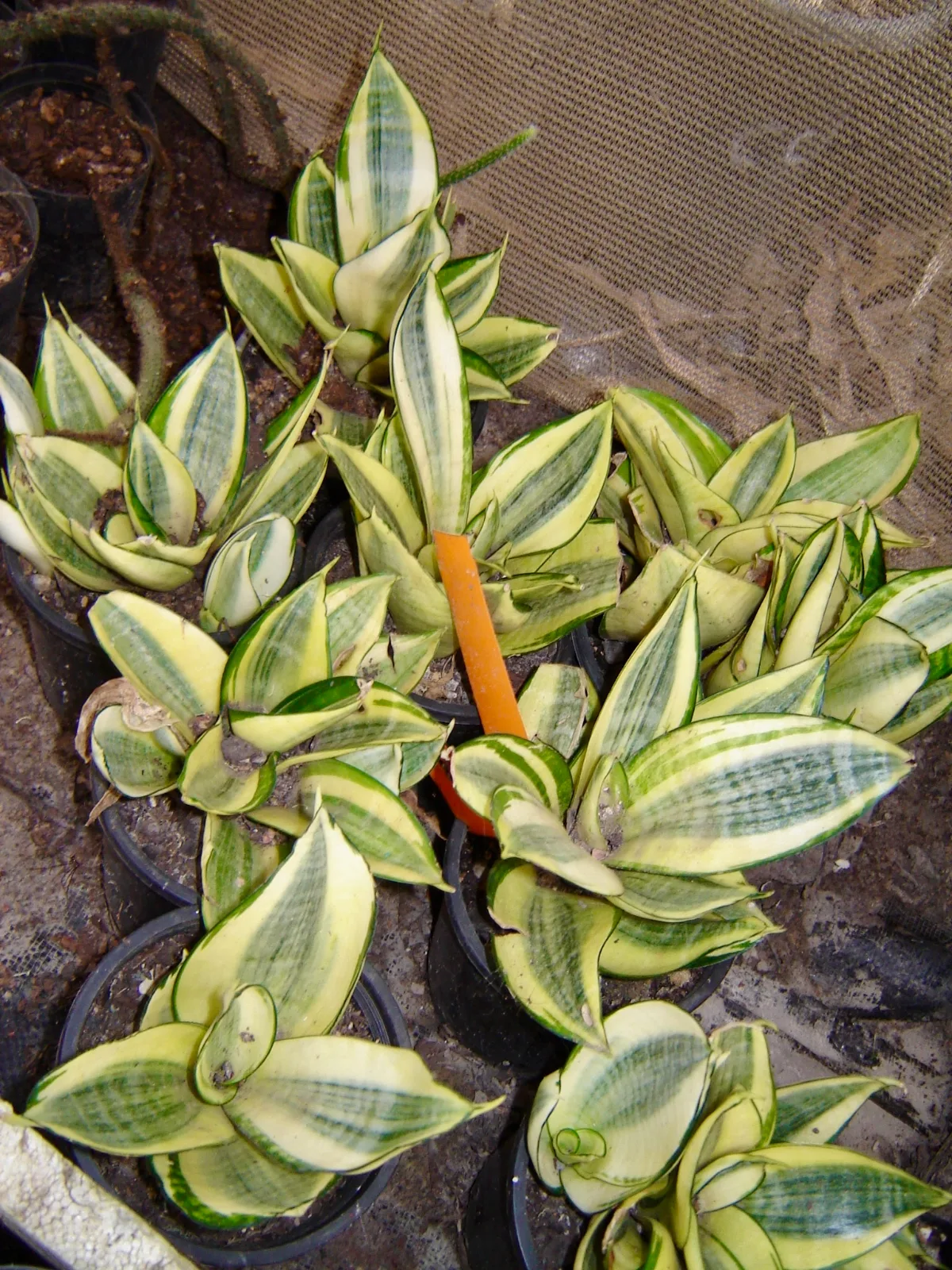
Snake plant is a tough upright foliage plant that handles dry conditions and lower light better than many indoor plants. Its stiff leaves and compact root system make it especially useful in pots.
- Grows well in
- Tropical, Subtropical, Temperate, Arid / inland, Mediterranean
- Lifecycle
- Evergreen rhizomatous perennial
- Light
- Part shade, Shade
- Mature size
- Usually 30 cm–1.2 m tall, depending on cultivar, with clumps widening steadily through underground rhizomes.
- Spacing
- About 30–45 cm apart outdoors, or one plant/clump per pot with room for the rhizomes to expand.
- Growth habit
- Upright clumping succulent-like perennial that spreads through thick creeping underground rhizomes.
- Native range
- Southern Nigeria to western Central Africa, with a separate native occurrence in Tanzania
- Natural habitat
- Seasonally dry tropical forest, woodland and rocky ground.
When to plant
Tropical
February–October
Subtropical
September–April
Temperate
October–March
Arid inland
September–April
Mediterranean
October–March
Indoor plants can be repotted whenever necessary, but warm active growth gives the fastest recovery. For outdoor planting, wait for reliably warm, frost-free conditions.
Planting
Use a pot with drainage or plant into sharply drained soil. Keep the crown and rhizomes close to the soil surface rather than burying them deeply. Outdoors, plant once conditions are warm and frost risk has passed.
Position and light
Bright indirect light or part shade gives the best growth and leaf pattern. It tolerates low light, but growth slows. Established plants can handle some direct sun if acclimatised gradually.
Soil
Use a very free-draining mix, such as quality potting mix opened up with coarse mineral material. In the ground, avoid heavy soil or any position that stays wet after rain.
Watering
Let the mix dry well between waterings, then water thoroughly and drain. Water much less during cool or low-light periods. Constantly damp soil is the quickest way to lose the roots and rhizomes.
Feeding
Feed lightly during active warm-season growth with a balanced indoor-plant or general-purpose fertiliser at the label rate. Snake plants need far less fertiliser than fast-growing tropical foliage plants.
Pruning
No regular pruning is needed. Cut damaged, yellow or collapsed leaves cleanly at the base. Thin or divide crowded rhizomes when the plant becomes too dense for its pot or garden space.
Propagation
Divide the rhizomes so each section has healthy roots and at least one growing shoot. Leaf sections can also root, although variegated cultivars may not come true from leaf cuttings.
Common problems
Root and rhizome rot from overwatering is the main problem. Also watch for mealybugs, scale and cold damage. Soft yellowing leaves usually point to wet soil or poor drainage.
Safety notes
Snake plant can irritate pets if chewed or swallowed. In dogs and cats it may cause drooling, vomiting and reduced appetite; keep it out of reach of animals that chew plants.
Worth knowing
The old Sansevieria name is still widely used, but snake plants are now placed in Dracaena. Variegated cultivars may lose their pattern if you propagate them from leaf sections, so division is the safer method when you want an exact copy.
Featured In

Grow Snake plant with Brancho
Add it to My Garden and Brancho works out what it needs next, timed for your climate.
How it grows around Australia
Growing this too? Share what you've noticed in your garden.
Grow a Little Wild
New plants to try, useful growing tips and a few garden jobs based on what you grow.