
Plant profile
Taro
Colocasia esculenta
Also known as cocoyam, dasheen, eddo.
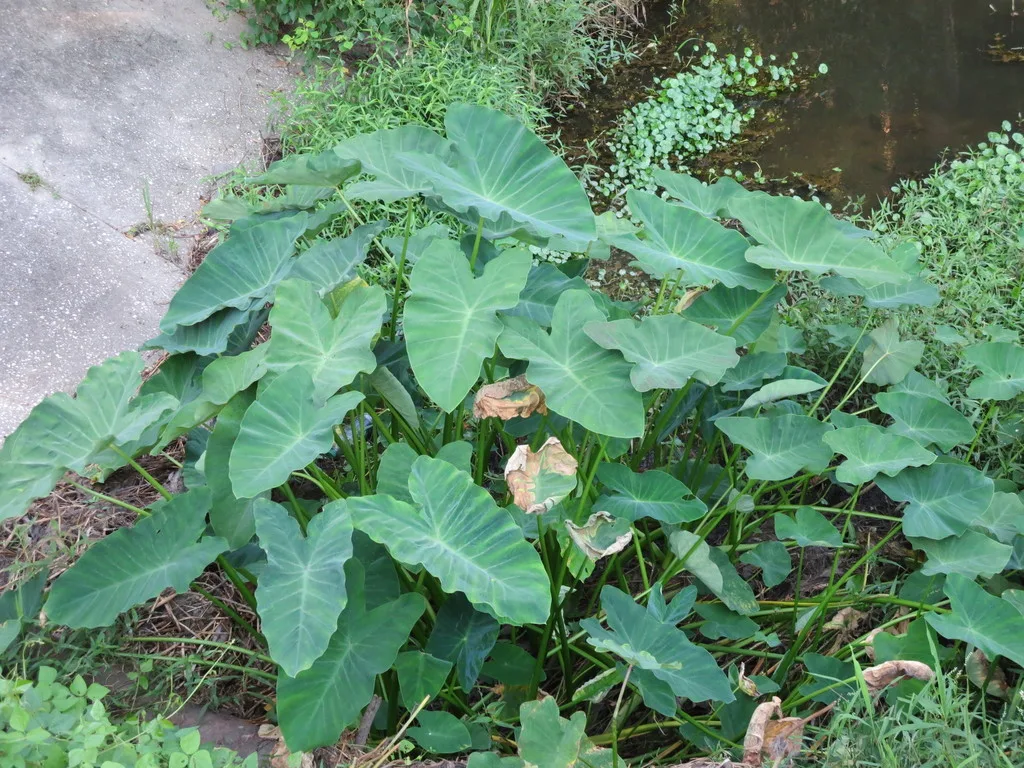
Grow taro for its beautiful, enormous leaves and a harvest of starchy corms beneath the soil. It fits into raised beds, big pots and tropical food forests, and wild taro in Queensland has a fascinating connection with tiny pollinating flies.
 By Elle · Published
- Grows well in
- Tropical, Subtropical, Temperate
- Lifecycle
- Warm-season perennial root crop
- Light
- Full sun, Part shade
- Mature size
- Usually around 1–1.5 m tall, with foliage spreading 1 m or more
- Spacing
- Allow 60–90 cm between plants
- Growth habit
- Clumping perennial herb with a central underground corm, side shoots and shallow roots
- Native range
- India to southern China and Sumatra
- Natural habitat
- Wet tropical forest, stream margins, marshy ground and other damp sites.
When to plant
Tropical
September–March
Subtropical
September–December
Temperate
October–December
Plant in spring after the soil warms in temperate and subtropical gardens. In tropical Australia you have a longer planting window, especially if you can water through the dry season.
Planting
Plant taro corms when the soil is warm. For small corms like those sold by The Seed Collection, plant about 5 cm deep with the growing tip facing up, and space them 60–90 cm apart. Mix compost through the bed first, water well and spread mulch over the soil. A dedicated raised bed is handy if you want to keep a particular planting separate and find the corms easily at harvest. Taro also grows in a large pot; allow at least 50–60 cm of width and depth for one plant.
Position and light
Grow taro in full sun or part shade. It can produce a good corm crop in full sun where water is plentiful, while some afternoon shade helps in hot, exposed gardens. The bright outer edge of a tropical fruit-tree canopy is another good position. In cooler districts, give taro a sunny, warm spot and protect it from frost. Very deep shade can mean smaller corms.
Soil
Taro grows beautifully in rich soil that holds moisture. Work compost or aged manure through your bed before planting, then keep the surface mulched. It can grow in managed flooded fields, and an ordinary garden bed also produces a good crop with regular watering. For containers, use a good-quality potting mix in a deep pot with drainage holes. A wide raised bed filled with compost-rich soil makes harvesting easy.
Watering
Keep taro well watered while those big leaves are growing. Check the soil beneath the mulch during hot weather and water deeply before the root zone dries out; dry soil slows growth and reduces the harvest. An established taro clump may retreat underground during cooler or drier weather. When fresh shoots return, increase watering again to support the new growth.
Feeding
Give taro plenty of compost or well-rotted manure at planting time. About six to eight weeks after the shoots emerge, top-dress with compost or feed with a balanced vegetable fertiliser at the label rate if growth needs a boost. Large leaves take plenty of nutrients to produce, especially in a pot. Add fresh mulch as the old layer breaks down and top up the potting mix with compost during the growing season.
Pruning
Cut away old leaves after they turn yellow or collapse. Leave healthy green leaves growing because they're helping the corm develop underground. If your clump becomes crowded, lift a few of the smaller side shoots and replant them. Chopped older leaves can go onto the compost heap.

Practical uses
A harvest of edible corms
Taro makes a lovely alternative to potatoes. Peel and cook the corms until completely tender, then boil, roast or mash them, or cut them into chips. Their flavour and texture vary between cultivars, from creamy and gently nutty to firmer and more floury.
At Yandina Community Gardens in Queensland, gardeners grow taro for its corms and share a recipe for taro fries with coriander pesto. If you have a productive clump, it's a fun way to try the harvest.
Beautiful leaves as well as food
The big heart-shaped leaves make taro a lovely plant for a tropical border, large pot or moist garden bed. You can grow an edible crop without hiding it away in the veggie patch.

Permaculture uses
An edible crop under fruit trees
Taro grows well in the bright, moist part of a tropical food forest. Plant it along the outer edge of a fruit-tree canopy, where the leaves can cover the ground and you still have room to dig up the corms. The broad foliage helps shade the soil around each clump, and old leaves can go into the compost or be chopped for mulch.
Taro in a Far North Queensland food forest
At Mike Gailer's garden near Kuranda, taro grows among bananas, sweet potatoes, cassava and many other useful crops on former grazing land. Mike has laid out planting rows along the contours of the slope, with swales to catch rainwater. Between the crop rows he grows nitrogen-fixing plants, then cuts their foliage and lays it down as mulch. It's a terrific example of including underground harvests in a much bigger food-growing system.

Wildlife and pollinators
Taro's tiny fly pollinators
Here's a fascinating connection: wild taro in northeastern Queensland has produced flowers, fruit and seeds, and tiny Colocasiomyia flies have been found in its flower spikes. Close relatives of these flies pollinate taro in neighbouring Papua New Guinea. Some taro varieties grown for their corms rarely flower, so you may never see this little wildlife story in your own garden.
Planthoppers and taro
Tiny sap-sucking insects called Tarophagus planthoppers feed on taro foliage. Researcher Peter Matthews even used their distribution across Australia and the Pacific to investigate where different taro populations came from.
Harvest
Taro is usually ready to dig after about 6–12 months, depending on the cultivar, growing conditions and the size of corm you want. Watch for the leaves to yellow and die back, then loosen the soil with a fork and lift the clump carefully. You'll find a larger central corm on some types, while others make plenty of smaller cormels around it. Keep a healthy piece with a growing bud to replant. Taro doesn't store for long once dug, so harvest what you plan to use soon.
Propagation
Taro is easy to multiply from its underground corms and side shoots. Lift an established clump and gently separate the offsets, keeping a growing bud on each piece. Replant them into warm, compost-rich soil and water regularly until fresh leaves appear. You can also plant sound corm pieces with a bud. Different taro varieties are usually maintained by division, which keeps their useful characteristics from one planting to the next.
Common problems
If your taro stops growing during hot weather, check the soil moisture first. Regular watering usually makes a big difference to corm development. Aphids and caterpillars sometimes turn up on the leaves; check the undersides and remove heavily chewed leaves if needed. Soft, decaying corms need lifting and checking. Use sound planting pieces and fresh potting mix if a container crop has started to rot.
Safety notes
Cook taro corms thoroughly before eating. Raw taro contains calcium oxalate crystals that can irritate your mouth and throat. Some cultivars also have edible leaves, but use a known food variety and follow a reliable preparation method.
Worth knowing
Taro comes in hundreds of cultivated forms. Dasheen types generally make a larger central corm; eddoe types are known for their smaller side cormels. Buying a plant labelled Colocasia esculenta tells you which species you have, though the named cultivar may still be unknown.
Companion and understory planting
Taro among tropical food plants
Try taro around the brighter edges of banana clumps or beneath widely spaced tropical fruit trees. Ginger and turmeric enjoy similar warm, compost-rich conditions and can grow nearby if there's room to dig each crop without disturbing the others.
At Permaculture Realfood in Australia, taro and kang kong are recommended for the wetter parts of a food forest, while turmeric goes into the understory and cassava gets the sunnier, drier positions. That's a useful way to arrange a mixed planting around the conditions already in your garden.
If you're growing several kinds of taro, keep a permanent label beside each clump. The leaves can disappear for part of the year while the corms stay alive underground.
Livestock and safety
Taro and farm animals
Taro has been used in livestock feeding overseas, but the preparation matters. Feedipedia describes chopped and fermented taro leaves being used in trials with sheep and goats, and processed corms being fed to other animals. Fresh leaves contain calcium oxalates, and taro silage on its own did not provide a balanced ration in the sheep trials.
Keep garden taro for the kitchen, away from grazing paddocks. The ASPCA lists Colocasia esculenta as toxic to horses, so keep it out of their grazing area.
Tradition and history
Taro in the Torres Strait
Taro has a long history in Torres Strait food gardens. Research into the western islands describes people cultivating taro and yams alongside bananas, sugarcane, coconuts and, later, sweet potatoes. These were productive, carefully managed gardens and an important part of local food systems.
An older story in northern Queensland
At Lockhart River on Cape York, people remembered gathering wild taro for food. Botanist Robert Tucker recorded their memories in 1987, and taro researcher Peter Matthews later included his account in On the Trail of Taro. Ancient sediments at Lake Euramoo in the Wet Tropics also contain Colocasia pollen. There's still plenty to learn about how Australia's wild populations relate to taro grown across Asia and the Pacific.
Across the Pacific, people have developed many cultivars and cooking traditions. You'll hear the crop called dalo in Fiji and kalo in Hawai‘i, among many other names.
Growth and roots
What happens underground
Taro grows from a swollen stem called a corm. A fairly shallow network of roots spreads out from it, and new side shoots can develop into smaller cormels. A single planting can gradually form a large clump, although the number and size of cormels depend on the variety.
When the leaves disappear
In warm, frost-free gardens, the underground corms can survive through seasons when the leaves die back. You may find fresh shoots appearing in the same place once warmth and moisture return. Mark the position before the foliage disappears, especially if you want to keep track of a particular cultivar or harvest it without digging up neighbouring plants.
References
- The Seed Collection — How to Grow Taro (corm)
- The Seed Collection — Taro corm product description
- Yates Australia — How to Grow Taro
- ABC Gardening Australia — Taro plant finder
- Yandina Community Gardens — Taro
- Mike Gailer — Forest of food in Far North Queensland, The Queenslander
- Permaculture Realfood — How to Create a Food Forest Garden
- Ahmed et al. (2020) — Evolutionary origins of taro in Southeast Asia
- Harris (2006) — Pre-European subsistence in western Torres Strait
- Denham (2023) — Putting the Dark Emu debate into context
- Hunt et al. (2013) — Genetic data confirms natural breeding in a wild taro population in northern Queensland
- NSW DPI — Tarophagus planthoppers
- Feedipedia — Taro crop and livestock feed research
- ASPCA — Colocasia esculenta and horses
- Kew Plants of the World Online — Colocasia esculenta
- Brisbane City Council — Taro weed profile
- Peter J. Matthews (2014) — On the Trail of Taro: An Exploration of Natural and Cultural History

Grow Taro with Brancho
Add it to My Garden and Brancho works out what it needs next, timed for your climate.
How it grows around Australia
Growing this too? Share what you've noticed in your garden.
Updates appear in My Brancho. Email alerts are not available yet.

Grow a Little Wild
New plants to try, useful growing tips and a few garden jobs based on what you grow.