
Plant profile
Banksia
Banksia spp.
Also known as banksia plant.
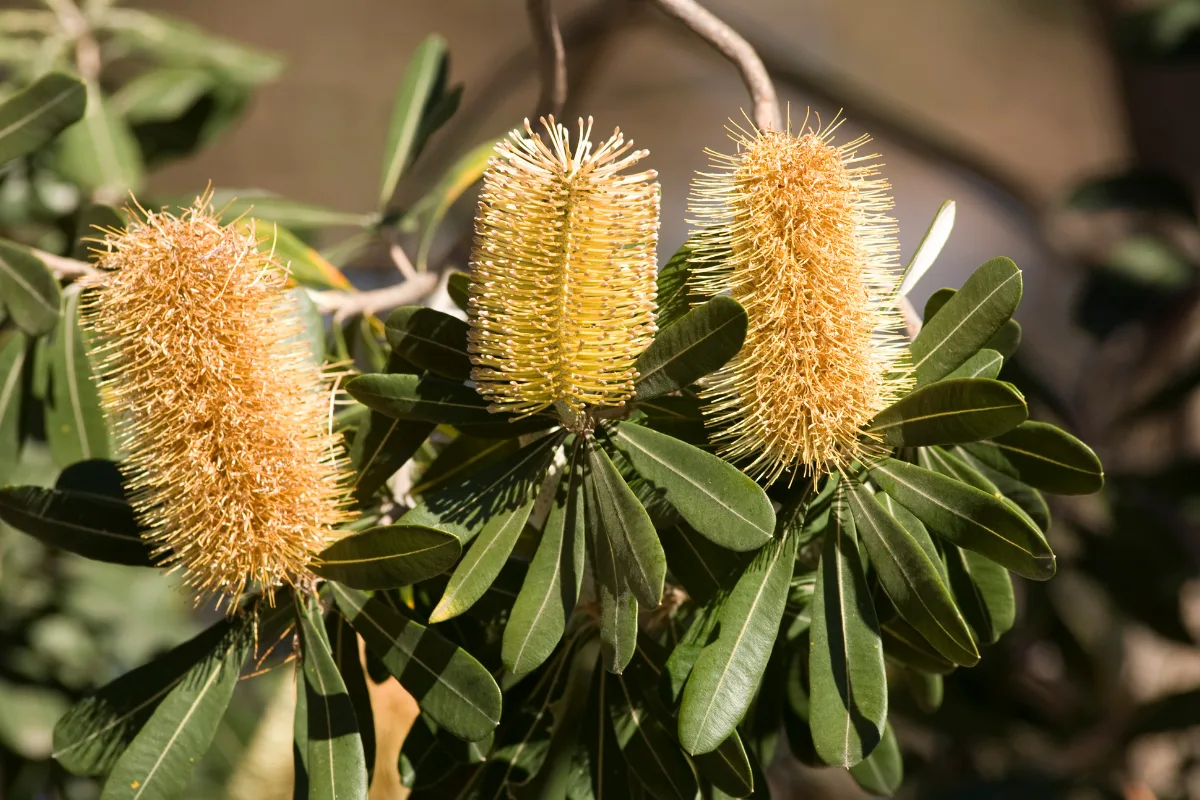
Banksias range from groundcovers to large trees, with nectar-rich flower spikes that bring birds into the garden. Match the species to your climate and soil rather than treating all banksias the same.
- Grows well in
- Tropical, Subtropical, Temperate, Cool / mountains, Arid / inland, Mediterranean
- Lifecycle
- Australian native evergreen shrub or tree
- Light
- Full sun, Part shade
- Mature size
- From prostrate forms under 50 cm to trees over 10 m
- Spacing
- Varies widely by species and cultivar
- Growth habit
- Evergreen shrub or tree; some prostrate forms
- Native range
- Australia, including Tasmania, with one species extending to New Guinea
- Natural habitat
- Heath, open woodland, forest and coastal scrub, often on nutrient-poor soils.
When to plant
Tropical
March–June
Subtropical
March–May
Temperate
March–May
Cool / mountain
September–November
Arid inland
March–May
Mediterranean
March–May
Autumn is excellent in mild and Mediterranean climates; spring suits colder districts. Tropical species can be planted through the warm growing season with reliable water.
Planting
Choose a species suited to your district and mature space. Plant at the nursery depth without burying the stem, and disturb the root ball as little as possible.
Position and light
Most garden banksias flower best in full sun. Some tolerate part shade, especially in hot districts.
Soil
Free-draining soil, often sandy or low in nutrients. Proteaceae are sensitive to excess phosphorus, so avoid rich high-phosphorus fertilisers.
Watering
Water regularly while establishing. Once established, needs vary by species, but poor drainage is a bigger problem for many banksias than short periods of dry weather.
Feeding
Use a low-phosphorus fertiliser formulated for Australian natives only if needed. Many established banksias need little feeding.
Pruning
Tip prune young shrubs after flowering if you want denser growth. Do not hard-prune species that do not reshoot from old wood.
Propagation
Most species are grown from seed. Named cultivars may need cuttings or grafting.
Common problems
Phytophthora root rot, excess phosphorus and a species poorly matched to the local climate are the main problems. Phytophthora cinnamomi can kill susceptible banksias quickly, especially in warm wet soil. If a plant declines, check drainage and root conditions before increasing watering.
Worth knowing
There is no single banksia planting recipe. Check the mature size, soil preference and local provenance of the species you are buying.
Grow Banksia with Brancho
Add it to My Garden and Brancho works out what it needs next, timed for your climate.
How it grows around Australia
Growing this too? Share what you've noticed in your garden.
Grow a Little Wild
New plants to try, useful growing tips and a few garden jobs based on what you grow.